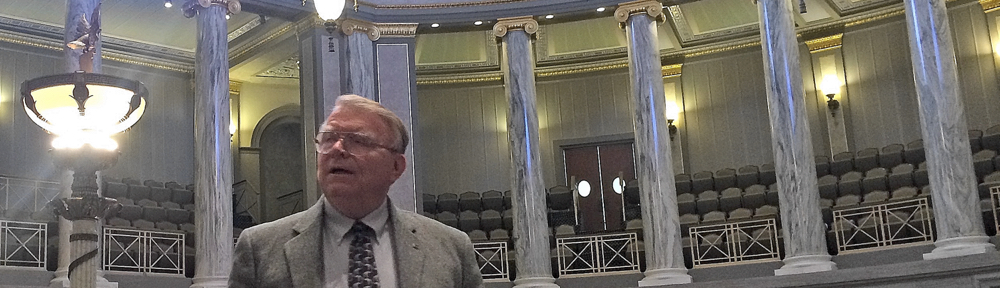
Be Careful What You Wish For 

It’s an old idiom with several variations but it has a currency in today’s politics as some states are hopping to President Trump’s demands to redraw congressional districts so a cooperative Republican majority will not offer any checks or balances to his policies throughout the rest of his term.

Republican friends, you would be well-advised to tread carefully into this Trumpswamp.

We have witnessed numerous lawsuits stemming from the seven redistrictings we have covered or observed. The authors of the realigned districts always deny they have gerrymandered districts either to protect an incumbent or to oust an incumbent the majority party wants to target.

But this is different. The President has specifically asked legislatures to gerrymander districts to make sure more Republicans are elected to the U. S. House in 2026. He has a small and shrinking majority there now and he is seeing some ferment within his MAGAites and his response is not to correct any of his own behaviors but to ask state legislatures to make sure he doesn’t have to.

Some leaders of the Missouri legislature would not be surprised if Governor Kehoe calls a special session to redraw our congressional districts to oust one of our two Democrat members of the House, in this case the Rev. Emanuel Cleaver of Kansas City, one of our senior congressmen.

They tried to do that once before, putting him in what I called a “dead lizard” district (because its outline looked like a dead lizard, lying on its back with its feet up) that stretched as far east as Marshall, thus putting more rural conservative voters in play. But the legislature made a mistake by letting him keep too many of his Kansas City constituents and he won anyway.  It is unlikely the legislature will make that same mistake this time.

In the past, legislators accused in lawsuits of gerrymandering denied doing so intentionally, forcing critics to prove their defenses untrue.  This time, however, there will be no denying intentional gerrymandering; the President has ordered it.

It will be blatantly intentional, therefore harder to defend.

There are other issues in play, too. They must consider whether they are enacting a boomerang.

First, there is the question of the population basis for the new plan. Trump wants a new census that can be used in apportionment. That’s a reason to delay redrawing the lines. His desire to exclude some people in that census will draw lawsuits. More delay.

Why, therefore, the rush?  No census. No determination of the census’s legality. How can the numbers used to calculate new districts be accurate without that census and the determination of its constitutionality?

Whether the districts will exist a year from now, in the 2026 election cycle, depends on the court attacks on the plan—and there will be attacks. The timing of the challenges, the hearings, the appeals, the appeals hearings, the rulings and the appeals to an even higher level will chew up a lot of time.  The legislature can approve the plan. But whether it will withstand vigorous court challenges on numerous fronts from the accuracy of population numbers as well as the overt partisanship behind it is uncertain. Whether opponents can run out the clock on the plan also is uncertain.

It also is possible that Trump’s continued misadventures politically, legislatively, socially, and judicially will have further inflamed his existing and his new critics by election time in ’26 and voters will take it out on Republicans generally and the Republican running to oust an incumbent Democrat in particular.

If this plan goes into effect, Democrats can launch numerous attacks and use it to put forward attractive candidates than will have a significant ready-made issue to make a strong run at Republicans. It could backfire.  Some concerns already are being heard in the GOP ranks.

Sometimes it is better to let incumbent dogs lie (read that how you prefer) than it is to stir up a public that is capable of switching to the other party on election day. Experience shows that the public is a fickle creature.

It’s a risk/reward situation for Republicans no matter how they cut it. They should consider the potential hazards of getting what they wish for because they easily could get what they don’t desire, especially if Trump continues in the next year to alienate his base and Americans generally with his Big Ugly Bill and subsequent actions and legal problems.

Present trends seem to indicate his behavior is doing potentially prospective Republican candidates no service, something incumbents might consider as they ponder their own futures. Is he worth the risk in which they might be placing themselves?  And if they decide he isn’t, will they have the courage to stand up?

Rigging the Election

A normally sane person might think that a person who has claimed a rigged election is wrong would be reluctant to try to rig one himself.

But we are living in Trumpworld.

President Trump wants red states such as Missouri to adjust their congressional districts so more Republicans might be elected next year. A president’s party historically loses congressional seats in midterm elections and Trump and his party don’t have any seats he can spare.).

Texas Republicans have jumped at the opportunity to make the master happy although the GOP already dominates the state’s delegation in the U. S. House of Representatives 27-12.  That’s not good enough for Trump. The effort has led to a confrontation with their Democratic colleagues that has become, our mind at least, a national embarrassment for Texas politics and politicians.

What’s going on here?  Trump is scared.  Of what?  National Review correspondent Audrey Fahlberg said recently on CNN, “The White House is driving this because clearly they are worried about losing the midterms.  They’re convinced that if House Democrats flip the House, that Trump is going to get impeached again…The ‘big beautiful bill’ is not polling super well right now, so they’re going on offense here. They’re driving this into motion in Texas. They’re looking at other states, as well. We may see this continue in states like Florida, Indiana.”

And Missouri appears likely to get into this, too. Republicans have six of our eight House seats but apparently that’s not enough. Senate leader Cindy O’Laughlin has told the Missouri Independent that it is “likely” the governor will call a special session to redraw lines so Republicans would be likely to take away the seat held by one of our senior members, the Reverend Emanuel Cleaver of Kansas City. He’s one of two Missouri African-Americans in our congressional delegation.

Missouri is not out of whack in the D/R balance of our congressional districts.  Last year, President Trump got 58 percent of the popular vote in Missouri. Kamala Harris and minor candidates got 42 percent.  A 6-2 congressional breakdown fits those results.

The Missouri legislature is more than 2-1 Republican so a walkout by Democrats similar to the Texas walkout wouldn’t stop the GOP from aiding and abetting Trump’s need to have a pliant Congress. The Missouri House Minority Leader, Ashley Aune of Kansas City, has told the Independent, “Everyone I’ve talked to, especially on my side of the aisle, expects to go down and get steamrolled…during a special session.”

In about a month, legislators will reconvene to consider overriding any vetoes dispensed by Governor Kehoe after the regular session and a special  session could meet concurrently with that veto session. It’s been done a few times before.

We can anticipate one of the arguments opponents will make. Our state constitution’s Article III, Section 45 says:

 When the number of representatives to which the state is entitled in the House of the Congress of the United States under the census of 1950 and each census thereafter is certified to the governor, the general assembly shall by law divide the state into districts corresponding with the number of representatives to which it is entitled, which districts shall be composed of contiguous territory as compact and as nearly equal in population as may be.

The average citizen is likely to think this language is clear—the state constitution provides for redistricting after each census but has no authorization for redistricting midway through a census decade. The language about “contiguous territory as compact and as nearly equal in population as may be” has been used from time to time to challenge redistricting plans that critics think wander too far from “contiguous” and “compact.”

Missouri has revised congressional district maps after the decennial census is taken beginning, as noted in the language, after the 1950 census. The only time the legislature redistricted between census counts was in the 1960s with a case that went to the United States Supreme Court that ruled against a redistricting map. A key part of the ruling said:

Missouri contends that variances were necessary to avoid fragmenting areas with distinct economic and social interests and thereby diluting the effective representation of those interests in Congress. But to accept population variances, large or small, in order to create districts with specific interest orientations is antithetical to the basic premise of the constitutional command to provide equal representation for equal numbers of people. “[N]either history alone, nor economic or other sorts of group interests, are permissible factors in attempting to justify disparities from population-based representation. Citizens, not history or economic interests, cast votes.”

If we understand Trump’s demands, he wants the Missouri legislature to create “districts with specific interest orientations.” The U. S. Supreme Court is much different than it was in the sixties so we’ll have to see if this precedent carries any weight with today’s Trump-dominated court.

Not all Missouri Republicans are in lock step with Trump. One is Senator Mike Moon of Ash Grove, a member of the so-called Freedom Caucus, a minority group within the Republican Party that took control of the chamber and blocked action on hundreds of bills in the last three years. Another is the Speaker Pro Tem of the House, Chad Perkins of Bowling Green who worries that “a 7-1 map is easily a 5-3 map in a year that doesn’t go the way that conservatives want it to go.”

Perkins also makes the point that Democrats should not moan and wail too loudly about Republican attempts to hold their advantage by changing districts in the middle of a decade because the Democrats in Illinois and California are doing the same thing to gain an advantage to offset any pick-ups Trump might make in other states.

The latest wrinkle in the planned rigging is Trump’s order for his Commerce Department to run a new census that does not include undocumented immigrants, the U. S. Constitution notwithstanding.

Article I, Section 2 does not seem to allow what Trump demands, at least for your observer’s untutored reading.

Representatives and direct Taxes shall be apportioned among the several States which may be included within this Union, according to their respective Numbers, which shall be determined by adding to the whole Number of free Persons, including those bound to Service for a Term of Years, and excluding Indians not taxed, three fifths of all other Persons. The actual Enumeration shall be made within three Years after the first Meeting of the Congress of the United States, and within every subsequent Term of ten Years, in such Manner as they shall by Law direct. 

The Constitution recognizes the census taken every ten years as the only legitimate census. By including “the whole number of free persons,” it does not exempt immigrants, which at the time the Constitution was written was a considerable number. Indians were not counted (although they were probably the freest people in the nation’s history until the Europeans showed up). Slaves WERE counted but since they were not free they were considered only three-fifths of a person—a provision the southern states demanded so representation would be balanced with states in the north.

And the article says the only census that will be constitutionally recognized is the one done every ten years.

Trump’s order is not helpful to his demand that new congressional districts be drawn. Right now. The first part of Amendment 1, section 2 says the districts will be drawn based on census figures.  The census has to come first, then the districts, a constitutional provision that seems to say Texas is jumping the gun and Missouri would be doing the same. Doing a census the way Trump wants it done could be pretty difficult and time consuming because a lot of Latino people whether here legally or illegally are making themselves as scarce as possible.

To coin a phrase, Trump seems to be engaged in unconstitutional bundling.

Trump’s political cynicism does nothing to reduce the general public’s distrust of our political system. In fact, he has played upon it to get elected.

Politics sometimes has been a mud-and-blood-and beer wrestling match although not as untrustworthy as many see it today. Some observers have suggested this state of decline began with Ronald Reagan’s inaugural remark 44 years ago that, “In this present crisis, government is not the solution to our problem; government IS the problem.”

Reagan had it right but he sure didn’t foresee the much different way the statement is true today.

The central issue in this frantic competition to diminish a minority within a state’s congressional delegation is this:

We have a President and a GOP House and Senate that recognize their statements and their actions are counter to the public’s increasingly self-recognized best interests. They are uncertain that the public, if given the chance, will let them keep doing to the country and its people the things they are doing.

Thomas Jefferson and the Second Continental Congress had the answer many of today’s  politicians want to ignore:

Governments are instituted among Men, deriving their just powers from the consent of the governed, –That whenever any Form of Government becomes destructive of these ends, it is the Right of the People to alter or to abolish it, and to institute new Government, laying its foundation on such principles and organizing its powers in such form, as to them shall seem most likely to effect their Safety and Happiness. Prudence, indeed, will dictate that Governments long established should not be changed for light and transient causes; and accordingly all experience hath shewn, that mankind are more disposed to suffer, while evils are sufferable, than to right themselves by abolishing the forms to which they are accustomed. But when a long train of abuses and usurpations, pursuing invariably the same Object evinces a design to reduce them under absolute Despotism, it is their right, it is their duty, to throw off such Government, and to provide new Guards for their future security.

Read that last sentence again.  When a despotic government becomes destructive of the inalienable rights of citizens like you and me, WE have the RESPONSIBILITY to resist and to form a new government that provides for our “future security.” The Trump bunch is afraid the people might want to do that now that the see that Trump was less than honest (to put it mildly) in his campaign.

Too many in today’s politics care less about life, liberty, and pursuit of happiness than they care about power, especially power that can be abused to benefit the few by harming the many. Re-drawing congressional district lines by those focused on power more than on the government our forefathers imagined helps assure that the people have reduced chances for benefitting from their inalienable rights.

There is an odor of desperation in the air on the part of those who believe in power above service as they see public sentiment for them weaken.

The redistricting game is being played by people who have come to believe they cannot win if they do not rig next year’s elections for Congress—-and they’re flouting their ambitions right before our eyes when they consider a mid-term re-drawing of congressional district lines based on ignoring counting “the whole people” to protect a President who now seems far less confident in his future than he did six months ago.

They might be imperiling themselves if they proceed, these legislators, as we will discuss in our next entry.

Christopher Kit

The first governor the Missourinet covered was Christopher S. Bond. We went on the air January 2, 1975 with a welcome by Bond in one of our first newscasts.

Today, I will be helping Columbia television station KMIZ telecast and webcast his memorial service from the rotunda of the Capitol where he served for ten years, two years as state auditor and eight years as governor.  The Capitol is less than an hour’s drive from Mexico, his hometown.

The memorial service will be at non today, after which he will lie in state until mid-day tomorrow. A celebration of his life will take place Thursday at Ladue Chapel Presbyterian Church in St. Louis.

He called himself “Kit,” and signed all of his letters that way.  But I never called him that. I think “Kit” is okay for a child but not for somebody who earned the prestigious titles of governor and senator. A grownup, especially a governor or a senator, should be Christopher. I’ll let a frontiersman from two centuries ago get away with it, but it’s just not dignified when applied to a Governor. Or a Senator and, once upon a time, in a time far, far away, a potential candidate for vice-president.

THIS is Kit:

Kit is about forty years old and it’s the time of year for it to go live outside for the summer.  We bring it indoors when the weather starts to turn a little crisp and park it next to a window so it can view winter, as we do, from the warmth of the house.

This is  Christopher.

That’s fifty years ago, after he had helped me get the American Freedom Train to come through Jefferson City for the American Revolution Bicentennial. I was the local committee Secretary and Carolyn McDowell was the committee chairman.  My friend, Jim Wisch, who also helped me build a grandfather clock from a kit (I’m sorry, it’s unavoidable in telling the story), did the woodwork for the plaque with the locomotive on it.

Some people have asked me to talk about Christopher Bond and I’ve talked about some of his legislative successes, his actions overturning a 140-year old extermination order by one of his predecessors telling Mormons to get out of Missouri or he would have the state militia kill them, his work on realigning government, his work ethic, and other things.  But I overlooked one of his best accomplishments. Alan Greenblatt, the editor of Governing magazine brought it up after learning of Bond’s death. He headlined it “When a Governor Preserved Part of His State’s Heritage.

With his reminding me, I recalled it well. Half a century ago, the St. Louis Mercantile Library decided to pay for a new air conditioning system by selling more than 100 drawings by Missouri’s most famous 19th Century artist, George Caleb Bingham.  Bingham’s works are universally appreciated not only as art but also because of the historical stories they tell. The drawings are of people who appear in one of his most famous works—County Election.

Bond mobilized school children to donate their dimes and pennies to help the state buy the drawings.  Any school that raised $250 got a Bingham print. More than three-hundred schools took part and their children raised about $40,000.

The children inspired adults, businesses, and the legislature to put up the rest of the money,  more than two-million dollars, to make the purchase.

The drawings, now in a trust, are protected from being sold.

Greenblatt concludes, “After I learned about Bond’s intervention… it became a habit for me to ask governors and former governors if they had ever done something similar — something that wasn’t part of their larger political agenda but something that had an impact they could talk about with their grandchildren. None have yet given me a satisfactory answer. So kudos to Kit Bond, as he was known, for using his bully pulpit in this particular way.”

I first met him when he was running against incumbent Congressman Bill Hungate, one of the stars of the Watergate hearings, in northeast Missouri.  He came to the radio station where I was in my first year as news director, the late KLIK, and we sat on a couch in the front office and talked about why he thought he was qualified to go to Congress. He lost but he gave Hungate a stronger run than he had ever faced.

That was 1968, the year John Danforth broke Democratic control of state politics. He hired a bunch of young assistants, Christopher Bond being one of them.  The list of people who came through the “Danforth Incubator” includes future governors, judges of the state supreme court, federal prosecutors, Republican Party leaders, and a couple of future governors—Bond and John Ashcroft.

Before Bond became governor he had to prove he was a Missourian. His primary opponent, Representative R. J. “Bus” King, charged Bond would not have lived in Missouri for the required ten years before the election.  He had gone to law school in Virginia, clerked for a federal judge in Georgia, worked for a law firm in Washington, D.C., applied for a marriage license in Kentucky and lived in DC after his marriage.

Bond argued all of those addresses were temporary and were connected to his education and his professional development. But, he said, he never intended to abandon his Missouri residence. The court ruled that “residence” is “largely a matter of intention” not requiring a physical presence. Therefore residence was “that place where a man has his true, fixed and permanent home and principal establishment, and to which whenever he is absent he has the intention of returning.”

Bond became the youngest governor in Missouri history in January, 1973. Some of the old guard, even in his own party, treated him with some disdain, some even referring to his as ‘Kid” Bond.

1972 also was the year Missourians approved a realignment of state government. Our youngest governor’s first big job was a complete reordering of the hundreds of state agencies, boards, and commissions into a little more than a dozen departments.

When a tornado hit Farmington in ’74, Bond and some members of the Capitol Press Corps hopped on a National Guard helicopter and flew over to check the damage. Bond and the press corps got along pretty well but on this flight there was no collegial chit-chat. Bond had his briefcase and was working on things all the way over and all the way back, a work ethic I appreciated.

By re-election time, Bond had won the respect of the old guard and was such a rising star in the party, nationally, that President Ford had Bond on the short list as a running mate. But when Joe Teasdale ran a populist campaign that Bond never seriously challenged, Teasdale emerged a surprise winner by about 13,000 votes.  The stunning defeat ended his hopes of rising to national importance.

I remember hearing him talk about how his loss not only was difficult for him, it was doubly difficult for his wife.  While he was mourning the end of his dreams, she was dealing with the loss of HER dream. And she had to deal with the end of his national ambitions, too.  It’s a lesson I’ve told other potential first-time candidates to think about—-that they don’t run for office alone; that their family is running, too, and is living all of the joys and sadnesses the campaign produces.

Bond filled his time as the head of the Great Plains Legal Foundation while working to rebuild the Republican Party. He came out slugging in the 1980 campaign and clobbered Teasdale by about ten times more votes than was the losing margin to Teasdale in ’72.

He laid out for a couple of years then ran for the U. S. Senate and won the first of his four six-year terms.

When he retired from the Senate fifteen years ago, he said,

“There is no greater honor than being given the people’s trust, to represent them. I have done my best to keep faith with my constituents in every vote I have cast and every issue I have worked on.

“As I look back, the successes we have achieved during my time here have always come because people were willing to reach across the aisle for the common good…

“In a world today where enemies are real—the kind who seek to destroy others because of their religion—it is important to remember there is a lot of real estate between a political opponent and a true enemy.

“Public Service has been a blessing and a labor of love for me. Little in life could be more fulfilling.”

Senator Christopher Bond of Missouri was known for his pork-barrel politics, the politics of getting as much federal money for his state as possible.  While some think being “The King of Pork” is not a distinction, Bond was proud of the title—-because it was done for his folks back home.

I saw him occasionally in the years since (such as at the Greitens Inauguration in 2017).  Age shortened his height but not his public stature. He  always had the smile, always the twinkle in the eye, always was glad to see someone, always ready with a quip.

He was 86 when he died last week.

One final story—about Kit.

In those days the press corps was made up of a lot of young men and women.  We had our softball teams and our basketball teams. One day the press corps played a game against Governor Bond and his staff.  The press corps won.  I hit a shot that nailed the governor in the shin at third base.

In May of 1984,  my city league softball team played the governor’s staff and I had to leave my position at third base to fill in for an absent pitcher.  Early in the game, one of the governor’s staff hit a shot straight back at me. It hit me in the left eye and I was in the hospital for a few days after doctors stitched the eye and the surrounding area back together.  On day a nurse brought a nice plant to my bedside. She and the other nurses were really impressed that the governor would send a plant to one of their patients.

We call the plant Kit.  And it will always remind me of a guy named Christopher.

(photo credits: Kit—Bob Priddy; County Election—Art.com; Old Bond—UPI; Official portrait of Bond—Bob Priddy)


The Meaning of a Wisconsin Election

When a people choose vindictive self-service over broader public concern, they make an eventually correctible mistake.

When Congress replaces responsibility for the many with loyalty to one, a nation is in trouble.

When courts replace justice with ideology, a nation might be lost.

We live in and often must endure our own humanness. But there are protections that we must trust within our political system that keep our mistake from becoming our destruction.

This is such a time.

The current administration has attacked the courts and the “unelected judges” who are overturning unconstitutional executive orders, preferring that the court system get out of the way. We can be grateful that our founders made the court a road block to injustice.

Elected? The dangers of an elected judiciary were on plain view in Wisconsin a few days ago where an effort was made to buy a seat on the state supreme court for someone designated as a Trump supporter who would tilt the court majority politically toward Trump.

It has become obvious to many within the last few days that they were mistaken when they accepted without question the promises given last year by Donald Trump.  Now, they must place their hope with a Congress in which some are beginning to question their loyalty to him and wonder if they have the courage to remember their responsibility.

In the end, though, it is the courts that have the ultimate responsibility for saving our nation.

The courts cannot completely nor immediately reverse the course set by the mistake. But the courts are our ultimate and final refuge—

—-which is why the recent Wisconsin Supreme Court election was so critical, not just for Wisconsin, but for all of us; not just because of WHO was elected but because of WHAT was rejected.

History has shown liberal or conservative-tilting courts are not always as clearly divided as the labels we attach to their individual members seem to indicate they will be. There is a middle ground that often is the resting place for compromise on carefully designed decisions. And it is that middle ground on the finest points of a case that might produce no major progress but will save us from any major regression.

Missouri originated a system that avoids the fight we recently saw in Wisconsin that featured a concerted effort to buy a seat on the Supreme Court. It is regrettable that we still allow people to try to buy part of our state constitution by financing multi-million dollar petition campaigns (last year’s sports wagering campaign in which the casino industry spent more than $40 million to get 3,000 more people to vote for sports wagering than voted against it after a misleading campaign is an example) and they can bankroll candidates for the legislature in an effort to buy laws.

But because our highest court judges are not elected, they cannot be bought.

Chief Justice Laura Denvir Smith, who also was the Chair of the Appellate Judicial Commission, told the Missouri Senate Rules Committee in 2007:

Judges are not intended to be politicians, choosing sides based on political considerations, or what the judge’s neighbors, fundraisers or special interest groups might think was best.  Deciding cases based on the judge’s or another’s perception of what is popular or politically expedient is inconsistent with one’s duty as a judge and is just plain wrong.  

The judicial branch of our democracy instead must be neutral, seeing that the laws are applied fairly, and providing stability in the law so that there is consistency in the rules by which people live their lives.  Although some court decisions are not popular, popularity is not the benchmark of quality in the judicial branch: The nature of our business is such that half the people are unhappy because they lost and some of the ones who won are unhappy because they don’t think they won enough.  

In every case, from a marital dissolution that only affects the couple and their children to an issue of constitutional validity, the role of the judicial branch is to resolve disputes neutrally and fairly based on the facts that are presented in court.  If they are doing their job correctly, judges decide based on the law and the facts, not based on the possible political ramifications of different results.

Sometimes the public, the parties and even the judges deciding a case are unhappy with its outcome, because the law may not produce a result that accords with our personal preferences. But if you ask those same people, when they have a case in court, whether they want a judge to pre-decide it based on the judge’s views of what will look good in the newspaper the next day, or, instead, whether they want a judge who will come to court with an open mind, listen to their side of the case, and reach a fair decision – they will pick the open mind and the fair decision – every time.

No one wants to worry that the case will be decided against them because the other side, or the other side’s lawyer, gave a large contribution to the judge’s election campaign, or to those politicians who appointed or nominated the judge for office.  Missourians learned long ago, before they adopted the nonpartisan plan, that is exactly what can and does happen when politics becomes a key factor in determining who will be a judge.

Missouri was the first state to adopt a non-partisan judicial selection process somce adopted by a majority of the states, although some states have added their own tweaks.

Although we adopted our plan in 1940 in an effort to take as much politics as possible out of the judicial selection process, the issue goes back to our first Constitution that was written in 1820 and had to be accepted by Congress before Missouri was allowed to become the 24th state.

That Constitution had the governor nominating judges at all levels and if the senate gave its consent to his nomination, the judges cold serve until they were 65 as long as they engaged in “good behavior.” But if the legislature found a judge having badly, it could by a two-thirds vote in each legislative chamber, ask the governor to remove a judge.

In the next couple of decades, though, Missourians began to doubt the wisdom of that latter point because it made the courts subservient to legislative politics and legislators were too influenced by special interests. Missouri became one of the states that decided the answer was judicial elections, legalized here in 1850.

By the start of the Twentieth Century and the machine politics of the time—the Pendergast family’s control of Democrat politics in its home town of Kansas City and in much of Missouri and the Butler machine in St. Louis, for example—the public became concerned that the judiciary’s independence was in doubt.

Beginning in 1903, when four state senators were indicted for taking bribes to vote on legislation specifying ingredients for Missouri-made baking powder and the supreme court overturned the first conviction and sentence and the other three cases never went to trial, there was suspicion that the supreme court had its own “boodle” scandal.

The Pendergast grip on Democratic politics statewide in the 1930s led to a push for adoption of a nonpartisan court plan known as “merit selection.” It was part of a national movement aimed at assuring our courts would be a true third branch of government.

When the legislature refused to hold an election on the proposal, an initiative petition forced a vote—and Missouri voters bought the idea in November, 1940.  When the legislature put a repeal of the plan on the 1942 ballot, voters strongly rejected it.

When our present state constitution was adopted in 1945, the plan was not touched.

The plan was limited to judges of the Missouri Supreme Court and courts of appeals. It also applied to some lower courts, including the probate courts, in the city of St. Louis and Jackson County. Other counties were given the option of adopting the plan.  But only six of our circuit courts have been put under the non-partisan plan, recognized nationally as The Missouri Plan.

Here is how it works:

A nonpartisan judicial commission, the Appellate Judicial Commission, solicits applications, interviews candidates and picks three finalists. The commission has three citizens appointed by the governor, three lawyers appointed by the Missouri Bar, with the chair being the chief justice of the Supreme Court. The commission picks three finalists whose names are made public, and the governor makes the final choice.

When a vacancy occurs, the commission seeks applicants and encourages the public to nominate well-qualified candidates for consideration. The commission reviews the applications of lawyers who wish to join the court and selects which applicants it will interview, then conducts those interviews in public. The commission then deliberates in a closed meeting to select a panel of three nominees for the governor’s consideration.

The governor has sixty days to announce his choice. If the governor fails to make a pick, the commission re-convenes and fills the vacancy. That has never been necessary.

The new judges then serve at least a year but then have to stand for retention in a statewide vote. The vote does not involve opposing candidates. It only asks citizens if the judge should be kept in office. There is no campaigning although the Missouri Bar’s Judicial Performance Evaluation Committee (made up of lawyers and non-lawyers) gives voters information about each of the judges up for retention so informed votes can be cast.

Although all counties can adopt this procedure, only a few use it. Only six jurisdictions do evaluations and hold non-partisan circuit judge elections—St. Louis city and county, Clay, Jackson, and Platte Counties in the Kansas City metro area, and Greene County (the Springfield area).

The plan is recognized as one that keeps politics out of judicial selection as much as possible. Unlike the federal system in which a President can reward friendly lawyers with juicy judicial appointments, this plan creates a process that sends up three people whose qualifications are based n their understanding of the law and the proper administration of it. There is no Senate approval of nominees, which would run the risk of politics being a major part of the process.

It does not keep those who want to degrade the legal system for their own protection or benefit from complaining about “unelected activist judges.”  But, having learned how it operates, this system might make it clear that some of the current attacks on the judiciary have no grounds, at least not here and not in our appellate court system.

The Missouri Non-Partisan Court Plan is the greatest protection we have against those who want to replace justice with ideology.


Spineless

So they don’t want people such as you and me to tell them face to face what their apparent saint in the White House is doing to the country with no apparent regard for who among us is hurt by his actions.

A few days ago, Congressman Richard Hudson of North Carolina suggested his fellow Republicans avoid holding in-person town hall meetings after some constituents unloaded on some of his colleagues when they did hold one.  One video showed one of those who represents folks like us fleeing from the stage because he couldn’t stand the heat.

Hudson is the Chairman of the National Republican Congressional Committee. He charged, without offering any proof that we have heard, that the town halls are being hijacked by Democratic activists, which seems to imply that there are no Republicans who have been moved to activism because all Republicans think the big guy is doing such wonderful things .

Funny, isn’t it?—that whenever people take to streets with pitchforks that it’s never the local folks who are causing the ruckus. It’s those lousy activists from the other party or other side of an issue who have driven for several hours just to be nasty to those poor elected representatives.

Some of those encouraging our representatives not to talk to us say those troublesome outside agitators are being paid!  How interesting that the Congresspeople seem to think nobody from their districts wants to put in their two cents worth about the events in Washington and wants a chance to be heard without buying anything, or anybody. It’s those well-paid troublemakers from somewhere else. Surely, the home folks wouldn’t be that worked up.

So they flee, shouting “outside agitators” over their shoulders.

There are two words that are not spoken as frequently as they should be to our political leaders at all levels who make such claims: “Prove it.”

Here in Jefferson City, it’s not much of a problem.  I can’t remember the last time our Congressman even showed a face around here, let alone had the mistaken impression that constituents might not be thankful for the voting record of their representative and what is being done to them. The one time I dropped by our most recent Congressman’s office, I found the door locked and when someone opened it, the attitude seemed to be “Who do you think you are?”

But elsewhere? Activists from the minority party are coming out of the woodwork and they’re not all outside or paid. But if even one insider in the district is asking questions, the Representative for that person should feel obligated to answer. Refusing to do so makes the Representative who lacks the courage to question anything his exalted leader is saying or doing uncomfortable. And what about the good unpaid people of the majority party? Would they never think to complain?

Congressman Tim Burchett of Tennessee claimed, “It’s pretty clear that they’ve got professional instigators, people that are showing up that are not even constituents,. And it’s getting dangerous. They’re going to people’s houses, they’re putting notices out, where do they live, where do they go to church, where do they eat — they did that on me. That kind of activity … breeds a very dangerous situation for families.”

Nobody in the White House is creating “a very dangerous situation for families”?

Speaking truth to power isn’t welcomed. The big guy in the White House won’t tolerate it from members of Congress or even from world leaders and lately has been denouncing some of his media interrogators as beneath his disrespect.  Members of Congress are upset when their constituents do have the courage to comment, and the constituents aren’t nice about it. They are upset at an obligation they should feel to hear what their people think even if it’s direct.

The big problem is that Republican members of Congress can’t dodge the issues. Or maybe we should say they can’t DOGE the issues.

Get a spine, Congressfolk.  Look at what the impact on the folks back home caused by a little man with a messianic complex. Come home and tell your farmers their markets are going to suffer because of tariffs, that the concerns about the social safety net are not valid, that the dismantling of the weather bureau and the disaster relief agencies  and the air traffic control system—and the price of Mexican beer should not be of concern.

We recall from our history-readings that when Andrew Jackson felt he had been wronged by future Missouri Senator Thomas Hart Benton and when Jackson was threatening to shoot Benton in a Tennessee hotel confrontation, he sounded at Benton, “Defend yourself, you damned rascal!”

It’s time for the damned rascals who are scared of the man in the White House (whose idol happens to be Andrew Jackson) who places loyalty above service; retribution above public responsibility; and lies above truth to explain themselves to the people who trusted them enough to put them in their offices.

Those who lack the courage to explain to their people why they lack the courage to oppose policies hurtful to the public interest don’t deserve more time to display their spinelessness.

Well—

They can run but they can’t hide.  And when they run again, the voting activists that they did not wish to face where they live might have a more important message than the “outside agitators” they didn’t want to address had.

The VEEP

Andy Borowitz is a New York-based humorist and political commentator who a few days ago posted this on The Borowitz Report:

MUSK’S DEPT. OF GOVERNMENT EFFICIENCY CUTS POSITION OF VICE PRESIDENT

(WASHINGTON—The Borowitz Report) —Elon Musk’s Department of Government Efficiency (DOGE) has eliminated the position of vice president of the United States, Musk announced on Monday.

“The job of the vice president is to fill in for the president if he falls ill,” Musk said. “This seemed unnecessary since I’m in superb health.”

Musk added that he was inspired to cut the VP position “because JD Vance hasn’t been seen in weeks and no one’s missed him.”

According to sources within DOGE, Vance will immediately be reassigned as a used Tesla salesman.

-0-

Well, is a Vice-President about as useful as a (fill in the blank)?

His or her main importance is that the Veep will become the Prez if the big guy is ruled incapable of continuing in office.

One of country’s best-ever syndicated political commentators, Jules Witcover, wrote a book that came out in 2014, The Americam Vice Presidency: From Irrelevance to Power.  His column that came out on October 18, 2014, was headlined, “Come On, Joe, Being Veep Ain’t So Bad: The Virtues of the vice-president.”

We have a new Veep, one who seemed to disappear at some point in the recent campaign; not an unusual situation when the presidential nominee sucks all of the air out of a room or out of a campaign. But it’s likely he will become more visible because he’s likely to break a lot of votes, as he did a few days ago when he broke a tie to confirm a new cabinet member. We enjoyed Witcover’s column so much that we offer it now that  J.D. Vance has become America’s official second banana. .

The general public regard for the American vice presidency was once summed up by Thomas R. Marshall, Woodrow Wilson’s standby, in the sad story of a man who had two sons. One was lost at sea, the other became vice president of the United States, and neither was ever heard from again. Wilson offered his own judgment of Marshall by once unguardedly referring to him as “a small-caliber man.”

The office of the vice presidency has never ceased to be the brunt of ridicule—even by its very occupants. Vice President Joe Biden at Harvard last week jokingly derided the office as “a bitch” before quickly insisting, perhaps less convincingly, that taking it was the “best decision I ever made.”

Not all vice presidents would say the same, especially most of the early, long-forgotten ones like Daniel Tompkins, George Dallas and William King. But despite Marshall’s and Biden’s gibes, most latter-day occupants of the second office have been significant—in some cases, essential—presidential partners in governing the country, attesting to the power of the role. Often, less-than-illustrious vice presidential performances have had less to do with the office itself than with the selection of running mates by presidents-to-be and how well, once elected, they made use of their seconds-in-command. If being vice president is like being lost at sea, it’s because, as history confirms, for too long presidents picked their VPs frivolously or carelessly and then left them to drift.

The first three presidents—George Washington, John Adams and Thomas Jefferson—had no say whatsoever concerning the identity of their vice presidents, as the Constitution stipulated that the runner-up in the balloting for president would get the job. The faults of this system were soon apparent. Adams, as Washington’s first veep, observed woefully, not unlike Biden, that “in this I am nothing, but I may be everything.” The second VP, Thomas Jefferson, used much of his four years in the office subverting his boss by creating what eventually became the Democratic Party, while publicly deploring “factions” in the young nation’s politics. (He once insisted, “if I could not go to heaven but with a party, I would not go at all.” Two centuries later, historian Arthur M. Schlesinger Jr. was moved to observe: “Even Jefferson soon decided that, with the right party, he would be willing to go, if not to heaven, at least to the White House.”)

By 1804, when the Twelfth Amendment was ratified, it had become clear that the existing VP selection system meant members of rival factions might be forced to work together, imperiling continuity of policy if a vice president succeeded to the presidency. At first, the path to the vice presidency was often through the death of a commander in chief. Eight accidental presidents, from John Tyler to Lyndon Johnson reached the Oval Office through the death of their party leader (though Tyler opportunistically turned Whig once he was president), and Gerald Ford got there by way of Richard Nixon’s resignation in the Watergate scandal.

Other Vice Presidents Who Hated Their Job

“Look at all the Vice Presidents in history. Where are they? They were about as useful as a cow’s fifth teat.” —Harry Truman

“Once there were two brothers. One ran away to sea; the other was elected vice president of the United States. And nothing was heard of either of them again.”  —Thomas R. Marshall

“I go to funerals. I go to earthquakes.” —Nelson Rockefeller

“I would a great deal rather be anything, say professor of history, than vice president.” —Theodore Roosevelt, before becoming William McKinley’s vice president

“I have no interest in it. Might very well turn it down, indeed, and probably would.” —Al Gore, before becoming Bill Clinton’s vice president

“The vice presidency is not worth a bucket of warm piss.” —John Nance Garner

But in the modern era, seekers of the two top offices, for practical purposes, have run on the same ticket—and increasingly the president wisely has decided to make greater use of the second office in governance. For too many years, presidents basically ignored their understudy as they clung warily to their power and closely guarded presidential secrets. In 1945, when Vice President Harry Truman took the Oval Office after the death of Franklin D. Roosevelt, he hadn’t even been told that the atomic bomb that would end World War II was near completion. Succeeding vice presidents were generally kept better informed, but 30 more years passed before they were employed in a manner commensurate to their experience and skills. Even Lyndon Johnson, master of the U.S. Senate prior to becoming John F. Kennedy’s second-in-command, was essentially kept on the sidelines as key Kennedy aides handled major legislative matters, to LBJ’s immense frustration.

Ironically, not until a Washington outsider named Jimmy Carter became president in 1977 was the vice president made a genuine presidential partner. Carter personally interviewed and chose running mate Walter Mondale, a U.S. senator from Minnesota, who, in alliance with the president, was most responsible for the evolution of the second office.

In a sense, the defeated 1972 Democratic presidential nominee George McGovern inadvertently played a role in the development of the Mondale model. After selecting Sen. Thomas Eagleton of Missouri as his original running mate under the pressures of a contested national convention, McGovern dropped him upon disclosure that Eagleton had received electric-shock therapy for mental depression. The furor persuaded Carter four years later to conduct a thorough personal vetting of several running-mate prospects, including Mondale.

In advance of Mondale’s interview by Carter in Plains, Georgia, the senator’s chief of staff Richard Moe drew up a detailed memorandum on what Carter seemed to need and want in a vice president. Mondale and Moe then crafted a paper describing what Mondale could offer and sent it to Carter, who bought into it at once. When he met Mondale, Carter told him: “I want you to be in the chain of command—a vice president with the power to act in the president’s place.”

Once installed in the White House, Carter and Mondale together created the modern model for putting the vice presidency to work fulltime. Carter gave Mondale complete access to him in the Oval Office and to his inner circle, and made him his chief adviser in dealing with Congress, about which Carter had no experience, as was often revealed.

Since then, after a long history of idle and near-invisible occupants, the office has evolved into a vehicle of notable political power. Four of the last six vice presidents—Mondale, Al Gore, Dick Cheney and Joe Biden—have had major roles in governing the nation never envisioned by the Founding Fathers. Their power, to be sure, has been delegated by the presidents under whom they’ve served; the Constitution gives the vice president only two roles, as presidential standby and president of the U.S. Senate, without a vote except to break a tie. These four, however VPs, and to a lesser extent two others—the senior George Bush, who later was elected president in his own right, and his vice president, Dan Quayle—also had access to the president and freedom to weigh in on certain policy decisions.

The senior Bush, who first ran for president against Ronald Reagan in 1980 before becoming his VP, professed to abhor the vice presidency. When asked whether he would accept it, he repeatedly said: “Take Sherman and cube it,” referring to the Civil War general’s declaration that “if nominated, I will not run; if elected, I will not serve.” But in the end, Bush took the job and kept a low profile, particularly as Reagan recovered from the 1981 assassination attempt that could have made his stand-in the president.

When Bush was elected president in 1988, for a sort of third Reagan term that distinctly didn’t turn out that way, he startled the political world by selecting the singularly unimpressive Quayle as his running mate. Presidential nominees always vow they will pick the individual most qualified to succeed to the presidency if destiny dictates, but Bush appeared to pick his own Bush as vice president—a youthful and pleasant enough fellow from a well-off conservative family who would happily serve in the shadow of the president. But the gaffe-prone choice was particularly baffling inasmuch as Bush himself, only weeks into his own vice presidency, had come within inches of the presidency in that shooting of Reagan.

Reagan followed the Mondale model in bringing Bush into the West Wing, but without the same regular access. Clinton in 1992 adopted the model with Gore but gave him specific areas of responsibility in government reorganization and cleaning up the environment.

George W. Bush also assigned his vice president specific areas of responsibility—in this case, in military and foreign policy matters—but went a step further. In 2001, the junior Bush allowed Cheney to set up what in some respects was a parallel staff of his own, with key former aides also placed elsewhere in the administration, assuring Cheney broad influence. In turn, Cheney took on roles in expanding presidential powers and wartime policies. His advocacy of intelligence-gathering and treatment of prisoners and detainees cast him almost as a de facto assistant president. Ironically, Bush had asked Cheney to help him find a running mate, and in effect he wound up finding himself.

Biden, after first telling Barack Obama he could better serve his country by continuing as chairman of the Senate Foreign Relations Committee, agreed to be his running mate on Obama’s promise that he would always “be in the room” when major decisions were made. Like Mondale, Biden would serve as a general adviser without departmental or other limiting responsibilities, as both VPs had desired. In office, however, Biden has taken on some specific policy assignments such as overseeing the use of economic stimulus funds in the states and cities and being the administration’s voice for middle-class concerns—and, for good or ill, overseeing the withdrawal of U.S. forces from Iraq.

The most successful vice presidential candidates seem to be the ones explicitly chosen for their judgment and competence. Of course, even in recent experience, this yardstick is not always used. Beyond the senior Bush’s selection of the gaffe-prone Quayle, Republican presidential nominee John McCain’s gamble on Alaska Governor Sarah Palin in 2008 confirmed that White House aspirants remain capable of yielding to purely political judgments of what may get them elected. Palin proved to be a charismatic running mate but was also one woefully ill-informed on matters that would come to a president’s desk, which might very well have contributed to McCain’s margin of defeat.

In most other cases, the vice presidency has not been much of a stepping-stone to the presidency. After Adams and Jefferson became vice president as runners-up in the soon-discarded presidential balloting, only two occupants, Martin Van Buren and the senior George Bush, ever have been elected directly from the second office—and both lost reelection. Three vice presidents, Mondale, Hubert Humphrey and Gore, did win their party’s presidential nomination, but were left outside the Oval Office looking in. Biden probably won’t even get that far.

Nevertheless, the vice presidency has come a long way, even since its lowest point in 1973, when Spiro Agnew was forced to resign as he faced conviction for taking payoffs from construction contractors as governor in Maryland and later in the White House. President Richard Nixon, himself imperiled in the Watergate scandal, at first regarded Agnew as his insurance policy. A 1973 White House tape caught Nixon telling aides: “Impeach Nixon? Well, then they get Agnew.” And later: “No assassin in his right mind would kill me. They know that if they did they would end up with Agnew!” On another occasion, Nixon considered removing Agnew from the line of presidential succession by appointing him to … the Supreme Court!

Fortunately, most recent presidential nominees have taken to heart their responsibility to choose VPs reasonably qualified to become president. But voters still look to the top of the ticket at the ballot box, leaving to presidents thereafter to make the most—or least—of who’s waiting in the wings.

Today, J. D. Vance, seemingly “the man who wasn’t there” during the latter weeks of the campaign and pretty much since then, has become the gentleman-in-waiting should the oldest person ever inaugurated in the presidency not make it to his political 18th green.

*Jules Witcover and I share the same birth day.  He is about 13-14 years older than I am but is an inspiration to the younger generation of political observers, of which I am a part.   I didn’t say WHICH younger generation, but younger.

When Conscience Brings Ostracism, a Story for Our Time

The latest litmus test for those who want to call themselves Republicans seems to be that they must worship at the Temple of Trump or they’ll be on the political street, kicked under the political bus, considered a political leper, seen as a member of the political Untouchable Class, and a dangerous free thinker.

—-at least in Georgia where former Lt. Governor Geoff Duncan has been expelled from the Republican Party.  He’s been charged with disloyalty because he wrote an op-ed article for the Atlanta Journal-Constitution saying, “Unlike Trump, I’ve belonged to the GOP my entire life. This November, I am voting for a decent person I disagree with on policy over a criminal defendant without a moral compass.”

Just after the start of a new year, the state Republican Party went on Elon Musk’s social media site to tell report that it had expelled Duncan and telling reporters they should refer to him as “expelled Republican Geoff Duncan,” or “ousted Republican Geoff Duncan” when they quoted him “trashing President Trump and the Republican Party.”

Atlanta TV station WAGA reports the party resolution charges Duncan undermined Republican candidates, endorsed Democratic opponents, and leveraged his party affiliation for personal gain. The first two can be understood but we’re waiting to hear what the party think is “personal gain,” other than an appreciation people from both sides might have for someone showing political courage.

Duncan had announced he would vote for Joe Biden and when Biden withdrew, Duncan announced he would vote for Kamala Harris. He said he was taking his stand in defense of his party, telling CNN, “This is where I believe is the best place for us to be able to hit the reset button and create a GOP 2.0, a party that focuses and defends on policies and uses empathy to grow the size of the tent and uses a tone that invites and encourages. I think all Republicans, for the most part, including the ones voting for Donald Trump, would agree he’s not the future of the party. I think we’re in this awkward spot where regardless of whether Donald Trump wins or loses, this party’s got this short window of time to get it right, to start taking our own medicine.

“If Donald Trump wins there’s no doubt he’ll wreck the car and continue to soil the brand of being a Republican, and so I think you’re going to watch entire herds of Republicans look for somewhere else that’s more respectable,” Duncan added. “That could mean we could start hemorrhaging to Democrats by droves.”

His concern, it seems, was regarded as a dangerous speaking of truth to power. He appears now to be a man without a party.  Whether that is worse than being a party without this kind of a principled man is worth exploring. But Duncan is unlikely to be alone as Republicans with a modicum of courage wonder how much damage Trump can do to the party before the 2026 mid-term elections.

The actions make the Georgia Republican Party appear to be a party of totalitarianism, incapable of discussing its internal differences and clearly putting party ahead of country.

It appears to still be okay for self-identified Democrats to cross over to vote for some Republicans.  But, in Georgia at least, a Republican cannot exercise a freedom of conscience in choosing the candidate, especially one running for the country’s highest office.

Duncan’s greatest sin seems to be that he went public with his thoughts.

Lord help us if the people we elect are not free to exercise their conscience in determining public policy and in discussing it in the public square. The idea that people making public policy should not discuss issues with someone of another political party is, not to put too fine a point on it, Un-American.

Whether the old saying that politics are left at the doors of legislative chambers has never been entirely true. But totally rejecting the idea, as seems to be the case far too often these days,  limits our nation and our state in dealing with the needs of the people.

Duncan can give himself whatever party label he wants to give himself. Despite his party’s attempt to dictate how the press should describe Duncan, it is Duncan’s right, at least for now in our country, to describe himself as a Republican.

Why should party loyalty dictate that one of its members MUST vote for “a criminal defendant without a moral compass?”

The Republican Party’s reaction raises questions about what moral compass IT follows.  If I were a reporter in Georgia, I would bore in on that issue.

We Get A New Governor Today

Mike Kehoe will be sworn in at noon today as our 56th Governor although it will be the 58th administration.  Two governors, Phil Donnelly and Christopher Bnd served two separate terms.

Kehoe succeeds Mike Parson, who now goes back to his farm in Polk County where he was working six years ago, when he was lt. Governor, when a Highway Patrolman showed up to tell hm he needed to get back to Jefferson City because Governor Eric Greitens was resigning.

I’ve referred to Govenor Mike Parson and Lieutenant Govenor Mike Kehoe as Mike 1 and Mike 2—and the Govenor’s Mansion for the last six years as the Parson-age.

Incidentally, a recurring political joke for many years asks voters if they would buy a used car from the candidate.  A lot of people did when he was a Ford dealer in Jefferson City.  He’s the second car dealer to be sworn in as Governor. Governor Arthur M. Hyde, who served 1921-1925 was a Buick dealer in Princeton and Trenton.

We’ve gone back over our notes on past gatherings to recall some special and sometimes not-so-special moments.

Each inauguration has some special touches. Sometimes the wheels fall off as was the case in 2013 when the usually reliable church bells tolling noon, the traditional time for the oath-taking, had a mind of their own and when the judge swearing in the governor mispronounced his name.

We listened back to The Missourinet’s recording of those events to put together this chronology showing how things fell apart at the critical moment.

11:59:56—band finishes playing “God Bless America.”

12:00:20—12:01:20—The bell at St. Peter Catholic Church tolls eight times.

Long pause.  Finally, Senate President Pro Tem Tom Dempsey, the MC, approaches the podium, and just as he draws a breath to introduce the judge to swear in the Governor—

12:02:23—a ninth bell (crowd and podium guests laugh loudly) Dempsey throws up his hands and retreats to his seat.

12:02:33—tenth bell

12:02:42—eleventh bell.  Then silence. There is no 12th bell for the noon swearing-in.  Voices on the platform (including Nixon’s apparently) are heard confirming, however, that there had been the 12th bell. Nope. Just eleven).

12:04:18—Convinced there are no more bells, Dempsey introduces St. Louis Circuit Judge Rex Burlison to swear in Nixon.

12:04:52—And Judge Burlison begins the oath by mispronouncing the Governor’s name:, “I, Jeremy Wilson Nixon…”  Nixon repeats, “I, Jeremiah Wilson Nixon…”

12:05:25—oath completed.   Church bells ring joyously throughout the city. Helicopter flyover.

Nixon’s first inauguration in 2009 was the second time in three inaugurals when the governor was sworn in early. Master of Ceremonies Charlie Shields, the Senate president pro tem, noted about 11:45 that the event was running early and the band would play some music to fill time. However after one number he announced the swearing in of the new governor would proceed. Shields said the National Guard, which operates the schedule for the inaugurations, told him through his earpiece to go ahead with the oath-giving and taking.  The swearing-in of Governor Nixon began at 11:52 and the church bells rang early.

The 2005 inauguration is remembered by some for the relatively warm weather and for the governor’s attire.

Governor Blunt refused to be sworn in while wearing the traditional tuxedo, which he referred to in an interview with The Missourinet as a “monkey suit.”  That night he did wear a tux, although the traditional attire for the inaugural ball is white tie and tails.  It was a frustrating few days for one of the Jefferson City tuxedo shops with which Blunt did business.  The owner tried…and tried…but failed to convince Blunt to be traditional in his attire.

Blunt used two Bibles.  In his inaugural address he noted that one was the Bible he used each day.  The second one would be given to his son upon his birth, which was scheduled for March.  He said it reminded him “that what we do today, tomorrow and across the next four years will help define the future opportunities of every Missouri Child.

2005 was the second time in recent memory that the new first lady danced in the inaugural ball a few weeks before the birth of the first couple’s first child.  Matt and Melanie Blunt had their first child, Branch, in March.  In 1981, Christopher and Carolyn Bond’s son, Sam, was born two weeks after the inauguration.

Bob Holden’s inauguration in 2001 was a scrambled affair that saw the first early swearing-in, in many years. Supreme Court judge Ronnie White, the master of ceremonies, called for the swearing-in of Attorney General Jay Nixon right after the invocation.  The schedule called for the inaugurations of the lesser officials to take place AFTER remarks from former Senator Thomas Eagleton and after the introduction of platform guests.  After Eagleton spoke and the guests were introduced, the other inaugurations took place.

The event, which had started at 11;15 instead of the usual 11:30 saw the inauguration of lower-ranking statewide officials by 11:45.  Rather than wait 15 minutes for the traditional noon-time inauguration of the governor, the ceremonies went right on ahead.  Just as the church bell across the street rang once to signal it was 11:45, Governor Holden was sworn in.  Radio and television stations planning to join the ceremonies just in time for the noon inauguration of the governor found themselves switching to the Capitol after Holden was well into his address, or not switching at all.  The church bells did not strike 12 because it would have interrupted the speech.  In his press conference after the event, Holden explained that he decided to go ahead with the swearing-in because it was 27 degrees and people were getting cold.

The early swearing-in caught the flight of four F-15s from the St. Louis national guard unit unprepared.  The jets, which usually formed up west of Jefferson City and flew over the Capitol west to east were far from being ready when word went out that the swearing-in was taking place and the 19-gun salute was being fired.  The jets wound up flying over the Capitol, more or less on a north to south route with two jets together and two others straggling behind, well out of formation.

The parties ended at 11;30 that night with fireworks over the Missouri River.  The explosions caught many Jefferson Citians unawares and awakened several.  Dozens of 9-1-1 calls were made.  One woman said she thought somebody was trying to break into her basement and called police.

The first Carnahan inauguration, in 1993, first brought the festival atmosphere which existed in and around the Capitol for the rest of the day after the ceremonies. Carnahan was sworn in using an old family Bible used by his great grandfather, a circuit-riding Methodist minister.  At one time there was a hole in the back cover.  Family tradition held that the hole was worn by the saddle horn of his great grandfather’s saddle.  A new cover was put on the Bible in later years that replaced that worn one. He did not wear a top hat–which is kind of an on-again-off-again tradition for these events.  Some people wear them; some don’t.  In 1989, when he was sworn in for his second term as treasurer, Carnahan wore a beaver topper with a long and distinguished history.  But he told us before the inauguration in ’93 that he reviewed the tapes of that event and saw he was about the only person who wore the traditional hat for the ceremony.  Others who had them either left them indoors or carried them. So he decided in 1993 to leave the hat off.  It belonged to his father, former Congressman A.S. J. Carnahan, who served in Congress for 14 years and was the first United States Ambassador to the African country of Sierra Leone, appointed by President Kennedy.

But his father was not the first owner of that distinguished hat.  It originally belonged to Congressman John B. Sullivan of St. Louis, whose wife Leonore became the elder Carnahan’s  successor in Congress and served with great distinction for many years.

Some might find a bit of irony in the telling of that story, we suppose.  Anyway, the hat stayed in the box in 1993.

But—

In 1997, Carnahan wore the beaver top hat—a little bit. He only wore it for the trip from the Mansion to the Capitol.  The ceremony was held in the rotunda because of the cold weather.

—As long as we’re speaking of top hats, here’s a little top hat history for you.  In 1969, when John Danforth was sworn in as Attorney General, he was the only one of the state officers who did not wear one.

Thomas Eagleton wore one that day although he refused to wear such a thing in earlier ceremonies.  He had complained that all during his military service his hats had been either too large or too small and he had refused to wear any hats since.

In 1961, when Harry Truman attended John Dalton’s inauguration, he refused to wear a top hat in the parade.  He wore his customary felt hat instead.

One highlight of the 1989 inauguration was the opening of the huge bronze doors on the south front of the Capitol.  The doors had been closed for many years.  They had been opened only for very special occasions for about 40 years.  The state had paid $122,000 to repair and restore the doors.  The hinges and frames were rebuilt and the finish to the doors was restored.  The doors weigh 7,200 pounds, stand more than 18 feet tall and are 12-feet wide. It takes seven minutes to get the things open.  The doors are divided into four panels.  the second and third panels–the center panels–fold inward toward the Capitol and lock against the first and fourth panels, which also fold inward to provide a panoramic view up the 30-foot wide grand stairway to the third, or legislative, floor of the building.   At the time the doors were installed, they were called the largest bronze doors cast since the days of Ancient Rome.

The bronze doors have been restored to their original appearance and the mechanisms have been repaired just in time for this inauguration.

The 1985 and 1989 inaugurations of John Ashcroft included prayers from his father, an Assembly of God minister.   Ashcroft, following his faith, did not dance at his inaugural balls. Each time he played the state song, “The Missouri Waltz,” on a piano in the rotunda.

In 1985, new Governor John Ashcroft made some headlines on his inauguration day when he did not dance at the traditional ball because of his Pentacostal background that discourages drinking, smoking, gambling, and dancing. Instead, he played a piano, accompanied by famous New Orleans trumpet player al Hirt, and the St. Louis Cardinals most famous harmonica player, Stan Musial. He did a similar thing for his 1989 inaugural.

In 1985, Former Governor Hearnes did not attend the ceremonies, saying he had not been invited far enough in advance.  Supreme Court Judge Warren Welliver refused to attend, showing his disappointment that an associate justice of the court was swearing in Governor Bond instead of the Chief Justice.  The Associate Justice that day was Albert Rendlen, former Republican Party chairman (Welliver was a Democrat), who later became a Chief Justice.  While he held that office, he swore in John Ashcroft for his first term.  Ashcroft was sworn in for his second term by Judge Edward Robertson, his former aide that he had shortly before appointed to the supreme court.  Robertson, who became the Chief Justice and is now in private practice, did not not swear in Governor Carnahan.  In fact, most members of the Supreme Court were absent from involvement in the 1993 ceremonies.  All of them were Ashcroft appointees.

It is not mandatory that the Chief Justice swear in the Governor.  Circuit Judge Sam Blair swore in his brother, James T. Blair, in 1957.  In 1881, Governor Thomas Crittenden was sworn in by the outgoing Lieutenant Governor, Henry Brockmeyer, because members of the Supreme Court didn’t show up for the ceremony until Crittenden was giving his inaugural address.                                                  —–

In 1981, an empty chair was placed on the inaugural platform next to Kenneth Rothman, who became Lieutenant Governor that day.  Rothman had it placed there as a memorial to his father, who had died the year before.

In 1977, when Joseph Teasdale was sworn in on a bitterly cold day, Senator Thomas Eagleton was sitting on the platform next to Senator Danforth.  He was so wrapped up in a shawl that Sally Danforth had given him when she went inside to get warm that a University of Missouri reporting program reporter mis-identified him as Senator Danforth’s wife.  The wind chill factor that day was 25 to 40-below, so you know why he was wrapped up so tightly.    The ceremony started in two-below-zero temperatures, (the high for the day was plus 3),  Nine inches of snow had fallen overnight, causing the cancellation of the inaugural parade.  Despite abysmal conditions—the pianist suffered frostbite on all of  her fingers–Teasdale decided to have the ceremony outside because of the large number of people who had come to Jefferson City–especially from his home town of Kansas City–to see him sworn in.   Many, if not the majority, of them stayed inside the Capitol, however, while the new governor earned for himself the nickname “Freezedale” from uncharitable critics, especially those who endured his event outdoors.Incoming Lt. Governor Ken Rothman reported later that Teasdale leaned over to him and said, “This must be my first mistake.” Senator Thomas Eagleton remarked later, “My feet damn near fell off.”

In his ten-minute speech, Teasdale said it was God’s will that he be elected governor, prompting State Treasurer Jim Spainhower—who would unsuccessfully challenge Teasdale in the 1980 primary—to tell a friend, “Don’t trust politicians with messianic complexes.” Spainhower was a minister of the Christian Church/Disciples of Christ.

The President Pro Tem of the Senate usually is the presiding officer, master of ceremonies, of the event—except in 1965 when the Speaker of the House presided.  That was the first inauguration of Warren Hearnes, who had run against the so-called “establishment” that ran the Democratic Party, and had defeated Lieutenant Governor Hillary Bush.  Former Senate leader Albert Spradling, Jr., recalled for the State Historical Society that Hearnes tried to gain control of the Senate but conservative senators stopped him by electing John W. Joynt of St.  Louis as the Pro-Tem.  Hearnes recalled in a similar interview that he had tried to get one of his campaign supporters, Senator Earl Blackwell of Hillsboro, elected President Pro Tem although Blackwell had been in the Senate only two years at the time.  The veteran senators also rejected Hearnes’ efforts to compromise by having Blackwell named Chairman of the Judiciary Committee. The resentment caused by Hearnes’ tactics—before he was even Governor—so antagonized Joynt that  he refused to preside over Hearnes’ inauguration a few days later, leaving the job to Speaker of the House Thomas Graham.

Timing of the events leading to the noon inauguration was a problem, too, in 1965, during the first Hearnes inauguration.  Speaker Tom Graham, about whom we referred earlier, recalled in an oral history interview for the State Historical Society that all of the scheduled events leading to the governor’s inauguration had been finished ten minutes early.  He said, “I introduced everybody in sight.  I introduced Governor Dalton and his wife. I introduced my wife. I introduced the members of the House. I introduced the members of the Senate, and then I introduced the taxpayers.”  That killed enough time for the swearing-in of Hearnes to take place at high noon.

Thomas Eagleton figures in a couple of other odd moments on inauguration day.  On the way to the first Hearnes inaugural in 1965, Eagleton—who was to become Lieutenant Governor that day—was seen hitchhiking, dressed in formal attire.  The car being used to chauffer him around had run out of gas a number of blocks from the Jefferson City First Baptist Church, where an inaugural worship service was held in 1965.  Another was held there in 1969.  The Hearnes family was Baptist and Betty often sang in the church choir.

The year Eagleton was sworn in as Attorney General, 1961, the man administering the oath forgot it.  Former Judge Sam Blair, who had administered the oath to his brother Jim when Jim became governor in 1957, said he had sworn-in thousands of persons before, and the oath is really simple as can be.  But he said he suffered a complete mental block, which lasted about four seconds but seemed far longer and left Judge Sam a little shaken.

The 1961 inauguration as unusual in another respect.  The Lieutenant Governor was not sworn in with the other statewide officials.  Hillary Bush was inaugurated more than two hours later in the State Senate because the Lieutenant Governor is the President of the Senate.  He told the senators he respected the Senate tradition of “orderly and courteous procedure and the most searching examination into each and every law affecting our citizens.”  He promised to support “full and open debate,” saying “Good laws are not enacted after bearing only one side of a question. Minority views are just as important as the views of the majority. Sound debate often results in a decision acceptable to both sides and thus redounds to the benefit of the state”

However, several of Bush’s friends from Kansas City missed the event.  The passenger elevators were jammed by the large crowd, so a janitor agreed to let them use a freight elevator.  Fifteen to twenty people crowded in—and the elevator stopped about five feet from the third floor.   Several minutes of door-pounding and prying open the doors finally caught the attention of someone in the hallway who got on top of the elevator car and lowered a chair to the interior.  After about five people used the chair to get out, the car rose to the third floor and stopped normally.  But it was too late for those inside to witness the event.

The scariest inauguration might have been in 1913, when Elliott Major was sworn in.   The Capitol had burned in 1911 and a temporary Capitol was erected just east of the present building.  It was made of stucco, lath and wire.  One account says “it was jammed to suffocation and the structure groaned and creaked under the weight of the crowd.”  The building was still there when Frederick Gardner was to be inaugurated but officials were afraid to use it.  The situation led to the first outdoor inauguration four years later when the new Capitol remained unfinished enough for an indoor ceremony and nobody wanted to go back into the temporary building.

Things were a little straight-laced, compared to today, in 1913.  The inauguration committee issued an edict barring “ragging” at the ball, the playing of ragtime music.  modern dances such as the “bunny hop” or the “bear cat,” or the “turkey trot,” and  “all other of the 57 varieties of the terpsichorean art where swaying of the shoulders and other unnecessary movements” are made.

There were fears in 1881 that the inauguration of John S. Marmaduke might have to be delayed because he developed a severe nose bleed in St. Louis a few days earlier.   The New York Times reported (Jan 11, 1885) that three doctors worked to solve the problem by trying to keep him “perfectly quiet and free from all excitement.”  The newspaper reported the Marmaduke was at a St. Louis hotel “up in his room nursing his well proportioned nose, which has both nostrils solidly plugged up.”

Marmaduke was a bachelor and described in the article as “quite a ladies’ man.”  A few days earlier he had a date with the Widow Bernoudy and was her escort as she called upon several mutual friends.  During the outing he complained of a pain in the back of his head but she thought he just wanted sympathy.  After the calls, the pain in his head grew much worse and he was seized with intense bleeding. She called two doctors who took him to the hotel and spent the day and night before they finally stopped the bleeding.   He did recover in time to attend his inauguration.  However he died in pneumonia  in 1887 before the end of his term.

Governor Thomas Fletcher, chosen in the first election since the start of the Civil War,  took office about three months before the final collapse of the Confederacy calling for magnanimity and “forgetful of past differences, seek only to promote the general good of the people of whole commonwealth.”

He said in part: “Henceforth Missouri shall be an asylum for all nationalities and races and peoples; the repository of wealth, and a theater for the development of the labor and enterprise of the hand and spirit of Industry; and the home of free thought, free speech and a free press, where the prejudices of caste and class have no legal embodiment or political encouragement…Let it be announced that in the new era which has come, ours is to be the first of States, with the largest freedom and the widest charities…Where a free people…guards the right of permitting the position and privileges of every man to be such as his virtues, talents, education, patriotism, enterprise, industry, courage or achievements may confer upon him.”

In 1857, Trusten Polk was being inaugurated when it was discovered there did not seem to be a Bible anyplace in the Capitol.  The ceremony was delayed for several minutes while an intense search was done.  A Bible was finally located, several blocks away, at the state penitentiary.

One newspaper said afterwards that Jefferson City would be a tremendous field for missionaries, noting, “”We fear that the work of legislation can never go on properly in a place where copies of the Good Book are so scarce, and that it will be necessary for other reasons than the high price of board, to fetch the Legislature to St. Louis where, goodness knows, there are plenty of Bibles, whether we govern our lives by the precepts contained therein or not.”

Inaugurations have not always been spectacular events.  When Missouri’s first state Governor, Alexander McNair, delivered his first message to the legislature in 1821, he did the entire thing—the swearing-in and the speaking—so quickly that a number of lawmakers in a nearby St. Charles pub missed the whole thing.  St. Charles was the temporary state capital then.   McNair refused requests to give his speech again.

Disgrace

Friends: This entry was programmed to go up on the website at 1:01 Wednesday morning. For some reason, the computer failed to post it.

We normally would just try to re-post it without comment.  But an event today surprised (and to be honest, gratified) your loyal observer. The House elected Representative Jon Patterson the new Speaker of the House.  He is starting his fourth and final term in the House, which means he was part of the freshman class of 2018.  He told House members, “It is the people that we serve; it is the areas that we represent that supersede us, long after we’re gone and we’re but pictures on a wall,.”

You will learn why this statement was especially meaningful to this observer when you read what we wrote last weekend and posted on Monday for release early this morning—that didn’t go out on time.

-0-

The 2025 legislative session begins this week.  There are more than fifty new members of the House of Representatives. The Senate will gain ten new people, only two of whom have not been in the House. The Senate will have a President who has had no elective office experience.

For a long time, I have been asked to speak to the incoming class of new state representatives. Whether it has been a briefing on the history of the Capitol or an hour explaining the Thomas Hart Benton Mural in the House Lounge, I always try to work in some points that, I have been told, takes some of the air of importance out of their balloon.

I tell them that one of the messages of the mural is that the greatness of a state depends on the greatness of its people and less on what 197 of them do each year. You are just temporary, I say, but the people are forever.

I tell them that if they ever start feeling self-important, they should go out in the halls and look at the composite photographs of members of past sessions, and look at one from as recently as ten or twelve years back and see how many of the names and faces they recognize and whether they know of anything those people said or did.  “With luck, eight years from now you will only be pictures on the wall,” I tell them, “and someday someone will point to your picture and say, ‘there’s great grandma or grandpa; he served in the House of Representatives,’ and the child will look at the picture for a couple of seconds and then want to go downstairs to see the stagecoach again.”

I also tell them, “Do not do anything here that would be an embarrassment to your family at home, that will lead to your children or grandchildren being asked at school, ’Why are people saying those things about your dad or mom, or grandpa or grandma?’  You can be as crooked as you want but you never want to face a day when a reporter walks into your office and starts asking questions you don’t want to answer.”

But there’s always at least one that doesn’t get the message.

The newbies will find their personal values and ethics challenged from the beginning; some might already have been contacted by people with political action committees and big checking accounts.  And they’ll have to decide who they listen to the most—the people in the hallways or the people in the coffee shops at home.

But they need to understand this; no lobbyist can give them as much money as the people of Missouri do—about $37,500 a year, guaranteed for two years.

They will leave their normal lives each Monday and walk into a bubble that is a completely different culture from what they have at home.  How will they handle it?  How will they keep up  because things move awfully fast—although the general public thinks it doesn’t move at all.

It’s a pressure cooker few of them have experienced in normal life. It might be hard for them to realize, but it is easy to be a different person in the bubble than they are at home.  The challenge each will face is how much different they will be.

Citizens have a responsibility in this game of politics. They have to understand that what a district wants is not necessarily the best thing for the state as a whole and their people in the House and Senate might be represent District X, but their title is STATE Representative and STATE Senator.

Watch how they deal with those pressures, those scenarios, those responsibilities. Care enough about your state and your community that  you don’t just read their press releases and newspaper columns—check on their voting records, especially on bills that are important to more than you.

Of course, citizens can adopt the position that it doesn’t really matter; they’ll be gone in eight years because of term limits anyway—that’s why voters saddled Missouri government with them.

That’s exactly the wrong way to go about being a citizen.

What’s the correct way to serve in the legislature? Read the top half of this entry.  The people will outlast those who represent them in Jefferson City.  The important people in shaping the greatness of a state, or limiting the greatness of a state, are—in the long run—the people who are on the wall of the House Lounge in the Benton mural, the hard-working, struggling people.

A lot of pictures have been hung in the Capitol hallways since Benton painted people who have always been there when all of those in the pictures have come and gone.

So for those who will take or re-take their oaths of office this week—don’t think you are more important than your neighbors at home just because you have been given a temporary title.

And for he folks back home:

You are the ones who have to hold those who will be here temporarily to account—and to make their terms are limited to less than eight years, if necessary. Voters still have the power to limit their representatives to two, three, or four years. Voters still have the power to limit their senator to four years.  After that, the law—unfortunately approved by the voters—takes away the citizen right to determine who their legislators will be.

We hope those beginning their service, whether for the first term or for an additional term heed the advice. And we hope those who sent them here meet their responsibilities.

Rep. Patterson’s remarks are at:

Jon Patterson becomes Missouri House speaker

-0-

Anniversary

I was among those asked to keep a daily journal during the pandemic so that people of the next great pandemic would know how we survived the anxious pre-inoculation months did it, the apprehensions we felt, the isolations we dealt with,  and the things we witnessed from a distance.

This is my lengthy entry for this day, four years ago. I offer it so we can recall the astonishing, abhorrent events and the reactions to them.

This recollection became more poignant when I read the reaction in 2021 of former President Jimmy Carter—-and the contempt for him by the man who will resume power in the White House in two weeks.

Although Donald Trump issued a statement of sympathy after Mr. Carter’s death, he cannot escape history recording that he once called Carter “the worst president” and when Joe Biden dropped out of the presidential race, Trump reacted in a way that surprised no one:

“Crooked Joe Biden is the worst president in the history of our country. He’s the most incompetent and he’s the most corrupt president in the history of our country. And it’s not even close. In fact, I said, today, the happiest person alive today is Jimmy Carter because his presidency looks brilliant. Brilliant by comparison.”

Historians, on the other hand, who are not as self-absorbed as Mr. Trump, a few years ago ranked the worst presidents as James Buchanan, Andrew Johnson, and Donald Trump.

President Biden has asked that flags be flown at half-staff for a month in honor of Mr. Carter, not an unusual way to recognize the death of a past President—-and Trump has again shown his usual self-absorption and lack of class by complaining that the flags will be at half staff during his inauguration.

Jimmy Carter, a man who lived his faith in word and deed, is being disrespected by a man who borrowed a Bible for a photo op at a church across the street from the White House, someone who worships the putter on Sundays and who will never build a house for Habitat for Humanity.

Remember January 6, 2021? A newspaper article yesterday carried the headline that memories of it  are \fading. If we love our country, love it more than we love ourselves, we cannot let those events “fade” as the  inspiration behind them prepares to move back to the scene of the event. So I have decided today to recall what I—and others—wrote and thought that awful day, four years ago today, even as it unfolded. (I am omitting the pictures from the original entry.)

Wednesday, January 6, 2021

I begin this entry at 1:50 p.m. while watching something happen in Washington that neither I nor my citizen ancestors going back to the days of Washington, Jefferson, and even earlier founders could have imagined—thousands of supporters of our president, egged on by him in an hour-long tirade near the White House—have laid siege to the United States Capitol, interrupting the debate on certifying results of the Electoral College. I am watching FOX, the network that has been uncomfortably friendly with our president for years, as some demonstrators are trying to break through the doors into the House of Representatives.

Reporters just said law enforcement officers are guarding the doors with guns drawn, and another of the reports said moments ago that he’s been getting text messages from ambassadors saying this country would be highly critical of other countries if anything such as this happened there.

What we are seeing is appalling.  One observer calls it “a breakdown of the constitutional process.”  It’s the most significant incursion inside our Capitol since the British attack in 1814.  There is no doubt our president stoked this outrage and has been doing it for months, years. This morning, he and his children and other supporters had a rally near the White House.  His son, Donald Junior—who hopes to become the next national chairman of the Republican Party—told the crowd that their presence should tell mainline Republicans their day is past. “It should be a message to all Republicans who have not been willing to actually fight, the people who did nothing to stop the steal. This gathering should send a message to them: This isn’t their Republican Party anymore. This is Donald Trump’s Republican Party. We’re going to try and give our Republicans the kind of pride and boldness that they need to take back our country.”  Then his father ranted for about 90 minutes, speaking to a crowd he had been begging for several days to show up in Washington today.  He urged the protestors to go to the capitol.

They did and about an hour after Congress started the process and started dealing with the first protest—of the Arizona results the House and Senate suddenly adjourned.  When I saw that happen (on C-SPAN) I switched to CNN and then to FOX because I suspected there was trouble developing.

FOX reporters are as stunned as anybody on the other (less Trumpish) networks by what is unfolding in front of them. Others got into the hallways and office areas.

Protestors get into the capitol and are shown on video walking through Statuary Hall.

One reporter on Pennsylvania Avenue just reported things are becoming increasingly violent in the streets. Senators and Representatives are locked in their offices. The Vice-President, who was presiding over the joint session, has been evacuated.  The President apparently is in the oval office where he earlier sent a Tweet criticizing the VP for lacking courage to overturn the election results today.  That was after VP Pence told members of Congress he would not try to singlehandedly throw out electoral votes. He had sent a letter to all members of Congress saying, “It is my considered judgment that my oath to support and defend the Constitution constrains me from claiming unilateral authority to determine which electoral votes should be counted and which should not.”

A few minutes ago he tweeted, “Please support our Capitol Police and Law Enforcement. They are truly on the side of our country. Stay Peaceful!”

One senator just tweeted a picture of protestors in the Senate Chamber.

The Mayor of Washington has instituted a 6 p.m. curfew.

So far, Josh Hawley has been silent—and he’s one of those who lit this fire several days ago when he announced he would challenge the election results. He was later joined by a dozen others, and the president who “rallied” his supporters in Georgia Monday and who encouraged demonstrators this morning to march on the Capitol.

House Minority Leader Kevin McCarthy, interviewed on FOX “cannot be sadder or more disappointed. This is not the American Way. I’m with capitol police; I’ve heard on the radio shots have been fired.”   (we later learned a woman had been shot, apparently while with the crowd trying to break into the House chamber.) “This is Un-American, what’s going on.” He called on Trump to make a statement.  The president sent out a Tweet shortly after that, about 2:15: “I am asking everyone at the U. S. Capitol to remain peaceful. No Violence! Remember WE are the Party of Law & Order—respect the Law and our great men and women in Blue. Thank you!”

About the same time, Brett Baier on FOX reported Speaker Pelosi and Senate Minority Leader Chuck Schumer had asked that the National Guard be deployed to clear the protestors.

2:30—FOX shows protestors breaking windows and climbing into the building.

Fox at 2:50 showed a photograph of a demonstrator sitting in the chair in Nancy Pelosi’s office.

The New York Times reported later that night that he’s from Arkansas, Matthew Rosenberg, who left a quarter on the desk and took a personalized envelope from the office. And he could be in very bad trouble. His Congressman, Steve Womack, tweeted about him, “I’m sickened to learn that the…actions were perpetrated by a constituent. It’s an embarrassment to the people of the Third District and does not reflect our values. He must be held accountable and face the fullest extent of the law. This isn’t the American or Arkansas way.”  And Arkansas Senator Jim Hendren tweeted “Don’t know this guy, but he needs to go to jail.”

Another photo shows a demonstrator sitting in the Senate President’s chair.

Haven’t seen an I-D of this creep yet.

(all Photos in this post are from Getty Images unless otherwise noted)

2:52—Pelosi and Shumer call on president to go on the air and call on protestors to leave.

2:55—DOD mobilizes troops.  A barrier will be set up around the capitol, crowd to be cleared out. And a tight lockdown will be put in place.

2:20—FOX reports at least one person has been shot.

2:20—senate secured and demonstrators are being pushed out of the second and third floors of the rotunda.

3:05—President-elect Biden goes on the air.  He began, “At this hour, our democracy is under unprecedented assault, unlike anything we’ve seen in modern times. Let me be very clear: The scenes of chaos at the Capitol do not reflect the true America, do not represent who we are. I’m genuinely shocked and saddened that our nation, so long a beacon of hope and light for democracy, has come to such a dark moment. America’s about honor, decency, respect, tolerance. That’s who we are. That’s who we’ve always been.”

He demanded the president call on his supporters to end an “unprecedented assault” on democracy. “I call on President Trump to go on national television now to fulfill his oath and defend the Constitution and demand an end to this siege.”  He urged the protestors to end their occupation of the House and Senate and blamed today’s violence on Trumps refusal to accept defeat. “At their best, the words of a president can inspire. At their worst, they can incite…This is not dissent. It’s disorder. It’s chaos. It borders on sedition, and it must end now. I call on this mob to pull back and allow the work of democracy to go forward.” He finished, “President Trump, step up.”

A few minutes later the White House released a taped message from Trump encouraging people to go home—-but most of his 61-second message was a whine about the election:

“I know your pain, I know you’re hurt. We had an election that was stolen from us, it was a landslide election and everyone knows it, especially the other side.  But you have to go home now, we have to have peace. We have to have peace. We have to have law and order we have to respect our great people in law and order. We don’t want anybody hurt. It’s a very tough period of time. There’s never been a time like this where such a thing happened where they could take it away from all of us from me from you from our country. This was a fraudulent election. But we can’t play into the hands of these people. We have to have peace. So go home. We love you. You’re very special. You’ve seen what happens, you see the way others are treated that are so bad and so evil. I know how you feel. But go home and go home and peace.”

We love you. You’re very special. ??????  No condemnation, no criticism.  Whine and pat these domestic terrorists you have encouraged on the heads and tell them to go home.

3:40—FOX shows video of woman shot in the capitol. She’s reported critical at a hospital. This is the only reported shot fired and only reported person injured.

It’s dusk in Washington now and reporters and city officials are worried about what will happen tonight, despite the curfew.  The Mayor and metropolitan police have announced anybody on capitol grounds after 6 p.m. will be arrested.

4:15: Rep. Steve Scalise says he hopes to get the capitol open and continue the debates tonight. Some other members reportedly feel the same way but we haven’t heard from the Congressional leadership yet.

At some point in all of this, this afternoon, the networks proclaimed John Osoff had won the Georgia Senate election although the margin is so thin that a recount is likely. He’s 33 and will be the youngest member of the Senate although not the youngest person elected. That honor goes to Joseph Biden.

About 4:55 it was announced that police think the capitol is secure again.

About an hour ago, Hawley tweeted: Thank you to the brave law enforcement officials who have put their lives on the line. The violence must end, those who attacked police and broke the law must be prosecuted, and Congress must get back to work and finish its job.

He drew three quick responses:

Samuel George

Sir – you inflicted this by rejecting the vote of the people

Your name will always be associated with today. Cool legacy.

Alex Rozar

This was your doing.

Former President George W. Bush released a statement late this afternoon “A statement on the insurrection at the Capitol,” a pretty plainspoken comment.  It’s especially impactful because he has seldom spoken about things since leaving the White House—as past presidents traditionally have done.  But there’s no love lost between the Bush family and Trump.

“Laura and I are watching the scenes of mayhem unfolding at the seat of our Nation’s government in disbelief and dismay. It is a sickening and heartbreaking sight. This is how election results are disputed in a banana republic — not our democratic republic.

“I am appalled by the reckless behavior of some political leaders since the election and by the lack of respect shown today for our institutions, our traditions, and our law enforcement. The violent assault on the Capitol — and disruption of a Constitutionally-mandated meeting of Congress — was undertaken by people whose passions have been inflamed by falsehoods and false hopes.

“Insurrection could do grave damage to our Nation and reputation. In the United States of America, it is the fundamental responsibility of every patriotic citizen to support the rule of law. To those who are disappointed in the results of the election: Our country is more important than the politics of the moment. Let the officials elected by the people fulfill their duties and represent our voices in peace and safety.  “May God continue to bless the United States of America.” 

Former President Clinton: “Today we faced an unprecedented assault on our Capitol, our Constitution, and our country. The assault was fueled by more than four years of poison politics spreading deliberate misinformation, sowing distrust in our system, and pitting Americans against one another. The match was lit by Donald Trump and his most ardent enablers, including many in Congress, to overturn the results of an election he lost.”

Former President Obama: “History will rightly remember today’s violence at the Capitol, incited by a sitting president who has continued to baselessly lie about the outcome of a lawful election, as a moment of great dishonor and shame for our nation. But we’d be kidding ourselves if we treated it as a total surprise. Right now, Republican leaders have a choice made clear in the desecrated chambers of democracy. They can continue down this road and keep stoking the raging fires. Or they can choose reality and take the first steps toward extinguishing the flames. They can choose America.

“I’ve been heartened to see many members of the President’s party speak up forcefully today. Their voices add to the examples of Republican state and local election officials in states like Georgia who’ve refused to be intimidated and have discharged their duties honorably. We need more leaders like these — right now and in the days, weeks, and months ahead as President-Elect Biden works to restore a common purpose to our politics. It’s up to all of us as Americans, regardless of party, to support him in that goal.”

Jimmy Carter: “This is a national tragedy and is not who we are as a nation. Having observed elections in troubled democracies worldwide, I know that we the people can unite to walk back from this precipice to peacefully uphold the laws of our nation, and we must. We join our fellow citizens in praying for a peaceful resolution so our nation can heal and complete the transfer of power as we have for more than two centuries.”

Twitter has shut down our president’s access for 12 hours because of a message he put out this afternoon.  Facebook took down his “We love you” video and has banned him for 24 hours.

The Kansas City Star tomorrow morning:

“No one other than President Donald Trump himself is more responsible for Wednesday’s coup attempt at the U.S. Capitol than one Joshua David Hawley, the 41-year old junior senator from Missouri, who put out a fundraising appeal while the siege was underway.  

“This, Sen. Hawley, is what law-breaking and destruction look like. This is what mobs do. This is not a protest, but a riot. One woman was shot and has died, The Washington Post reported, while lawmakers were sheltering in place.

“No longer can it be asked, as George Will did recently of Hawley, “Has there ever been such a high ration of ambition to accomplishment?” Hawley’s actions in the last week had such impact that he deserves an impressive share of the blame for the blood that’s been shed.

“Hawley was first to say that he would oppose the certification of Joe Biden’s Electoral College win. That action, motivated by ambition, set off much that followed — the rush of his fellow presidential aspirant Texas Sen. Ted Cruz and other members of the Sedition Caucus to put a show of loyalty to the president above all else.

“After mayhem broke out, Hawley put out this uncharacteristically brief statement: “Thank you to the brave law enforcement officials who have put their lives on the line. The violence must end, those who attacked police and broke the law must be prosecuted, and Congress must get back to work and finish its job.” So modest, Senator, failing to note your key role in inspiring one of the most heartbreaking days in modern American history. We lost something precious on Wednesday, as condolence notes to our democracy from our friends around the world recognize.

“Among those Hawley got to emulate him was Kansas Sen. Roger Marshall, whose very first act as a member of the world’s greatest deliberative body was to sell out his country by attempting to overturn the outcome of a legitimate election.

“This revolt is the result, and if you didn’t know this is where we’ve been headed from the start, it’s because you didn’t want to know.”

“’The Frankenstein just tore down the doors to the palace,” U.S. Rep. Emanuel Cleaver, a Democrat from Missouri, told The Star. Which happened because, as he said, “One-third of the nation has bought into a bald-faced lie, and they are living in a fact-free America.’

“’I’m currently safe and sheltering in place while we wait to receive further instruction from Capitol Police,’ tweeted U.S. Rep. Sharice Davids, a Democrat from Kansas. ‘Today is a dark day for our country. It’s unacceptable that we have a President who has repeatedly condoned and even encouraged this despicable behavior. It must stop.’”

“We’ll say again what Davids is too polite to say: Trump did not manage this madness on his own. Far from it.

REPUBLICANS KNEW TRUMP’S FRAUD CLAIMS WERE BOGUS

“Just before the putsch began, Senate Majority Leader Mitch McConnell said sadly that we need to once again work from an agreed upon set of facts. Only now has he noticed that lying to the public on a daily basis poisons democracy.

“People have taken this too far,” House Minority Leader Kevin McCarthy said on Fox News. Until he had to run for cover, McCarthy was fine with this sick stunt.

“U.S. Rep. Andy Barr, a Republican from Kentucky, said in a statement, ‘Today’s events at the U.S. Capitol are tragic, outrageous, and devastating. They are wholly inconsistent with the values of our constitutional Republic.’

“Yes, they are. But they are wholly consistent with Trump’s calls to overturn this election to address nonexistent fraud. And they are wholly predictable, given the willingness of most Republicans to repeat these baseless claims.

“When we wrote that Hawley’s actions were dangerous — and that those of Missouri Sen. Roy Blunt and others were too, in their pretending for far too long that the election wasn’t over — some readers found that absurd. ‘Oh my goodness, how will democracy and our country survive?’ one reader wrote in sarcasm. ‘How will Biden possibly govern? The Star editorial board’s hysteria over nothing is approaching CNN levels.’

“No doubt plenty of Americans will see even this free-for-all in the temple of democracy as defensible. And those of you who have excused all of the brazen lawlessness of this administration can take a little bit of credit for these events, too. They couldn’t have done it without you.

“Hawley, Marshall and other Republicans who upheld Trump’s con about widespread fraud knew all along that his claims were bogus. Now that they’ve seen exactly where those lies have landed us, decency demands that they try to prevent further violence by making clear that Joe Biden did not win by cheating. Please, gentlemen, surprise us.”

(Hawley gestures to the demonstrators this morning as he goes into the Capitol.)

About 9:30 tonight the Senate defeated the challenge to Arizona’s electoral votes 6-93 as several of the original protesting Senators withdrew their support of the challenge after today’s actions.

A TV station in San Diego (KUSI) says it has confirmed the identity of the woman who was shot to death inside the capitol.  It says she’s Ashli Babbit, a USAF 14-year veteran who did four tours overseas. The French news agency, AFP, said tonight that Babbit tweeted yesterday about those going to Washington for the rally, “Nothing will stop us….they can try and try and try but the storm is here and it is descending upon DC in less than 24 hours….dark to light!”,

I had said right after the election that one of my greatest concerns was how much damage Trump could do before he left.  I’ve written a couple of pretty harsh blog pieces (the most recent one was Monday) about him.  I can’t say I was surprised by what happened today—I was surprised by the scope of the events but not that there was mob violence based on his encouragement of it. Now, with two weeks to go before he departs the White House, there are some concerns being voice in tonight’s news coverage about this deranged man with his finger on the nuclear trigger remaining in his job for those 14 days.

Tonight (it’s 10:15 p.m.) there’s talk about whether steps need to be taken under the 25th Amendment to remove him.  And there are reports of several resignations from his staff and possible resignations from his cabinet or high-level staff.  There are also a lot of questions being asked about how the mob could have penetrated the Capitol security.

I don’t think I would want to be in the White House tonight.  Our president must be in a rage that borders on insanity, not only because Pence hasn’t done his bidding and Congress not only won’t do his bidding and because some of his closest associates are on the verge of bailing out, but because he has no access to s social media, no way to rant and rave at an unprecedented level.

This has been one of those days that will be a “What were you doing when….” question is asked. It’s a landmark day in national memory much as the Kennedy assassinations and the King murder and the Moon landing, and the Twin Towers attack (and in Jefferson City’s case, the 2019 tornado). This one is so special because even the Kennedy and King assassinations didn’t leave people this shaken about the future of our republic.

It’s now after midnight.  The TV nets are reporting the streets of Washington are quiet.  The day’s toll, according to various reports:  Four dead—one shot to death by a police officer and three who had medical emergencies.  Fourteen police injured , two hospitalized, one critical.

The joint session re-convened. Two or three protests were offered but none had a Senator’s name on it—the first House member with one protest said the Senators had withdrawn their names. The count stopped with Pennsylvania when several House members and Senators Hawley and Cruz filed a protest.  The Senate dispatched with the Hawley-Cruz part of it 7-92.  The House is voting down the protest on its side of things but it’s time to call it a terrible day and go to bed.

While all of this has been going on, the common folks were dealing with the coronavirus.  MODOH reports yesterday’s positivity rate was 21.5% and hospitalizations just under 2800. Nationally, yesterday was the deadliest day in the pandemic.

MODOH was my shorthand for the Missouri Department of Health.

—A week later, I added to the journal the text of Trump’s remarks so that those a hundred years from now (I hope we don’t have another pandemic for at least that long) will understand how Trump encouraged those events and how stunning it was to watch them.

And how our then-junior Senator fanned the flames.

Jimmy Carter is dead and today the House and Senate will make the electoral college vote official with the same ceremony Trump tried to stop four years ago.

And the flags will be at half staff. Read into that circumstance what you wish.