Fifty 

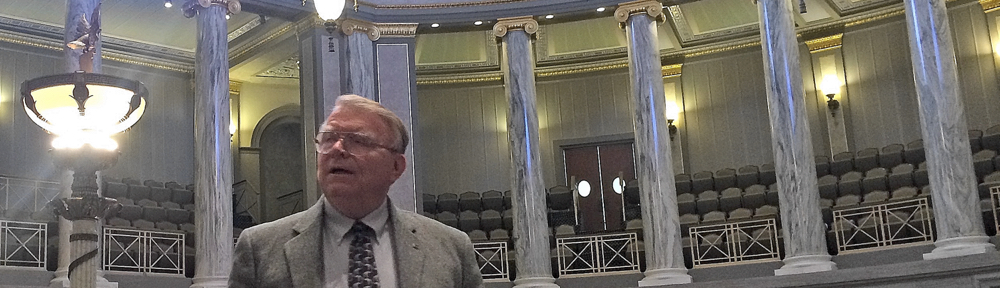
It was 5:55 a.m.  Fifty years ago today, I turned on the microphone, pushed a button on the cart machine to play the theme, and said to people throughout Missouri, “This is news on the Missourinet….” for the first time.

We’re going to tell you the story of how it all started and some of the things that it turned into. This will be a long entry.  But half a century is a long time and no, it does not seem like only yesterday.

This entry runs to about 15-16 printed pages, so you will be forgiven if you decide it’s not worth finishing if you start.  But the company isn’t doing anything to celebrate this anniversary, so I’ve decided to put some things on the record. Voluminous things and I apologize for being voluminous. But The Missourinet and the people who made it deserve a historical accounting.

All we did was revolutionize the way Missourians learned about their state government, their candidates, their office-holders as well as the daily flow of events throughout the state.  We lived by the second hand and by the events, some scheduled and some random, and a few were tragedies that put us to tests and challenged our capabilities to respond. But respond we did.

The Missourinet was a dream of my former assistant news director at KLIK in Jefferson City, a station that has since become just one more format in a building full of formats in Columbia, one of the hundreds of stations owned by one of the larger radio station groups in the country.  Clyde Lear was the first Plan B graduate of the University of Missouri School of Journalism, a program that let people do a special project instead of writing a thesis.  I probably would have a master’s degree today if that option had been available in my time at the Journalism School.  But as time went by, I found that doing radio was more interesting than writing a big paper about some arcane issue in the business.  Clyde’s project was how to do a statewide radio news network.

A report Clyde did for KOMU-TV while he was a student shows some of the roots of the company that he, Derry, and others founded.  The creation of a broadcast center on the first floor of the Capitol was a significant development, as you will see.

Bing Videos

Clyde, who earned enough money in the summers selling religious books to finance much of his college education, recalled on his own blog many years later:

My first “run” at starting a radio network failed. It happened in the fall of 1968 between my final book summer and starting at KLIK. My idea was a simple one. I’d charge each station an average of $10.00 per week for feeding them personalized stories from Missouri’s capital city. Bigger stations would pay more; smaller markets less. All I needed was 20 of the some 70 markets to earn $200 per week; pretty good pay in those days. So, I started selling; driving east on I-70 toward St. Louis. KWRE, Warrenton signed on; then St. Louis’ powerhouse rocker, KXOK; then Farmington; then another along I-55 and then Cape Girardeau. At Sikeston in the southeast corner of the state I hit a snag. The owner was a board member of the Missouri Broadcaster’s Association and he reported that he thought the MBA was going to start its own news network. He suggested I chat with the President of the MBA over in Joplin — on the other side of southern Missouri. I remember clearly driving all night for an early morning meeting with this guy who confirmed that most certainly the MBA was getting into the radio network business and there wasn’t a chance I’d succeed. So, I drove home. Five hours. A failure. And dejected. The next day I applied for and got my $85/week job at KLIK. The rest of the story is that the MBA never moved on its scheme. But I’d had a taste; learned tons; and four years later was much wiser.

Just down the hall from us in that century-plus old building at 410 East Capitol Avenue in Jefferson City, was the office of farm Director Derry Brownfield, who had dreams of doing some kind of agricultural marketing program throughout the state.

When I met Derry, I thought he had the perfect name for a farm broadcaster.

Clyde was a terrific reporter and as a Jefferson City native, he had a background in the city I did not have. We made a great team. Both of us were committed journalists, aggressive, creative—and newlyweds.  Clyde left us after a couple of years (to sell driveway sealer for a local lumber dealer—-which might help you understand how paltry his salary was) but he stayed in touch with Derry and with me.

He and Derry got some financial backing to put a farm network on the air on January 2, 1973. They called it Missouri Network, Inc.  Derry did the broadcasting. Clyde was the engineer, manager, salesman and whatever else needed be done. They started with just six affilaites, but  before too long they had a lot of stations and when they started picking up affiliates outside Missouri, they had to change the name.

And that’s where the Brownfield Network began. Today it is known as Brownfield Ag News and bills itself as “the largest, and most listened-to ag radio network in the country with more than 600 affiliate radio stations across Illinois, Indiana, Iowa, Kansas, Michigan, Minnesota, Missouri, Nebraska, Ohio, South Dakota, Wisconsin, and the Delta region.”

“The Delta Region” originally was The Delta Net, a specialty network for Missouri’s bootheel and farming areas around it where the crops are a little different—cotton for example—that went on the air a year after Derry’s first broadcast.

By early 1974, Clyde and Derry’s project was strong enough for them to move toward creation of a news network.  The Missourinet, they decided to call it.  Clyde asked me to be his news director.  I put him off because the CBS Regional Vice President and KMOX General Manager Robert Hyland had told me that the station in St. Louis wanted to “bring you in” when there was a news department vacancy. I believed it and so did then-news director Bob Hardy but as the months went by and Hardy moved more to the programming side, and a new news director took over, it became apparent I had been misled.

So I agreed to work for Clyde.

(An early ad from Missouri Life, which the company owned until it cost too much to keep. It flourishes today under another generation or two of owners.)

The only thing close to a statewide radio network that existed before that was something that was haybaled together once every four years for a gubernatorial inauguration.  The Missouri Broadcasters Association arranged all the necessary phone lines for stations throughout Missouri to pick up the KLIK broadcasts of the parade and the ceremonies at the Capitol.

But a full-time network focusing on state government and politics that also picked up stories from affiliates throughout Missouri—a state version of the national networks—was revolutionary in Missouri broadcasting.

Clyde and Derry had built so much confidence in the industry that The Missourinet started with something like 36 affiliates.

I was the seventh employee of the company, the sixth on the staff  at the time because one of the early ones had stayed only briefly and was gone when I arrived. I thought it would be great, at least for a while, to work from 8-5 getting things set up and hiring two other reporters.

Not so fast, Bob—Derry had gone to Rome to cover the World Food Conference.  So my first day started before 6 a.m. and I had to drive to Brownfield’s farm off of Route 179 just past Marion where a studio had been set up in a house originally intended to be a residence.  My first broadcasts were farm news.  Thankfully our other farm broadcaster, Don Osborne, did the markets.  I knew how to do news but I didn’t know a pork belly from a tenderloin, so that worked out well.

When Derry got back, I went to work on the state network side.  The first thing we had to do was think of a new name for a history show I had done on KLIK called “Missouri in Retrospect.”  The station still had the original scripts but I had copies retyped by the station secretary and it was always our plan to do a network version of the show. We kicked around several ideas before slightly paraphrasing the title of Bernard DeVoto’s Pulitzer Prize-winning book, Across The Wide Missouri. I suggested substituting “our” for “the,” and the rest is, well, history.

It took a lawsuit to allow us to run the program. The manager of KLIK maintained I had done the program as part of my employment there and thus the station owned all the rights to it—although the program began as a voluntary effort on my part to commemorate Missouri’s sesquicentennial in 197I and I had kept doing it voluntarily until I left with the station never telling me I had to keep doing it.  So we had a little lawsuit that let us run the show on the network while the station had someone else reading my scripts.  We finally got it settled without a hearing.

One day, when Clyde was working at KLIK, he looked across the table that separated our desks and said, “You should put this in a book.”  Eventually, there were three.

One day we went to St. Louis to meet a fellow with a synthesizer to create the opening and closing themes for our newscasts.  We settled on a jazzed-up version of the first five notes of The Missouri Waltz, the state song. In 1976 I heard someone comment that it’s a lousy state song, languid and reeking of the old South and having nothing to do with Missouri except being a song about a song that someone learned while sitting on their mammy’s knee, “way down in Missouri where I heard this melodeeeeeee.”  I immediately agreed but not until relatively recently have I heard something immeasurably better—The Missouri Anthem sung by Neal E. Boyd, the young man who won the America’s Got Talent contest.  Neal died in 2018 at the age of 42. There’s a video of him made when he was running for a legislative seat—he ran twice and lost both times—in which he sings the anthem: Neal E. Boyd and Brandon K. Guttenfelder – MISSOURI ANTHEM

After that we had to find a studio, furnish it, hire the other two reporters, and let the world know about us.

The original Carnegie library in Jefferson City was about to move into its new building and had furniture to sell.  The U-shaped circulation desk struck me as the ideal studio piece. We also bought a big two-sided library shelf.  A few days before we went on the air the three members of the news staff exhausted themselves trying to get that big U-shaped desk up a flight of stairs, around a corner to the left and then through a door on the right.  It took all day and we finally took the thing apart enough to get it in.

We didn’t have regular soundproofing materials for the studio so we put carpet on the floor and on all the walls; the orange and red shag design looked okay in the 70s but by the time we left 216 East McCarty Street to move into an attic of an old house across the street, that carpet looked sooooooo 70s.

(The original cast in what is now a Missouri Bar office that once was our newsroom—-with a piece of the “soundproofing.”)

Down on the first floor of what had once been a funeral home was affiliate KWOS. The station break room had a drain in the floor.  It was next to the hand-operated elevator that brought caskets from the display room, down the hall from the Missourinet office, to be used by those who had been prepared in the later KWOS break room.

It wasn’t until a few years ago that we got a group picture taken of the three of us who were the Missourinet that first day.

The first reporter we hired for the Missourinet was Jeff Smith, who had worked with us at KLIK for a while before going to Illinois to find more profitable employment.  And we also hired a young reporter from KRKE in Albuquerque named Charles Morris.  Jeff much later retired as a VP with Northwest Airlines and Chuck went on to a long career in religious broadcasting, recently retiring as the voice of Haven Ministries.  Our get-together a few years ago was the first time we’d been back together in the better part of four decades. That’s Charles on the left, Jeff, me, and Clyde on the right. Frankly, I think we look pretty good, fifty years along.

I don’t think it ever occurred to any of us that this thing might not make it.  I like to say we materialized Clyde’s dream.

We went on the air on January 2, 1975. We had spent the week before that doing interviews and gathering actualities for our first newscasts.  We spent a day “dead-rolling” our programs—newscasts at :55 with repeats at five minutes past the hour (the 7 a.m. newscast was stretched an additional five minutes in those days when stations did longer newscasts, in case anybody wanted to stick with us for the extra time) and again on the half-hour—-except during the noon our when the third feed went out at 12:29 because the farm network had a show that was fed from the Centertown office at 12:35.  Our second newscast on the first day featured Governor Bond welcoming us to the Missouri airwaves and saying a nice thing or two about us.

We were everywhere.  We sent people with the Missouri delegations to the national conventions. When a tornado hit Neosho not long after we went on the air, we sent Chuck to Neosho to give us live reports.  We were in the House and the Senate every day and often would be at the Capitol for night committee hearings when the common folks got to tell their stories about potential legislation and we were recording, recording, recording so listeners could hear the voices of those shaping their public policy.

At the time, the Capitol Press Corps was made up of guys who’d been around for years with two wire services, two newspapers from St. Louis and two more from Kansas City with other newspaper reporters from Cape Girardeau, Springfield, Joplin and St. Joseph. There was some
“who are these guys” questions and there was some skepticism that we would last.  We were a completely new animal and sometimes—because we hadn’t been around very long—we asked some impertinent questions.

People throughout the state heard their legislators arguing about bills. They heard the governor’s voice talking about issues.  They heard the state epidemiologist talking about the Swine Flu, the Revenue Director updating the number of income tax returns being filed (with the assistance of United Press International Bureau Chief Steve Forsythe, we embarrassed one Director of Revenue by having the department mail somebody’s tax return to a stranger).  And our affiliates provided stories from all corners of the state.

Some members of the House didn’t like it when they heard that their voices in debate were being broadcast on the radio but we quickly overcame that.  Once, the chairman of a Senate Committee—William Baxter Waters—demanded that I remove a microphone from a witness table at a hearing. He and I worked that out right afterward and we never had another problem with recording hearings.

There were few hearing rooms at the Capitol when we set up operations, which meant a lot of committees met at night because there was no place to hold hearings in the daytime. The House sometimes had hearings in the Capitol restaurant in the basement because it could hold a pretty good number of people.  It worked out well—until the refrigerators and freezers motors kicked in and unless you were face to face with the committee, you couldn’t hear anything.

Sometimes we had hearings in the legislative library, a wide-open room with the witness table facing the windows and the audience sitting behind them It’s a beautiful place (more beautiful now that it’s been restored to its original colors) but the acoustics were horrible.  Those of us sitting behind the witness struggled to hear what was being said. I had headphones plugged into my SONY 110B cassette recorder, so I was better off.

House Appropriations Committee meetings were in the House Lounge with the large committee seated at a c-shaped section made up of several tables to the left of the entrance. The witness sat at a table across from the entrance and others, including me, sat behind them, to the right. When things got boring, which was most of the time, I would find myself looking at part of the Benton mural and a few minutes later I would realize I was looking at another segment. Several years later when I wrote a book about the mural, I discovered Benton designed the painting to draw the viewer’s eyes through it.

There also were hearings in the Highway Department hearing room a block away, in the rotunda, and at least once, in the House chamber.

One hearing in the Senate Lounge—on the Equal Rights Amendment—was packed and undoubtedly was far beyond fire safety standards.  The Senate committee was around a couple of tables on a platform on the left side from the entrance and I spent the hearing account halfway under the committee table, right in front of the table that witnesses who struggled through the crowd would stand at to testify.

We were doing primary election returns in 1976 when Congressmen Jim Symington and Jerry Litton and former Governor Warren Hearnes were competing for the Democratic nomination to succeed the retiring Stuart Symington, Jim’s dad.  It appeared Litton, a cattle farmer from Chillicothe, had pulled off an upset when we got a telephone call. There had been a plane crash at the Chillicothe airport. We immediately suspected the worst because we knew Litton was staying at home until the numbers came in and then planned to fly to Kansas City for a victory party.  We worked the phones and wound up talking to the driver of the ambulance that had gone to the scene. He confirmed there were no survivors.  Litton and his family all died along the pilot and the pilot’s son.

A few days later we arranged to broadcast the Litton funeral.

Twenty-four years later, Nancy and I were at her sister’s house in Albuquerque, decompressing after a week in the back country of Colorado mapping ancient pueblos and rock art sites, when the KOB-TV newscaster announced that the plane carrying Missouri Senate candidate Mel Carnahan was missing.  We switched over to CNN and it was reporting the plane had crashed. I called the newsroom and everybody was there—including Clyde.  I told Brent Martin, my managing editor, to find Lt. Governor Roger Wilson and stick with him because he was going to be sworn in as governor that night if worst came to worst.  Brent gave Clyde a recorder and sent him to the Capitol.  Roger didn’t want to say much but Clyde, the old fire horse of a journalist got a brief interview from him anyway.

Nancy and I got a little sleep and then drove 996 miles from Albuquerque to Jefferson City the next day. Brent told me later that when he went on the air at 5:55 that morning for our first newscast, he had to stop and remind himself that thousands of Missourians would be hearing for the first time that their governor was dead.

Our Chief Engineer, Charlie Peters, spent the next day getting phone lines installed the capitol for the big funeral that was expected.  By then the word was out that President Clinton and Vice President Gore would be attending the funeral, along with a large number of those I referred to as “the stars of C-SPAN.”  Workers at the Capitol had worked hard to get aluminum stands set up for photographers and TV cameras and facilities for radio and other media.  One of the Carnahan aides complained that the  Secret Service had gotten involved and, “It was secret and not very much service.” We had a little set-to with them when they said we couldn’t broadcast from our planned location. I think the Carnahan folks intervened because the media stayed put.

The funeral was on a beautiful day three weeks before the election and it was outdoors on the south lawn. Clinton, Gore, and members of the U. S. Senate and the House of Representatives walked right past our broadcast position. The AP took a picture of the procession and I’m standing right at the fence, broadcasting what I was seeing.

Two events. Two plane crashes.  I believe they changed the course of Missouri politics.  People have asked me what were the biggest stories the Missourinet covered.  The flood of 1993 was a huge and long=running story.  But the most important stories of the first half-centuries of The Missourinet were the most important ones we covered.

It was a difficult event to broadcast because I had allowed myself to get closer to the Carnahans than I did to anyone else I ever covered. Jean kept me up to date on the book she was writing about First Ladies and I gave a couple of speeches at special events there.  The governor’s coffin was in the mansion’s main hallway and I, as the radio pool reporter, was in the library to the left of the hallway as you enter the front door.  Jean came down to welcome the governor’s office staff and when she came in, she saw me in the library and came over and hugged me and said, “We’re so glad we got to know your son.”

Our son, Rob, was a flight instructor at the time (now a Southwest Airlines Captain) and one evening during the campaign, when Governor Carnahan showed up to fly a light plane to Hermann—he hadn’t had his pilot’s license very long, I don’t think—where was going to meet Jean and their Highway Patrol security officer and go on to a fundraiser in St. Louis. Somebody had to fly the plane back to Columbia.  But when they got to Hermann on that hot summer night, the plane’s engine wouldn’t refire.  The Governor invited Rob to go into town with them and have dinner together. And Jean remembered that when she saw me in the library on a day that she had the heaviest of hearts.

There have been other funerals at the capitol, only a few, and none had a greater influence on What Missouri—and maybe the nation—would become.

Carnahan had gone to St. Louis three weeks before the election for a fund-raiser and then was headed to southeast Missouri for another one when the plane went down.  Many years later, I met the man who hosted the fundraiser in St. Louis and he told me that Carnahan announced during the meeting that he had, for the first time, pulled ahead of John Ashcroft in the race for Senate.

The crash was a huge problem for Ashcroft. He did the honorable thing by pulling all of campaign commercials and not campaigning for the last three weeks.  It was too late to put somebody else’s name on the ballot and on election night, I was anchoring our coverage when, along about midnight the last big slug of votes came in just before we went on with that hour’s report. I remember thinking, “My God, he’s done it.”

We covered a lot of important stories in the first 50 years of The Missourinet. Those were probably the most consequential stories.

Telephone lines were the lifelines of our operation when we started. But as the Brownfield Network expanded into other states, we had to look at an alternate distribution system because the phone bills were getting financially difficult.  Satellite technology was just catching on and Clyde and the other company officials decided we had to distribute our services by the bird.  Our first satellite dish was set up behind the office at 216. The Missourinet and Brownfield Net became the first broadcast networks, including the national ones, to be distributed entirely by satellite.

A bigger uplink dish was installed at the farm office.  In 1989, as we consolidated the farm and news divisions in the one building at 505 Hobbs Road, the company hired a big-lift helicopter company to airlift the big dish from the farm to the new office site.  I think there still is a video on Youtube that shows what happened—-that shortly after the helicopter lifted the dish off and headed toward town, one of he retaining bolts snapped and the added eight was more than the others could hold so the whole thing fell a few hundred feet into a farm field with a disastrous “crunch” and our dish became material for recycling.  Fortunately, the incident happened early so the dish didn’t fall on top of road, a home, or even a shopping mall.  We used a portable uplink until we got all of the insurance stuff settled and built a whole new one at 505.

One day we got job application filled out in pencil from a kid working our affiliate in Lexington. When we were far enough along to hire a sports director, we brought him in.  His name was (and still is) John Rooney.  Each morning, after I had finished the major newscast and John had finished his 7:20 sports report, he and I would make a fast trip to the Yum-Yum Tree up on High Street to pick up a version of a sausage, egg, and cheese biscuit and a diet cola drink called TAB.  We’d be back in plenty of time to do the 7:55 newscast.

John later teamed with another up and coming young sports broadcaster for some of our early Missouri Tiger basketball broadcasts.  Both John and Bob Costas went on to long careers in major sports broadcasting. John, of course, has been in the St. Louis Cardinals broadcasting booth for a long time.

After a few years at 216, we moved across the street into a house at 217 E. McCarty. The news department was in the attic. Our studios were one floor down. It was dark up there so Clyde installed a skylight, which was fine until summer arrived and that old attic, as attics do, got hot, really hot. There were times when I’d send some members of the news staff to the kitchen to cool off. We finally got up on a ladder and scotch-taped some wire-service fanfold paper to the ceiling to deflect some of the sun’s rays and heat.

We moved to 505 Hobbs Road, the present headquarters of the two networks, in 1988-89.  That place became the nerve center of a major broadcasting corporation that was moving to become one of the nation’s dominant entities in collegiate sports radio and is today THE largest.

As time went by and as technology changed, my House reporter—Travis Ford—convinced the Speaker to let us run live floor debate on our web page. I did the same with Senate leader Jim Mathewson.  A few years later, we convinced the Missouri Supreme Court, which only recently had agreed to let people record and film its hearings, let us stream arguments before it. I’m not sure if we were on the internet for the trial of impeached Secretary of State Judith Moriarty, but I do know we recorded the whole thing. The recordings are in the oral history archives of the State Historical Society in Columbia.

When the state re-instituted the death penalty with legal drug injections as the means, we knew we had to cover executions because we believed the state should not inflict its most severe penalty without statewide news media present, and by then UPI had faded away, leaving us and the Associated Press as the only statewide media organizations. The Missourinet’s Dan McPherson covered the first one—which was done in the gas chamber at the old penitentiary (they couldn’t use gas because the seal around the door to the chamber had rotted away and witnesses as well as the honored guest would all be executed so a lethal cocktail of three drigs ws used for George “Tiny” Mercer, who was about as bad as they come.  Dan was one of the pool reporters that covered the event and reported to the large number of other media folks what had happened—and there was a large crowd for the first execution in more than a decade. Dan is one of three of our former reporters who had to learn  new way of writing and thinking when they went to law school. He’s been an assistant attorney general for a long time.

In 2009, I covered the execution of Dennis Skillicorn, one of 22 executions I covered, first in Potosi and then in the newer prison at Bonne Terre.  Executions were done at midnight then (now they’re scheduled for 6 p.m.) and reporters then, and now, cannot use cell phones during the event itself—or other recording or photographic devices.  I kept notes of the times various events occurred that night and afterwards, in my motel room, I sent out a series of tweets doing a chronological recounting of events.  I think I might have been the first reporter in the world to tweet an execution.

And it goes on through the pronouncement of death, interviews (if there were any) of survivors of his victims and eventually with me leaving the prison.

It got a lot of reaction. Some thought it was gruesome. Some thought it was a revelation. Some were critical, including some anti-death penalty people in Europe—as I recall.  I only did this once, not because of any bad reaction but because when executions were finished and I was back in my motel room, I had to write my stories and feed them back to Jefferson City for the morning newscasts. By then it would be about 4 a.m., and my only thought was getting to bed.

After the 1986 elections, we compared the two wire services reporting of the numbers and found a lot of inconsistencies. I met with Secretary of State Roy Blunt to see how we could develop a centralized, reliable election reporting system, and the Missouri Elections Consortium was born, giving the media that paid the consortium fees that were used to pay Blunt’s staff who had to run the feeds.  Secretary of State Bekki Cook took the consortium system and made it available to the public at large.

We believed in pushing the envelope.  One year, we had an intern whose expertise on the internet was so much a benefit that we almost started doing video feeds of the legislature. We were wired for let people watch the state senate’s last day but backed away at the request of the President Pro Tem who worried the senators would misbehave on the last day if they knew they were being televised. By the time the next session began we had lost our intern and some internal company management changes ended our experimentations.

One election, we went on the internet live at 7 p. m. and stayed live until we wrapped up our coverage after midnight.  During the feed we paused to do reports on the network.  We had a small audience of people watching us do radio in the August Primary that included reports from reporters or stringers at various campaign headquarters. Our audience tripled for November.  The next time, we tried to use Google Groups so we could have videos. Our success was spotty but we were looking forward to taking the next step but it never happened.

Clyde let me have a summer off one year to work with the Missouri Cable Television Association to establish a Missourinet cable channel that would be kind of a hybrid between ESPN, CNN, and PBS.  We put together a terrific programming package that we could deliver to the cable operators throughout the state for a price per customer per month that was about as much as a large bag of M&Ms with peanuts.  When I pitched it to the local operators, they looked at me as if I was a telephone post.

Today the House, Senate, and the Supreme Court do their own streaming.  House floor sessions are televised and so are some hearings. Inaugurations are televised, streamed, and broadcast.

One reason we were able do the things we did, or try the things we tried, was that the owner of the company was a journalist at heart.  As we have seen radio change in these last fifty years, and too often not for the good of the communities in which they operate, we realize how important Clyde was to the things we were free to do.  I think Missourians are better off because we didn’t just do newscasts but because we were motivated to push that envelope.

Because Clyde was a journalist at heart, he let me do a lot of things—especially getting involved with the Radio-Television News Directors Association, the equivalent in our business to the American Bar Association or the American Medical Association. The company paid for my travels to meetings in Washington and convention cities. I was the first person elected to lead the organization twice and my active participation in it led me to lecture programs on college campuses and even conducting seminars on creating free newsrooms in Romania and Poland after the fall of the Iron Curtain. Clyde never voiced any concerns about the costs of those activities. And I always had great news staffs that kept up our levels of reporting while I was gone.

I walked out the door for the last time as news director on December 1, 2014. As they say in sports, “I left it all on the field.”

The Missourinet is still where I left it but not the same as I left it.  It has changed as the radio industry has changed.  But it still fills its role as the statewide news organization that keeps an eye on our government and our politics.

Clyde retired before I did and I see fewer faces that I recognize whenever I visit to record some new episodes of Across Our Wide Missouri (I have a new batch on a shelf next to me) or drop in for some other reason.

A lot of people worked for The Missourinet in those years and good people work for it now.  It’s different but the industry is different.

Fifty years ago today we went on the air.  We started something good.  We had faith in each other that we could do it.

We started with Royal manual typewriters (our first newsletters were called “Notes from a Battered Royal—which all these years later has morphed into “Notes from a Quiet Street.”), cart machines in the studio, one reel-to-reel tape recorder that we used for telephone interviews (everything else was one-to-one in person interviews) and one UPI wire machine.

And we had no idea what the network or the company would be fifty years later.

It’s only a tiny part of a billion-dollar corporation with headquarters in Plano, Texas now, but it keeps churning out meaningful products and profits.  Learfield Communications helped inaugurate the big-money collegiate sports marketing deal to the country when we bid six million dollars to broadcast Missouri Tiger basketball and football games for five years.  Today, Learfield says, “From tailgates to t-shirts, courtside seats to NIL activations, on game day and every day, Learfield is your connection to college sports and live events. We engage 150M+ loyal and passionate fans across the US with unrivaled leadership across sponsorship, ticketing, licensing, and more. Our playbook is powered by media, technology, and data, unlocking value for university partners and venues while connecting brands to fans.”

The 50th anniversary of the Missourinet will pass quietly today. The corporation decided there would be no celebration. But that’s okay because The Missourinet will do what it did on January 2, 1975—cover the news for the people of Missouri, with good people who will do it responsibly and do it well.

Four of the founders of various parts of what became Learfield Communications (a combination of Lear and Brownfield)  are in the Missouri Broadcasters Association Hall of Fame—Clyde, Derry, Rooney, and me. It’s quite an honor but more important, it’s a validation that Clyde had a dream and we make it come true far beyond what any of us could conceive.

So there’s some of the story of The Missourinet, just for a historical record.  It began fifty years ago today, on this date, January 2, 1975.

It seems like it was only—

Fifty years ago.

The Ones Most Interested  

—and the places most damaged.

We’ve had three weeks or so to digest the results of the November 5 election.  We are going to offer some insights in the next few entries.

One of the amendments we voted this month proposed something that we’ve seen before—a statewide vote to force a city or an area to allow something the people there did not want.

That was Amendment 5, which would have forced the people living and working at the Lake of the Ozarks to accept a commercial casino in their midst.  Two areas of Missouri were involved: the area where a casino is proposed and an area fearful that it would be the next place forced to accept one.

We’re talking about the Lake of the Ozarks and Branson.

It might be instructive to see their thoughts about the sports wagering amendment and the casino-placement amendment. We looked at the votes in five lake counties and in five Branson-area counties.

Both groups wanted nothing to do with either proposal, sports wagering or a casino.

The five lake counties were 57% against sports wagering, Amendment 2, that barely passed statewide with only 50.074% of the votes (as of last night), a margin so small a recount can be justified if the losers want to pay for it.  The five Branson-area counties opposed it to the tune of 60%.

Amendment 5 was the issue that was most stark in its possibilities for these two areas and the message sent by these ten counties was more than no. It pretty much amounted to a “Hell, No.” Camden County rejected the proposal 10,621-14,375. Taney County swamped it 9,875-16,071.  Sixty percent of the voters in the five lake counties rejected the casino. In the Branson area, the rejection was even greater, 61.4%.

End result: People in those ten counties don’t like sports wagering but their people can do it if they want, but they’re sure don’t want them ever to do it in a local casino.

Both of these counties have promoted their areas as family-friendly tourism destinations.  Branson was worried that a Lake of the Ozarks casino would be the precedent-setter for a casino campaign in Branson. Amendment 5 would have forced one area to accept something the voters clearly did not want, and exposed the other area to a similarly unwelcome intrusion later.

Branson had a taste of this issue twenty years ago when voters defeated a proposal to put a casino next to the White River at Rockaway Beach.

How about counties that have casinos?  Amendment 3 failed in three of them—Cape Girardeau (46.4%), Lewis (Mark Twain Casino in LaGrange—46/7%), and Cooper (Boonville 48.5%).

This time, the casino industry spent ten-million dollars on a petition effort and an election campaign for Amendment 5.  Their efforts netted them less than 48% of the statewide vote.

In St. Charles County, the home of Missouri’s most lucrative casino, Amendment 3 got only 53.4%.

The spending on the Lake of the Ozarks proposal was pocket change compared to the huge amount invested in the sports wagering amendment. It took $41 million from the two biggest internet bookies to overcome the $14 million dollar opposition campaign financed by another bookie. The victory margin was only (as of last night) 4,360 votes out of almost three million votes cast.  The certified final results will be posted after the Missouri Board of Canvassers meets on December 10.  Presidential electors meet a week later. Congress is to certify the federal results on January 6.

The casinos will get their money back pretty fast.  The host cities of the casinos will lose millions because of the support their voters game to Amendment Two.

How much will they lose?  There are two factors.  The state tax rate on gambling (table games and slot machines is 21%.  Host cities get ten percent of that amount. In the last fiscal year, ten percent of the state gaming taxes collected provided $39,711,780 to the host cities.

But sports wagering will provide ZERO money from the state gaming tax, which will be only ten percent to begin with.  The State Auditor estimates casino revenues in the first five years will be $1,044,684,612.  The states ten percent will amount to $104,467,878, all of it earmarked for higher and lower education. None of it goes to the home cities. None.

If Amendment 2 followed current law, the casinos’ own home dock cities would split an additional $10,446,788.

But it’s worse than that.  If the tax rate on sports wagering were the same as it is on other forms of gambling—and the industry has never given a consistent answer why is should not be—the home dock cities would have split an additional $21,938,377 in those first five years.

The casino industry will recover more than one-half of the money it spent on the campaign by giving their own host cities the shaft. Permanently.

I can show you the math; the casinos wouldn’t.

The manifest shortcomings in taxes can only be remedied by adoption of another amendment. A campaign that focuses on those shortcomings and either corrects or overturns Amendment 2 might be considered, given the paper-thin margin of victory for sports wagering. It would be interesting to know the reactions of city councils in the thirteen host cities if they are ever shown these numbers. I doubt the industry, its leaders, or its supporting organizations have ever given these figures to the cities

The casino industry has never been put on the defensive at the Capitol or at the ballot box.

And maybe it should be, as we will discuss in our next commentary because what could be coming will be only worse.

What Next? 

The casino industry spent a record $41 million dollars to convince few more Missourians to vote in favor of sports wagering than voted against it—very few—out of about three million votes cast.

It will be a mistake to think the industry is satisfied with the sweetheart arrangement voters approved. The casino industry is changing rapidly, and the legislature and the voters need to be preparing for the next change in law that will benefit casinos and disadvantage the state, our schools, and their own host cities.

We don’t profess to be an expert or some kind of Casino Nostradamus, but we have been studying this industry and its proposals for several years now. It is not hard to find industry and scholarly articles pointing to a much different industry materializing in the next ten years or less. The casino industry is being altered by demographic changes. But rapidly changing technology will let the industry respond to those demographic changes.

Amendment 2 was just the first step. The policy set by Amendment 2 is likely to be the template for state policy as casinos move increasingly to remote betting on ALL gambling offerings.

We know from experience that technology often moves faster than the development of reasonable and fair regulation of it, making this a time for correction of shortcomings of the past coupled with anticipation of problems in the future. The state will be well-served by a adopting a policy of correction and anticipation, although there is considerable doubt that such a policy will be enacted a Missouri Legislature that is heavily influenced by industry pressure and largesse. Whether voters who can be wooed by absurd amounts of money spent on advertising that is low on the honesty scale would approve a policy unfriendly to the casinos is problematic.

A couple of years ago, Joey Richardson wrote for Gamblingsites.org, “(Casinos) are going to need to change what they offer and how they offer it if they want to continue to attract new customers.”

Millennials who have grown up on video games and who learned during the pandemic how to live their lives without leaving their homes already are having a major impact on the future of businesses of all kinds. Past discussions of internet sales taxes as a meager protection for brick and mortar businesses were one of the beginnings of this trend that gained momentum in the pandemic era when working from home became viable.

Hoosier Park Racing & Casino in Indiana became one of the first casinos to have a Pac-Man video slot machine, in September of 2017. Blackjack revenue for casinos is about half what it was in 1985 when it was responsible for 85% of table game revenues. Richardson noted in his article that casinos already had brought in new games to fill the gap—Caribbean stud, Three Card Poker, and Casino Holdem among them. All can be played remotely—if laws are changed to allow it.

Although Richardson doubts brick and mortar casinos will die out, Mehul Boricha, at Techrival.com has suggested virtual reality casinos could be on the way. He wrote, “Rules and regulations will always continue to influence future casinos. Various regulatory bodies come up with new and stricter policies that online casinos and games have to adopt without losing their grip on their innovation and creativity.” The new world of casino gambling that is being born in front of us will be a challenge not only to tomorrow’s legislature but to the gaming and lottery commissions that will have to regulate it. The gambling industry prefers not to make or be forced to make an investment that will allow regulatory bodies to prepare for the changes they must make to balance public responsibility with private profit.

Marketing Manager Emily Rodgers with driveresearch.com reported on August 2, 2023 that the growing preference for online or mobile app betting among three-quarters of sports bettors indicates a significant shift in the gambling industry towards digital platforms, offering convenience, accessibility, and potentially contributing to the overall increase in sports betting activity worldwide. She says convenience (78%) and easy deposits (75%) are the top reasons people prefer online/mobile sports betting. She argues that these top factors highlight the importance of user-friendly and seamless platforms in the gambling industry, factors that not only attract more bettors but also contribute to increased customer retention and engagement. She says digital channels are in the future for casino gambling, beginning with sports wagering..

Online sports betting revenue is expected to grow at a compounded annual rate (CAGR) of 10% during the next 5 years.

The introduction of AI (artificial intelligence) in sports betting will undoubtedly have a profound impact on the industry. One example is the way systems record information in digitized ledgers  known as blockchain, which is being adopted globally. Blockchain applications will help automate real-time data, expedite payments and wagers, and provide in-the-moment security and monitoring – including cryptocurrency transactions that are not allowed in Missouri, yet.

The sports betting marketplace grew ten-fold from 2019 to 2021 while netting nearly  $7B in revenue from $83B in total bets placed on sports in 2022.

Another report by marketdecipher.com revealed similar findings. In fact, its estimated $85B in bets placed in 2023 is forecast to balloon to $288B total by the end of 2032.

Virtual reality sports betting took a step forward with the launch of the VR22 sports betting  platform last October. The service allows users to take in a 360-degree live gaming experience as if they were there in person. Users can interact with the game or match in real time including the ability to place wagers down to a specific play – and even purchase merchandise or NFTs.

Missouri already has remote betting although it has been on a small scale.  In the past several years, a few of our casinos have had what they call “hybrid” wagering.  If a table is too crowded to allow additional players, gamblers are referred to a computer terminal that lets them place bets at the table as if they were physically there. It has been done on a small scale and has generated generally small profits. But it’s an experiment and it works.  Whether the terminal is fifty feet from the table or 50 miles and at someone else’s table, it is still sports wagering. And it is part of gambling’s future.

Another reason present casinos need to reach the public where it is, instead of waiting for the public to come back, is the threat of widespread competition. It is a very real threat and the first part of it could be in business in a few years.  We’ll talk about that in our next edition.

The Majority Rules, Chapter Two

A rare race for Speaker of the Missouri House has shaped up after 51.6% of the voters of Missouri approved Amendment 3, the abortion amendment.

For several years, Missouri House Republicans have picked a Speaker-designate during the September veto session who would succeed the outgoing Speaker in January. They have a two-thirds majority, so the decision in September is tantamount to the actual election.

But the November election has injected some uncertainty into the proceedings.

Republicans chose Dr. Jon Patterson of Lee’s Summit as the presumptive successor to Dean Plocher, a St. Louis County Representative who is term limited.

But the election, particularly the approval of Amendment 3, has produced a challenger—Justin Sparks of Wildwood.

Patterson has said the legislature should “respect the law.”  But Sparks says that Patterson’s comment “is not what the leader of the Republican Caucus should be saying.”

Sparks is a member of the ultra-conservative House Freedom Caucus.  His background is in law enforcement as a 15-year veteran of the St. Louis County Police Department and a Deputy U.S. Marshall. He has told St. Louis television station KMOV, “It is clear that many people that voted for Amendment 3 did so under information that was false.” And he asked, “Should three cities determine what everybody lives under for the entire state? I say no.”

Sparks also criticizes Patterson on other issues, especially as a St. Louis Post-Dispatch editorial put it, “Patterson’s vote against legislation to prohibit transgender treatments for minors. Patterson, a surgeon, has said he believes there should be exceptions to that prohibition based on case-by-case details — a medically reasonable standard that most in Patterson’s party today reject. As House majority leader, Patterson nonetheless allowed debate on the legislation, which passed.”

The November election tally from the Secretary of State’s office shows Amendment 3 passed 1,527,096-1,432,084., a 95,000 vote margin.  But it passed in only seven of Missouri’s 116 voting areas (114 counties plus the cities of St. Louis and Kansas City).  Voters in the two cities, Jackson and St. Louis Counties were joined by Boone, Clay, and Buchanan Counties with 72.6% of the votes in those areas.  In the rest of the state, Amendment 3 was outvoted 728,042-1,050,088. Boone County was the only county outside the metro areas to vote “yes.”

Patterson and Sparks, both Republicans, won in areas that went heavily in favor of Amendment 3. St. Louis County, where Sparks lives, went for it 335,082-162,311 with St. Louis City going 95,039-19,673. Jackson County was in favor 112,822-78,712 with Kansas City adding a tally of 99,120-23,985.

Two Republicans will face off for one of the most important jobs in state government in January, both from metro areas that provided the margin in the statewide victory for Amendment 3.  One says the will of the whole people of Missouri as well as the will of voters in his home area, should be honored. The other says both should be ignored because that’s not what Republicans are about, in effect saying that they should be a party that does not accept the will of all of the public.

One says all of the voters should make the decision. The other says only one party’s voters count.

Let’s see what kind of Republican Party we have in the Missouri House, come January.

The Majority Rules

Whatever else we discard during our electoral processes, we maintain the concept of majority rule, whether through the electoral college or, in all other elections, the popular vote.

The system guarantees disappointment for some, gratification for others, and exultation for some, depending on the margin of victory or defeat.

Some have pronounced the Democratic Party dead after the election. That is a mistake. It has not been that long ago that the Republican party was considered to be on life support. We have seen through history many times when one party suffers a disastrous loss only to come back a few years later and regain its prominence. The winning party of 2024 will be the defensive party in 2026 and 2028. The fickleness of American politics gives voters a chance to correct the nation’s course every two and four years.

The majority thinks it has done that this year. But the first chance that those who cast minority votes to turn the tables comes in just two years.

There is no time for self-pity. Likewise, there is no time for superior attitudes.  Now, it is nothing more than a matter of doing. And measuring whether that doing is correct—

—-because voters always have the right to change their minds, to change their parties, and to change their leaders or representatives.

Historian Jon Meacham, one our favorite writers on contemporary events viewed against the background of the past, told Morning Joe the morning after election day, in part:

We’ve had 59 presidential elections in American history and only fifteen of them have unfolded in the electorate that voted yesterday.  So more than two-third of our elections unfolded at a time when women couldn’t vote or black folks couldn’t vote; immigration was even more restrictive.

…The question now is all our Republican friends who said, and I wish I had a quarter for every time someone said this over the last twelve months or so is, “Yeah, I don’t like the way Trump acts, but I liked his policies;” the second point, that I also want a quarter for, is “You guys exaggerate this whole ‘guard rails’ thing.” 

Well, now we’ll find out. And if they were right, and I pray they were—and I don’t say that lightly; I genuinely want to have been wrong, that the constitutional order, that his election result put it too much at risk, that now it’s on those whom the country has entrusted power to prove that we were wrong.

And, look, the success of an incumbent Congress, the incumbent White House, is also the country’s success.  And so I think we take a deep breath. I think citizenship itself is about the hard work, as St. Paul said and President Kennedy used in the coda to his inaugural address, is “being patient in tribulation.” And there are a lot of people this morning who are waking up and feel that the world is ending. There are a lot of people who are waking up who think, “Okay, we’re on the right track.”  The point of America is that we all should be able to have those different views but to move forward together.

I’m not trying to preach here, but that’s what democracy is. It’s disagreeing and dissenting within a common vernacular. And the country’s made a very clear decision and now we’ll find out if, in fact, the folks who have been entrusted with power are worthy of that power.

…The old phrase from Revolutionary times, “Eternal vigilance is the price of liberty,” and everybody who found this election to be existential, you don’t set those concerns aside. But what you DO do is, you have to watch carefully; you participate in the arena, and the people, the remarkable number of our neighbors and friends who made a different decision now face a test, themselves.

The New York Times ran a lengthy editorial the day after the election emphasizing the responsibilities that this election places on new Trump appointees who will be asked to place loyalty to him over loyalty to country and the responsibility the Senate will assume to act as an independent check and balance on his actions on appointments. But, it says, the ultimate responsibility rests with those who fought at the ballot box for the future course of our country:

…The final responsibility for ensuring the continuity of America’s enduring values lies with its voters. Those who supported Mr. Trump in this election should closely observe his conduct in office to see if it matches their hopes and expectations, and if it does not, they should make their disappointment known and cast votes in the 2026 midterms and in 2028 to put the country back on course. Those who opposed him should not hesitate to raise alarms when he abuses his power, and if he attempts to use government power to retaliate against critics, the world will be watching.

Benjamin Franklin famously admonished the American people that the nation was “a republic, if you can keep it.” Mr. Trump’s election poses a grave threat to that republic, but he will not determine the long-term fate of American democracy. That outcome remains in the hands of the American people. It is the work of the next four years.

We, you and I, have our marching orders regardless of which side we were on a few days ago.  Benjamin Franklin gave them to us a long time ago.

(If you want to read the entire editorial: Opinion | America Makes a Perilous Choice – The New York Times (nytimes.com)

The Choice

We will decide the future of our state and nation tomorrow.

Some argue we will decide the FATE of our nation tomorrow.

We harken back to the story of an English stable owner in the 16th and 17th Centuries who had forty horses, leading customers to think they could choose one from among the forty.  But the stable owner allowed only the horse in the first stall to be rented, believing that he was keeping the best horses from always being chosen.

Customers believing they had many choices actually had only one. Take it or leave it, even if neither was desirable.

The stable owner was named Thomas Hobson, whose name is preserved in the phrase “Hobson’s Choice,” meaning only one thing is really offered while it appears there are other choices and it isn’t particularly desirable.

Many believe that is what we are facing tomorrow, a Hobson’s Choice.

We’ve all survived the weeks of rhetoric, weeks of misstatements and lies, or misinformation from insiders and outsiders on our social media, weeks of efforts to denigrate competing candidates and competing issues.

We have listened to the two sides paint the picture of the other side. And after listening to all of that noise we have concluded that we have these choices at the top of the ticket:

—A candidate who claims to be middle-class child of immigrants whose party has been branded as Marxist and Socialist and a threat to our democracy by the other party.

—A felon, a congenital liar and narcissist whose party is backing him despite complaints that he wants to emulate Hitler and other dictators and is a threat to our democracy.

Thomas Hobson would be greatly entertained.  Take it or leave it when neither choice seems to be desirable.

The political process seems to have given us horses in the first of two stalls in a stable full of better mounts that we can’t have.

This might not be any help to you at all, but let’s skim the surface of the two possibilities.

Both Karl Marx and Adolph Hitler wrote books: Marx’s Das Kapital, and Hitler’s Mein Kampf.

Marx is described as “a German-born philosopher, political theorist, economist, historian, sociologist, journalist, and revolutionary socialist.”  The description is from Wikipedia, which serious researchers caution should not be considered original research. It is an amalgam of the evaluations done by others presumably well-acquainted with a subject.  So, We are going to rely on one of Wikipedia’s sources, English historian Gareth Stedman Jones, whose work focuses on working class history and Marxist theory and who wrote in 2017 in the journal Nature:

“What is extraordinary about Das Kapital is that it offers a still-unrivalled picture of the dynamism of capitalism and its transformation of societies on a global scale. It firmly embedded concepts such as commodity and capital in the lexicon. And it highlights some of the vulnerabilities of capitalism, including its unsettling disruption of states and political systems… it [connects] critical analysis of the economy of his time with its historical roots. In doing so, he inaugurated a debate about how best to reform or transform politics and social relations, which has gone on ever since.”

The same resource describes Hitler as “an Austrian-born German politician who was the dictator” of Germany under the Nazi Party that “controlled the country, transforming it into a totalitarian dictatorship.”  He wrote his book in prison while serving four years for treason after a failed coup in 1923. The book outlined his plans for Germany’s future, the main thesis being that Germany was in danger from “the Jewish peril,” a conspiracy of Jews to gain world control. It is considered a book on political theory. “For example, Hitler announces his hatred of what he believed to be the world’s two evils: communism and Judaism…Hitler blamed Germany’s chief woes on the parliament…Jews, and Social Democrats, as well as Marxists, though he believed that Marxists, Social Democrats, and the parliament were all working for Jewish interests. He announced that he wanted to destroy the parliamentary system, believing it to be corrupt in principle…”

So there you have it. A choice between an economic theorist whose theories challenge our capitalistic society and a political theorist who used every means necessary to be an all-powerful manipulator of a political system, including mass incarceration and murder of undesirables.

You might have a different evaluation for these two whose partisans have stereotyped each other throughout this campaign.

We had a coworker who once observed, “Stereotypes are so useful because they save a lot of time.”

In American politics, stereotyping saves the voters a lot of thinking.

And that’s too bad.

From our lofty position, we offer this thought;

Economic theories are abstract offerings that do not imprison or murder those who differ from them.  Political theories can create tangible results that, taken to extremes, can produce (in order) division, disrespect, control through, if necessary, mass incarceration and—-at the very worst—murder.

We have two politicians to think about tomorrow.  It’s too bad none of the others in the stable are available.  It’s take it or leave it time.

Which Hobson’s Choice are you going to make?

-0-.


Then They Came For Me…..

Our almost final pre-election meditation today focuses on a former president, a comedian/social commentator/political satirist, a German leader, a Christian movement that might sound familiar, and a Lutheran minister.

We are focusing on Donald Trump’s promotion of “the enemy within” and the failure of people today to recognize the dangers of that philosophy in the past as a warning for us now.

There are several versions of a famous quotation although scholars have found no indication that he was the one who distilled his words into the poetic version in the Holocaust Museum in Washington, D.C. The one we will use here comes from the British Holocaust Memorial Day Trust and is slightly longer.

The Lutheran minister is Martin Niemoëller, an anti-Communist supporter of Adolph Hitler during his rise to power. But he became a leader of German religious leaders opposing Hitler when Hitler announced he supported the German Christians movement that sought to remove the “Jewish element” from Christianity, including portraying Jesus as Aryan, rejecting the Old Testament and trying to rewrite the New Testament. Niemoëller was a leader in the opposition to Hitler and the German Christians.

He was arrested in 1937 and imprisoned at Dachau and Sachsenhausen until American troops liberated the camps in 1945.  The next year, he began a series of speeches apologizing for those who remained silent about Hitler’s crackdowns. Among his comments we find, “The people who were put in camps then were Communists. Who cared about them?…They got rid of the sick, the so-called incurables [who] just cost the state money; they are a burden to themselves and others….”

His apologies came to mind as I watched a recent edition of Jon Stewart’s Daily Show.  Stewart is a liberal comedian and social commentator who has a large following, especially among young people, and is an intellectual critic of American politics and the contradictions within the practice of them.  In this case, we refer to his comments after Donald Trump’s Madison Square Garden event.

We have omitted the audience applause and Stewart’s pauses and facial expressions that are part of his schtick.  He inserted several video excerpts of events as part of his program:

Trump at his Madison Square Garden rally; On day one I will launch the largest deportation program in American history to get the criminals out.

Stewart: Day one? Have a snack. Meet the staff.  Day one is typically—we just read the syllabus. There’s no—there’s generally no homework. OK, day one, mass deportation.  How is that going to happen?

Trump: I will invoke the Alien enemies act of 1798.

Stewart: …From the man himself, that is his priority.  From day one, I’m going to round up all the so-called illegal immigrants. It’s a tough policy but I guess it’s gotta be done. And it’s not like anyone else, i.e. legal immigrants or who are American citizens going to be caught up in that dragnet. I’m sure that Trump has a very detailed and precise plan.  How many people are we talking about?

Niemoëller: First they came for the Communists but I did not speak out because I was not a Communist.  

Trump (montage of previous statements at rallies and in interviews); Millions of illegal immigrants.  They think it’s two million; it’s probably five times that amount. You hear 15, 16 million, sometimes you hear 17. We have 21 million, at least 21 million; I think it’s much more than 21.

Stewart: So we are going to be rounding up and deporting between two and 21, or more, million people. But listen, they’re all bad. And they’ve all committed terrible crimes. And we have cataloged—without due process—the terrible things they have done, yes?

Trump (from debate with Kamala Harris): In Springfield, they’re eating the dogs. The people that came in. They’re eating the cats. They’re eating the pets of the people that live there.

Stewart: So, between 2 and 21 million people—and while they weren’t actually doing that, still, chase them with guns. Because at the very least they are here illegally. Yes, they are illegal.

John Berman, CNN, during broadcast: Donald Trump threatening to deport thousands of migrants in the country legally…

Stewart: So that one’s tricky. But I’m confident that on day one, Trump does his mass deportation of anywhere from two to 100 million people, it won’t be you. It’ll be them because of how precise Trump is, especially when it comes to people of color.

Niemoëller: They came for the socialists, and I did not speak out because I was not a Socialist.

Trump: I know Willie Brown very well. In fact I went down in a helicopter with him.

(Part of News Nation’s The Hill Sunday excerpt, with Chris Stirewalt): The African-American politician in question was not Willie Brown but rather this man, Nate Holden.

Reporter: Holden says, quote, “Willie is the short Black guy living in San Francisco. I’m a tall black guy living in Los Angeles. I guess we all look alike.”

Stewart: I guess there’s some confusion there. But he’s not deporting California politicians day one. And that story makes him racist. It’s not the point. He really can’t tell white people apart either.

Trump (video from grand jury deposition in the E. Jean Carroll case): Roberta Kaplan asks, “You say Marla’s in this photo?”  Trump: “That’s Marla, yeah. That’s my wife.”  Kaplan: “Which woman are you pointing to?” Trump: (points) “Here.” Kaplan: “That’s Tara. The person you just pointed to is E. Jean Carroll.”  Trump: “Oh, I see. Who is that? (points to another woman in the picture). Kaplan: “And the person, the woman on  your right is your then wife, Ivana?” Trump: “I don’t know.  This was the picture.”

Stewart: You know what I just realized? Donald Trump doesn’t have affairs—just thinks everyone is his wife. So clearly an attempt to deport between thirty and 500 million people is gonna be complicated. So it’s gonna be important to know how carefully the former president would execute this plan.

(Portion of interview on Full Measure, the weekly television news show hosted by Sharryl Attkisson):

Niemoëller: Then they came for the trade unionists, and I did not speak out because I was not a trade unionist.

Attkisson: “A lot of the millions of people have had children here who are American citizens. So, yes to mass deportation of women and children—”  Trump: So we’re going to look at it very closely. They way that you phrase it is exactly right. You put one wrong person on a bus or on an airplane and your radical-left lunatics will try and make it sound like the worst thing that’s ever happened.”

Stewart;  Because it’s the worst thing that ever happened to THEM, the American citizens, the American citizens you mistakenly deport. Yet Trump is like (imitating Trump), “That makes me look like the bad guy.” And why is my wife interviewing me? (a takeoff on his inability to identify people in the photo, shown earlier and a reference to Attkisson) You are my wife, right? Marla? Ivana? Ivanka? I don’t know. This sounds awful. But as everyone knows, you can never listen to what Trump’s saying and hear it.

(Montage of Republicans responding: Unidentified member of Congress: “I think you’re taking everything a little bit too literally.”  New Hampshire Gov. Chris Sunnunu: “Look, Trump speaks in hyperbole. This is nothing new.” KellyeAnn Conway, at the time of the interview the incoming White House counselor: “He’s telling you what was in his heart. You always want to go with what comes out of his mouth rather than what’s in his heart.”

Stewart: You’re right Why hold former presidents to what they say they’re going to do from their mouth holes?… Look. You know what? Sure, maybe Trump’s just talk. But on day one when the deportation of between two and eleventy billion people begins, what will be the guiding principle? Perhaps we should ask the dead-eyed architect of these plans, Stephen Miller.

Miller (at Madison Square Garden rally): America is for Americans and Americans only.

Niemoëller: Then they came for the Jews, and I did not speak out because I was not a Jew.

Stewart:  Oh, that makes sense. We’re only deporting people who’ve come here illegally, or people who have come here legally but sneaky legally. Or people who have children who actually are citizens, or some people who look like they may have come here illegally, or people who have protested the war in Gaza, or a special prosecutor that Trump doesn’t like, like Jack Smith, which, by the way, name a more American name than Jack (bleeped) Smith. Where are you going to report him to, Faneuil Hall in Boston? Or maybe we just going to be deporting the people that always bring wretchedness and want.

Oh, I’m sorry. That’s how we describe the Irish in 1832 (with image of portrait of New York Mayor Phillip Hone who said, “They will always bring wretchedness and want.”)

Or maybe we’re just going to deport people whose race inherently has a certain kind of criminality.  Oh, I’m sorry, That was the Italians in 1911.

The point is, every one of these groups was at a place and a time on the wrong side of not being American enough. And right now you think you’re safe. Because the group Trump’s people are talking about—It’s not you, as if…Donald Trump can tell the (bleep) difference or even cares that day one implementation of the 1798 law that was last used to intern Japanese and German citizens in World War II, will be a fine-toothed comb.

It just makes me very sad, it—the whole thing—it

(Interrupted by the show’s former senior correspondent, Jessica Williams) Jon, Jon, Jon…Don’t be sad.  Jon, everything’s going to be okay—for you, a white guy, a rich old white guy.

Stewart: You think my rich old white guy privilege will save me?

V: Then they came for me—and there was no one left to speak out for me.

Williams; Maybe…It doesn’t matter. Because for non old white people, for people of color, and women, and queer people it’s gonna be a completely different story, all right?

Let me give you some advice.  I know you’re exhausted. Hell, I’m exhausted. Everybody’s exhausted. Anger and disappointment in our political discourse is exhausting. But it’s easy to throw up our hands and be like fine…I’m tired.  Go ahead and take people’s rights…

—–

In one of his 1946 speeches, Niemoëller  wondered what would have happened if thousands of clergy in Germany would have spoken out against Hitler and his German Christians and the disaster and the tragedy they brought to the world.

Niemoëller: I believe, we Confessing-Church-Christians have every reason to say: mea culpa, mea culpa! We can talk ourselves out of it with the excuse that it would have cost me my head if I had spoken out.

We preferred to keep silent. We are certainly not without guilt/fault, and I ask myself again and again, what would have happened, if in the year 1933 or 1934—there must have been a possibility—14,000 Protestant pastors and all Protestant communities in Germany had defended the truth until their deaths? If we had said back then, it is not right when Hermann Göring simply puts 100,000 Communists in the concentration camps, in order to let them die. I can imagine that perhaps 30,000 to 40,000 Protestant Christians would have had their heads cut off, but I can also imagine that we would have rescued 30–40,000 million [sic] people, because that is what it is costing us now.

Williams: Focus, okay? I just want to be clear, all right? Do not let them exhaust you. Don’t let the constant draining bull— wear you out. Do not turn away. Look it right down that barrel and say, not today, apathy… And no matter what happens, we have to throw our arms around the people who need us the most, and hang…on. All right?

If you want to watch the entire routine, it’s at (15) Jon Stewart on Trump’s Xenophobic MSG Rally & Mass Deportation Plan | The Daily Show – YouTube.

(Photo Credits: Amazon, The Daily Show, Holocaust Museum)

Winning for Missouri: More Like the Mugging of Missouri 

One last shot at Amendment 2 before next Tuesday’s vote on it. And a warning that this amendment might have far-reaching results that have gone unnoticed.

Unfortunately, these considerations are being offered to late to be circulated enough to make a difference. But let’s put the issues on the record. Or at least, this person’s perspective.  Disagreements are welcome in the box at the end of this entry. We’ll talk about the casino industry’s efforts and we’ll discuss some sports teams questionable claims late in this post.

A key part of the proposed amendment is the sports wagering tax rate—10% —a back door tax cut of about 25% for all forms of gambling.

And here we must note that later we will discuss a clause in the proposed amendment that can lead to later mischief that will further disadvantage the state and its people.

The industry-supported legislation has never defined sports wagering as a special category.is listed as just another kind of game of skill.  In the lengthy list of those allowable games, it has been inserted after “Double down stud” or “any video representation of such games.”

It is that last clause that nobody has talked about.  But it’s important for future developments in the casino industry.  Here’s why.

People are not going to casinos as they once did.  The generation that has spent hours at the slot machines and the tables is dying off. Admissions are almost half what they were a dozen years ago or so.  As this trend continues, the casino industry must find ways to get customers to play these games. If they won’t go to the casinos, the casinos must—in effect—take the games to the consumers. This amendment is a template for later proposals to expand remote wagering to other forms of gambling.

This amendment legalizes remote betting in our casinos for the first time. Some of our casinos already have tested a version of remote gaming within the casinos, calling it “hybrid gaming.” In those casinos, customers who can’t find room at their favorite gaming table have gone to a nearby computer terminal, have set up their account, and have placed bets at the table as if they were there.

The tests haven’t generated much revenue. But the system has been tested.  No matter what the industry calls it, whether it’s fifty feet from the table or fifty miles from the sportsbook, it’s remote wagering. Don’t be surprised if casinos become more involved with it.  And that phrase is going into the constitution if voters approve Amendment Two.

We are not sure if that phrase in the amendment will mean casinos can offer remote betting on table games and slot machines without more legislative action. But it would not be in the proposal if the industry did not have a reason for it being there.

The Casino industry cleverly set the parameters for the discussion of sports wagering early:

—We can’t do sports wagering at 21% (the rate the state established more than three decades ago for table games and slot machines (incidentally, about 85% of casino revenues come from the slots).

—Sports wagering is different from other forms of gambling and needs special treatment.

Neither statement is true.

The industry has consistently claimed sports wagering is unique and requires its own special betting area and its own special tax rate, the latter reason justified differently year-to-year in bills introduced in the legislature.  The first bills proposed a tax rate of 6.25% (the lowest in the nation), 6.75% (the present low), 8%, and 10%.  The industry has seemed to have trouble sticking to its story when advocating a tax rate of less than 21%.

A couple of years ago the Senate tried to make the rate 12% and there was talk that the casinos would compromise on 15% because it was the average of the states around us.  We’ll get to that in a little bit.

The truth is that sports wagering is just another item on the gambling menu and its presence on that list supports that point. But the casinos have tried to get the legislature to believe it is special. And they want voters in a few days to believe it, too, so they can get a cut in overall tax rates (by our calculation) of about 25%.

The industry has never produced any independent studies in any legislative hearing we have attended, to justify the claim that sports wagering is a fragile flower needing lots of TLC, including the low tax. None of the pro-amendment advertising has offered any justification for it either.  And the voters, who understandably don’t closely follow the policy-making, or lack of it, by the legislature are left to make decisions based on thirty-second television commercials of questionable verity.

One industry argument has been that casinos will spend a lot of money establishing a unique area where the sports wagering can take place, an argument that falls apart because all forms of gambling have THEIR unique betting areas.  It’s why you can’t roll dice at a blackjack table. You can’t play poker at the roulette wheel table. You can’t play craps at the poker table and you can’t bet on where the ball will land on the big wheel at the Texas Hold ‘Em table.

There is nothing inherently unique in sports betting, regardless of industry claims. It operates the same way as other forms of wagering.  The consumer has money; the casinos have a system that will take all of it through time. The player at the poker table places a bet. So does a bettor in the sports betting area. The casino processes the bets, paying the winners and keeping the losers’ money. At the end of the day, the casino proceeds go into the same bank account with the proceeds from table games and slot machines.

Every year, the industry seems to have changed its justification for a sweetheart tax rate, raising a simple question that should been asked but never was: “How can the industry’s claims be trusted if it cannot stick to its own story?

In 2019, the industry demanded a 6.75% rate because “that’s what they charge in Las Vegas.”  A quick review of the Nevada gaming laws showed something the industry avoided telling our lawmakers: that 6.75% ALL forms of gambling in Nevada.  The industry also neglected to tell the legislators that the Nevada gaming law allows no deductions and no carryovers of casino losses from one month to the next, as is proposed in Amendment 2.  It was pointed out that the Nevada template would mean that Missouri would have two choices: either lower its present tax rate to 6.75 so all forms of gambling would be treated uniformly or to charge sports wagering a 21% tax.

Here are other reasons offered for a low tax rate:

—The casinos need to keep the extra money to properly promote and advertise this unique form of gambling. A representative of Penn National Gaming told a House committee in 2022 that a higher tax would hinder Missouri’s ability to compete with illegal gaming sites. He said, “When you are able to spend more in marketing, you are able to drive more in volume and revenues.”

The position of the industry that money should be taken away from the education fund and from home dock cities to subsidize promotions and advertising was questionable when the industry was generating revenues of about $1.7 billion at the time. Wouldn’t you think the industry should pay for its own promotions and advertising?

A critic argued that there is no reason the state should subsidize advertising for an industry of that size by reducing funding for the school systems and home dock cities (ten percent of the gaming tax goes to the thirteen host cities of Missouri’s casinos).  Additionally, major betting companies already were advertising on professional sports broadcasts and have stepped up their advertising since.

The proposal for using money traditionally earmarked for the education fund to publicize and promote sports wagering included no accountability language that would have required casinos to show the money actually had been used as proposed instead of just pocketed.

They also claimed the money not given the state in taxes was needed to convince Missourians to quit using illegal betting sites.  We’ll touch on that a little bit later.

—The casinos originally claimed the house advantage in sports wagering is “only” four percent (in 2023 the industry testified it was five percent).  But a study done for the UNLV Center for Gaming Research indicates that four percent is higher than most popular table games, sometimes double or more, and the industry has never asked for a favorable tax rate for table games.

In truth, the house advantage for sports wagering is more than four or even five percent, as the casino industry has claimed in some later legislative committee hearings. The website legalsportsreport.com charts statistics month-by-month in every state from the first month sports wagers were made in that state. As of last Sunday night, the webpage calculated $408-Billion dollars had been wagered in states allowing casino gambling on sports. The casino advantage worked out to 8.6%, more than double what the industry told legislators, and adding up to $35.1 Billion dollars.

Delaware, which has the highest tax on casino revenues, had the highest house advantage—25.1 to 46.5.  Delaware taxes casinos at a 50% and we’ve not heard any organized opposition to it.

Another excuse has been that Missouri needs a low tax rate to compete with surrounding states. Kansas is at 10. Iowa’s rate on casino earnings is 6.75, and according to an industry spokesperson. Missouri needs to have a low tax to keep Missourians from going to another state to place their sports bets.

The industry has presented no independent studies indicating casino customers care about the amount of taxes the casinos pay. In reality, the so-called competition rests on a simple question: Does Missouri have legal sports wagering? If Missouri legalizes it, Missourians presumably will place bets here because they don’t have go to some other state.

The industry also claimed it needs to have a much lower tax so it can pay for building sportsbook facilities within the casinos. If ninety percent or more of sports wagering will be done remotely, there’s not much reason for an elaborate sportsbook.  And, besides, building a sports betting facility in a casino should be considered a normal business expense with its own tax implications at the end of the business year.

This amendment has been called a “compromise between the stakeholders”—the six professional sports teams, the casino industry, and the remote betting industry” by St. Louis Cardinals president Bill DeWitt III.

But there are far more stakeholders than that. None of their representatives were invited to work on this “compromise.” Where were representatives of public education, host cities, veterans, the Access Missouri Scholarship Program, the National Guard program that provides veterans’ funeral escorts, people who develop gambling problems (we have seen several studies indicating those problems will triple with sports wagering), or even the Missouri Gaming Commission?

Here’s an answer: They were not invited because they were not considered participants in drafting gambling policy. Instead, they are industry targets whose only usefulness is based on how much money the industry can take from them or keep from programs benefitting them.

There’s one more stakeholder. The legislature, hired by the citizens to protect their interests. But the legislature has been MIA in protecting its constituents. The “compromise” is not a compromise at all.  It was, instead, an agreement to have the legislature give each of the stakeholders what they want. When the legislature fumbled several chances to satisfy the teams and the casinos, Amendment 2 was created.

It’s important as we reach the conclusion of these discussions to ask, “How did we reach this point?”

One reason this issue is on the ballot is that the legislature refused to resolve a competing issue—the legality of the gambling machines in many of our convenience stores, Video Lottery Terminals.

Supporters of video lottery terminals, while professing that they are legal, want the legislature to make them legal. The casinos see them as competing for their slot machine revenues and have not allowed an up-or-down vote on the VLT bills.  Supporters of the VLTs have filibustered the sports wagering legislation, demanding VLT legalization legislation be part of any sports wagering measure. The stalemate, especially in the Senate, has been a key factor in the pretty disgraceful deadlocks there that have resulted in historically-low levels of bill passage during the last three sessions.

The legislature lacked the courage in the face of extensive and aggressive lobbying by the casino industry to establish policies protecting the state’s interests and year after year considered the industry proposals without question. Only once that I recall did I hear a legislative committee member seriously press the chief industry lobbyist on some of these issues—Senator Denny Hoskins who was the leader in the unsuccessful efforts to legalize VLTs—was told he was out of time before he had finished his questioning. The replies he had received were vague at best.

A couple of years ago, I talked to the sponsor of a bill raising the tax rate to ten percent. A year earlier he had sponsored the industry’s bill that set the rate at eight percent. “What’s magical about ten percent?” I asked. “Last year it was only eight.”

He responded, “I figured that if ten was good enough for Jesus it was good enough for me.”

I was stunned for a second or two, and when I recovered my composure, I asked, “Jesus had twelve disciples not ten.  Can I get you up to 12?”

All I got in response was a smirk.

I found his responses to my questions arrogant, disrespectful, and dismissive. While I would not use the same phrases to characterize those who have advocated for this legislation, I think it is accurate to say there has been a certain confidence on their part that no outside opinions would be tolerated in the annual legalization efforts.

The legislature’s refusal to challenge industry-backed bills year after year is an indication of who has been in charge of things in the Capitol on this issue. Its inability to deliver what the industry—and in the last few years, the pro sports teams—wanted means the issue is likely to be put into the Missouri Constitution next week and the legislature will not be able to change things to protect the interests of the people of Missouri very easily.

I expect the mugging of Missouri and its people to succeed next Tuesday.  And we can thank a few generations of the people we think represent us at the Capitol for aiding and abetting it through their inaction.


Beyond Hope

He’s not deranged.

He’s not unhinged.

Both words have been used frequently to describe him.

He is just plain sick.

Try to imagine that you are one of the children of Arnold Palmer.  Try to imagine being a resident of Springfield, Ohio.

Would you tolerate unmitigated sewage of this kind about your family or your town at your dinner table?

He thinks he’s being funny when he talks about genitalia, whether it’s describing it in admiring (or is it envious?) terms or whether it’s in claiming he can have his way with some people if he grabs theirs.

He thinks it’s a good thing to libel an entire town and the people who live and work there, to make citizens whose culture is not native to the community afraid?

—to tell a lie because it gets you publicity and the bigger the lie the more you can overwhelm those who won’t wade through the treatment plant with you.

How furious would you be—perhaps after you’ve gotten over the embarrassment of hearing your father described as Trump described Arnold Palmer?

Pam Palmer Wears, a daughter of the great golfer, called Trump’s commentary about her father “inappropriate,” one of the biggest understatements of our recent political history. And she said it was a waste of voter’s time. Palmer described himself as a political conservative but Wears told ABC news that her father would “cringe” at the thought of Trump. In fact, she recalls, he did..

She called Trump’s commentary “a waste of the voters’ time.”

“”The people coming to these rallies deserve substance about plans Trump has as a candidate, if he could elucidate on some of the threats he’s made to people. I mean, these are important issues that should be discussed for people when they’re getting ready to vote, and using my dad to cover the important things just seems unacceptable to me.”

She said her father “was very modest,” continuing, “We’ve lost our sense of outrage in this country over just about everything, and I’m not sure that’s okay.  There are other things about my dad that would be better to focus on.”

And she recalled her father, talking shortly before his death, about his strong dislike of Trump:

“My dad didn’t like people who act like they’re better than other people. He didn’t like it when people were nasty and rude. He didn’t like it when someone was disrespectful to someone else. My dad had no patience for people who demean other people in public. He had no patience for people who are dishonest and cheat. My dad was disciplined. He wanted to be a good role model. He was appalled by Trump’s lack of civility and what he began to see as Trump’s lack of character.”

I’m not sure I would be that restrained if someone were to stand in front of a large audience and make that kind of personal comments, regardless of their truth, about someone in my family.

When I take my ballot for the November election in a few days, I’m likely to vote against this sick bully and I will be hard-pressed to vote for anyone who has become aligned with him.

John Dean, who became famous fifty years ago with his damaging testimony against President Nixon in a Watergate hearing, told Nixon one day in the oval office, “I think that there’s no doubt about the seriousness of the problem we’ve got. We have a cancer within—close to the presidency, that’s growing. It’s growing daily. It’s compounding. It grows geometrically now, “

We know who would fit that description today.

—a man with no morals. No regard for anyone else.

Donald Trump is the RINO he accuses others of being.  It would not be disloyal to the party—in fact, it might be a great sign of loyalty—to vote for every other Republican but not for hm.

The nation’s history is dotted with times that people have chosen the better of two evils.

It should not be that hard in 2024—unless you believe that the face of our country should be someone who think that a person’s genitalia is a proper topic of conversation.

It’s not.  It’s sick.

-0-

“Winning for Education” Turns Casino Host Cities Into Bigger Losers

So this is what they get for three decades of being the hosts of Missouri’s casinos—a financial knife in the ribs.

For three decades, ten percent of the casino gambling taxes have gone to the home dock cities and half of the admission fees, too, to pay for the police and fire protection, the infrastructure the cities provide so people can go to and from their casinos, use their bathrooms, and drink city water instead of some of the river water under the ‘excursion boat” where they gamble.

The cities have used some of that money for other improvements—parks, for example.

But not with Amendment 2, the sports wagering proposal on the November ballot.

They’re cut out of it. Completely.

None of the sports gambling taxes will go to the home dock cities.

There will still be an admission fee charged for those who go into the casinos to place their sports bets. But Winning for Missouri, the committee that is, shall we say, gloriously overstating the public benefits of sports wagering, has an economic study saying that, eventually, more than 98% of the bets will be placed online.  There will be no admission fee paid by the casinos for almost all of the sports bets.  And there is no fee in lieu of the admission fee.  They’re going to keep it all.

None of the sports gaming revenue will go to the cities, as it does for present casino table games and slot machines. Admission fees going to host cities will be minimal.

Once again, everybody loses except the casinos and the sports teams—including the host cities (the formal name is Home Dock Cities, harkening back to the days when the industry convinced voters there would be real boats traveling on our big rivers, before they became boats in moats—which is a good thing; we might tell that story in a later entry).

The host cities have been getting the short end of the stick for all of these three decades. For more than a decade, fewer and fewer people have been going to the casinos. At their peak, casinos counted about 54-million admissions.  In the last fiscal year, the admissions continued their decline toward 27 million.

Adding insult to injury is the industry’s refusal to let the legislature increase the admission fees so those home communities admission payments could keep up with inflation. The equivalent of two-dollar admission fee established in 1993 was $4.31 when we checked the Bureau of Labor Statistics calculator Saturday night.

Yes, we mean “let the legislature increase the admission fees.”  Your faithful correspondent has suggested increases to legislators for six years. One of the more frequent responses is, “The casino industry would never buy that.”

The suspicion in the hallways for some time that the industry is, in one way or another, buying something.  It has several political action committees with bottomless checking accounts.  And legislators have to run for re-election for an unfortunately limited number of times.

The influence of the casinos is so ingrained in the legislative process that their representatives don’t even try to justify their statutory or constitutional demands. They just make brief statements about how great sports wagering will be and then sit down.

Not making any accusations, mind you.  We’re just sayin,’ as the colloquial phrase goes.

Anyway—the $4.31 equivalency means the state is getting two 1993 dollars while the casinos keep $2.31 of 2024 money.

The casinos are making more off the admission fee than the state and the home dock cities are making. But the situation is even worse than what we’ve just shown.

Inflation has reduced the purchasing power of those two dollars to about 95 cents.  So, while the home dock cities and the gaming commission are starving for funding with two dollars that are worth 95 cents in contemporary money, the casinos are making $2.31, and the gap between what the casinos keep and what the state and the home dock cities receive widens each year.

Our extensive research and hours with the calculator indicate the home dock cities and the State of Missouri, since the first casinos opened in 1994, have lost almost $1.9 billion ($1,880,392,926) in outright cash payments and in purchasing power combined because the casinos have pressured the legislature into making no change.

Extensive research has calculated how much each of our thirteen cities has lost in the last eight years or so. The individual tables are available but we don’t want to spend the space here to print them. Perhaps that can be done at another time.

Has anyone told our thirteen cities they’re being taken for a ride by their “excursion gambling boats?” The cities are part of the Home Dock Cities Association that one might think would be working to keep the losses from continuing and increasing.  But we have seen representatives for the association spouting the casino line every time they’ve testified before legislative committees.  It’s okay with the association, apparently, that the people they represent keep losing funding and will see no improvement from sports wagering.

The association says it favors the casino position because casinos are economic drivers for the region.  Really?   Can they show any studies that prove it? They haven’t, and the industry’s own statistics reported to the Missouri Gaming Commission show a different story.

We started compiling comprehensive statistics three years ago with a five-year lookback and we have updated figures from the Gaming Commission’s annual and monthly reports. In the now-eight years of statistics, these are the combined losses in cash admissions payments and lost value of those payments for each of our casinos:

  1. Ameristar St. Charles  $46,399,739
  2. River City, Lemay $43,956,210
  3. Hollywood, Maryland Heights $42,069,051
  4. Horseshoe (form Lumiere Place), St. Louis $31,287,455
  5. Ameristar Kansas City $36,290,466
  6. Harrah’s NKC $29,250,328
  7. Argosy Riverside $27,274,214
  8. Bally’s KC $21,852,498
  9. IOC Boonville $13,568,851
  10. Century Cape Girardeau $12,712,770
  11. Century Caruthersville $7,200,880
  12. Jo Frontier $8,357,439
  13. Mark Twain, LaGrange $5,718,114

Amendment 2 will only increase those numbers.

Sports wagering backers say sports wagering will generate hundreds of millions of dollars that will make a big difference for the pay of our classroom teacher.

That isn’t true.  As mentioned earlier, if voters approved Amendment 2, only a few million will be added to the $10-Billion dollar annual budgets of the elementary and secondary schools and the additional multi-million dollar budgets of our colleges and universities.

The industry has testified that increasing the admission fee to benefit our veterans would be a hardship on the industry, especially the smaller casinos. Bunk. It wasn’t but a few years ago when they paid $100 million a year, or more, for a decade and were not whining about the payments being an economic threat.

The industry has offered no statistical evidence to support its contentions.  It has shown no independent studies proving any of the claims made in their advertising leading up to the vote in a few days on Amendment 2.

The industry can’t or won’t supply that information to support its promises and claims.  But everything written in his series of posts is backed up by lengthy research.

Not only have the casinos fought efforts to maintain the value of the admission fee for their host cities, they have laid off about 5,500 of their employees since the number peaked at 11,658 in 2008.  In the most recent fiscal year, the total was down to 6,079.

Will sports wagering bring back those jobs? Not with 98% of wagers made remotely.  We can see a few more people serving drinks in the modest, at best, sportsbooks that will be created in our casinos to handle the few walk-ins. There might be a few runners taking bets to the I-T people—who might represent the biggest employee boost. But the jobs needle won’t move very much.

Let’s look at how much of an economic driver the casinos have caused in our five non-metropolitan areas, where one might suspect significant economic impact would produce community growth. Here are the population numbers for those communities, the census of 1990 first and the 2020 census next:

LaGrange  1,990-825

Caruthersville  7,389-5,562

Cape Girardeau  34,435-39,540

Boonville  7,095-7,969

St. Joseph  71,852-72,473

Five thousand jobs are gone. Limited population growth in some places or losses in others do not indicate casinos are causing their host cities to flourish. Admission Fees are dropping by the thousands, cutting funding for their host cities in half.

We mentioned in an earlier the industry’s claim that casinos “give back generously. Here’s the truth:

Casino “donations” or “contributions” to local causes are pennies on the dollar. Charitable giving during the last six fiscal years has averaged 0.000391% of their adjusted gross revenues. Their adjusted gross receipts have totaled almost $10.5 Billion in those years and their total charitable giving has been just $4.1 million. That’s less than pocket change.  And most of those who read these entries give far more than four-ten thousandth of our personal revenues to charities each year.

Again, we have charted the “giving generously” figures for each casino for the last six fiscal years. But we don’t have room for the charts in this post.  They are available, though.

A few years ago, casinos started reporting how much their customers left behind for charitable donations.  We have spotted six times when the customers provided more than the casinos did.

And that’s just fine with the industry, which fights every effort to restore funding to the towns that welcomed the casinos as great economic boosts for the area. Maybe for a while they were— thirty years ago.  But now?

The casinos also do not mention fees in Amendment 2, and for millions of reasons. The host cities have been getting the short end of the stick every year and it’s been getting worse for a long time. It is going to get even worse for host cities if sports wagering is approved next month.

I often wonder if the thirteen host cities ever get reports from their association or consider Missouri Gaming Commission annual reports that track how their fee income has fallen off a cliff and sports wagering will not save it.

Do not look for sports wagering to lead to reopened closed restaurants in our casinos. Not if only two percent of the sports bettors walk through the turnstiles. At one time, local restaurants feared the casinos would take away their business.  Today there’s far less competition from the casinos for the restaurant business in many of our towns.

One final thing before we go today:

The sports wagering proposal the casinos want to adopt in this election could be the prototype for expanded remote wagering in all other forms of gambling.  As walk-in traffic continues to dwindle, the casinos will be looking for more remote attachments to existing games.  Some casinos already have stuck their toes in those waters in recent years with hybrid table games—blackjack and other games in which people who can’t find room at the gaming table go to a computer nearby to place their bets.  The tests have not generated many dollars, relatively, but tests have been run.  Don’t be surprised if the casinos come back to our lawmakers and ask for remote slot machines and table games—again paying much less tax than those games pay now. It’s a characteristic of business that stacks the cards only for itself.

(We stayed at a casino hotel a few weeks ago and went to the breakfast bar where we placed an order and were given a tag for our table.  A few minutes later, a robot playing a catchy tune, came around the corner, and came down the aisle to my table, my order on its tray.  I took off the plate and the robot went back to the kitchen, trailing its little melody behind it. One nice thing, I suppose, is that I wasn’t given a choice of 15, 18, or 25 percent for a tip. I found myself wondering how soon there would be robots, not people, dealing the cards or spinning the wheel.)

There go more jobs.

Add the casino host cities  to the list of those whose situations will get worse if Amendment 2 is approved with its sweetheart tax rate, its deductions and carryovers, and its reliance on customers who carry casinos in their pockets.

This kind of thing should be handled by our elected representatives and senators, not written by two industries who place profit over any services to the people of the state.  But we have this proposal because our elected senators and representatives didn’t do their job.  Voters are well-advised to give them another chance by defeating a proposal that enriches the casinos and the pro sports teams and impoverishes our educators, our veterans, and the casinos’ own host cities.

Vote for Amendment 2 if you want.  But don’t do it if you think it will benefit anybody but the casinos and the sports teams, no matter what they tell you on the television or with misinformation you will find in your mailbox.

-0-