Notes From a Quiet Street (Injured Curmudgeon Edition)

(being an irregular voyage through some mental flotsam and jetsam that isn’t worth full blogness)

There is so much to writr about these days but unfortunately your constant observer has become a one-fingr typist because was not observant when he went to the mailbox Thursday night and tripped over a little sidewalk wall and found himself in aencounter with a garage door.  The door is fine but the left shoulder of your observer became removed from its socket, said left arm now tightly strapped down.

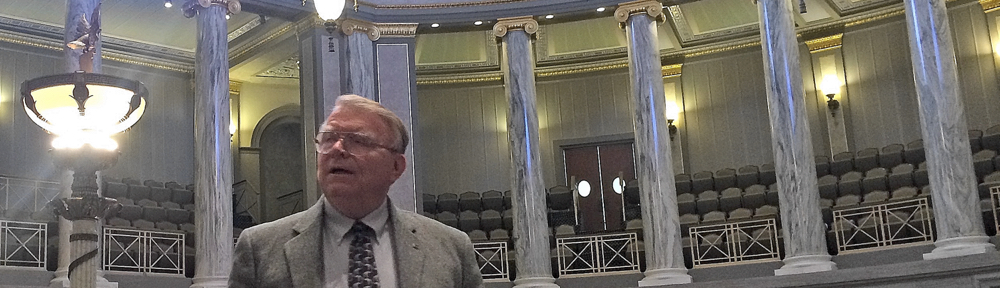
But I do want anyone in the area to know that on tuesda morning thru Wednesday afternoon I have attanged evhibits from the Steamboat Arabia Museum in KC and National TransportationMuseum in Kirkwood to be in the capitol rotunda to promote legislation to help veterans, provide financial aid to struggling local historical museums, krrp the Arabia in Missouri and help the NMOT achieve its dreams for expansion and protection for and restoration of its collection.

Now onto the original great observations about our times—-

Anybody else getting tired of emails or telephone calls from people wanting to know if your experience with your doctor, your mechanic, your financial advisor, your car salesman, your—-you name it—was a pleasant one?

Feedback Mania has taken hold.

It seems as if every time I go someplace I get an email request almost before I’m out the door wondering if I had a pleasant experience, if the office staff was friendly, or if I would recommend this to others.

Did you enjoy your colonoscopy?  Was the admissions staff chipper enough?  How was the taste of the gallon of stuff you drank?  Was your experience with the drug administered before insertion pleasant?

I’m thinking of saving all of these surveys until I can fill them out while I’m on hold after an impersonal, recorded voice tells me that my call is important.

-0-

I had a dream the other night that I opened my closet door and the only things inside were hangers with t-shirts proclaiming that I had saved a shivering dog or an elephant, that I had helped a school kid get a meal, another kid get healed from a disease (I slept under about three adorable blankets during the night)—you know.

I had bankrupted myself at the rate of $19.95 a month for so many different wonderful causes. In my dream, I decided to go on TV and promise viewers that I would give them a t-shirt that said, “I saved Bob” if they just sent me $19.95 a month.  The t-shirt would cost me 75 cents from the sweatshop in China. I needed the money because I placed a telephone call to see if a Medicare plan was available for me in my zip code and I needed to enroll.

Then I woke up and felt badly because each of these charities is only trying to do good in its small part of the human experience.  All except for the Medicare guy.

-0-

Speaking of insurance:  Can you imagine if Flo and Doug had a child?

-0-

Here is something that is spooky as all get-out:

A few days ago my friend Steve Mays, who was our webmaster at the Missourinet for many years and did great and creative things while some of us sluggards refused to quit living in our  internet caves, was explaining ChatGPT to me.  As I understand it, it’s an artificial intelligence program that lets people feed some information in and the program spits out a theme, a letter, an article, or whatever in whatever format or language or length the user wants.  People talk to it on their cell phones.

Later that day he asked Chat GPT:

Do you have any information about reporting by a man named Bob Priddy?

ChatGPT

Bob Priddy, a renowned journalist in Missouri, retired after a notable 40-year career. He was known for his dedication to government transparency and his critical view on the state of statehouse reporting, especially concerning the decline in media presence and the increasing influence of lobbyists. Priddy also played a significant role in advocating for open government, such as pushing for cameras in judicial chambers. However, he expressed concerns about the worsening state of government transparency in Missouri. His career has been a testament to committed journalism, focusing on impactful stories and the importance of government accountability​​.

As complimentary as it was, I was, and am, a little bit chilled that some lights and wires in a box can churn out something like this about me.

I looked up ChatGPT on Wikipedia.  I wonder who—or what—wrote the article.

-0-

Saw a discussion a few days ago about whether Iowa Hawkeyes’ greatest basketball player should go pro or stay in college. One of the questions is whether Caitlin Clark would take a financial cut if she did.  One sports site, Firstsportz, estimates her net worth already is three-million dollars because of the endorsements of various products and services while in college.

At least Clark has stayed at one school throughout her career instead of being a jock gypsy, as so many athletes have become.

Are we alone in thinking there’s something basically wrong with college sports today?  I doubt it.

Uncertainty

I want to talk to you today about my greatest hero and about his life and his times which resonate in these uncertain days.

I want to tell you about helping George Clooney make a movie.  But Clooney, whose work I admire, is not the hero of this story.

Back about 2005, I was wrapping up my second chairmanship of my profession’s national organization, the Radio-Television News Directors Association (now the Radio Television Digital News Association) when George Clooney’s production company reached out to us to help with some information about Edward R. Murrow.  I also was the organization’s historian so the response fell to me.

Edward R. Murrow was, and is, my hero. To be involved, even in such a minor way as I was in producing an Oscar-nominated Murrow movie produced by George Clooney—who can be as serious as a heart attack in his work although many of his movies are light-hearted—is one of the most important distinctions I have gathered.

Murrow had given his greatest speech at our convention in 1958, three months after See It Now was killed by CBS boss William S. Paley. It’s known as the “wires and lights in a box” speech.  It’s also considered his professional suicide speech because he was critical of the early network television news decisions as he warned: “This instrument can teach, it can illuminate; yes, and it can even inspire. But it can do so only to the extent that humans are determined to use it to those ends. Otherwise it’s nothing but wires and lights in a box….”

Here’s the entire speech, should you choose to listen, from our convention more than 65 years ago:

Bing Videos

I provided the background information and a copy of the organiztion’s 1958 logo for the opening and closing segments of the movie.  You won’t see my name or that of RTNDA in any of the credits, but that was my contribution. I am not bothered by the omission. It was, after all, a minuscule part of the story.

When the movie came out, RTNDA had a reception in Washington where Clooney, Strathairn, and Grant Heslov (who played a young Don Hewitt, the creator of Sixty Minutes), attended.  I have a signed movie poster in my loft office.

Seventy-one years ago, he said:

“If we confuse dissent with disloyalty–if we deny the right of the individual to be wrong, unpopular, eccentric or unorthodox–if we deny the essence of racial equality then hundreds of millions in Asia and Africa who are shopping about for a new allegiance will conclude that we are concerned to defend a myth and our present privileged status. Every act that denies or limits the freedom of the individual in this country costs us the confidence of men and women who aspire to that freedom and independence of which we speak and for which our ancestors fought.”

McCarthyism was ramping up in America at the time.  There are those who feel we are in our greatest peril since then, perhaps greater.  Reading these words reminds us that we as a people have been where we are before and we have survived because reporters such as Murrow (and we still have some today although we are also bombarded by many on the other side) refused to back away or had no fear in confrontations with demagogues. The story of a free nation seems to be cyclical, which is one reason to study unvarnished history.

His most famous broadcast was “See it Now” on March 9, 1954 when he used McCarthy’s own words to condemn him, concluding:

“We will not walk in fear, one of another. We will not be driven by fear into an age of unreason, if we dig deep in our history and our doctrine; and remember that we are not descended from fearful men. Not from men who feared to write, to speak, to associate, and to defend causes that were for the moment unpopular.

“This is no time for men who oppose Senator McCarthy’s methods to keep silent, or for those who approve. We can deny our heritage and our history, but we cannot escape responsibility for the result. There is no way for a citizen of a republic to abdicate his responsibilities. As a nation we have come into our full inheritance at a tender age. We proclaim ourselves, as indeed we are, the defenders of freedom, wherever it continues to exist in the world, but we cannot defend freedom abroad by deserting it at home. The actions of the junior Senator from Wisconsin have caused alarm and dismay amongst our allies abroad, and given considerable comfort to our enemies. And whose fault is that? Not really his. He didn’t create this situation of fear; he merely exploited it–and rather successfully. Cassius was right. “The fault, dear Brutus, is not in our stars, but in ourselves.”

David Strathairn recreated those remarks with great effectiveness in the movie.

Bing Videos

I invite you, especially if you are a reporter today or a young person wanting to be a reporter in this rapidly changing world of journalism, to watch this 1975 program about Murrow, produced by the BBC.

:Bing Videos

And I invite you to read this column from constitutional lawyer John Whitehead, written in 2005 when the movie came out. It seems appropriate now:

The Rutherford Institute :: Edward R. Murrow: “We will not walk in fear, one of another.” |

I close with Murrow’s words that are a challenge to all of us when there are those who believe they can seize power because they can intimidate a nation.

“This is no time for men who oppose Senator McCarthy’s methods to keep silent, or for those who approve. We can deny our heritage and our history, but we cannot escape responsibility for the result. There is no way for a citizen of a republic to abdicate his responsibilities.”

 Murrow reaches out to us seventy years after that broadcast. All we have to do is remove “Senator McCarthy” and fill in another name and we will understand the challenge we as citizens must not avoid meeting.

One of Murrow’s journalism descendents, Dan Rather, used to close his broadcasts with the word, “Courage.”

May all of us, we who are not descended from fearful men and women, find it in 2024.


The Governor and the Book

I see that Governor Parson has written a book.  It will be released next March but some excerpts have been made available to the press.  He calls it No Turnin’ Back.

I look forward to buying one.  Maybe he’ll have a signing at Downtown Book & Toy. I’ll be near the front of the line, I hope.  Ernie and Hazel, the bookstore cats, probably will have to be locked away because the line is likely to stretch a good distance down High Street.

It’s going to be a historic book because Mike Parson has been a central figure during some major points of history.  He came into statewide office as Lt. Governor, set to fill the role as Senate President and preside over the chamber in which he had just served eight years, while Eric Greitens careened throughout the capitol as a governor who antagonized most of the people he needed to make into allies.

Then came the historic day when Greitens announced his resignation as governor, getting out of town before he could be run out of town.  Suddenly Mike Parson—who was tending to his cattle on his southwest Missouri farm that day—became THE top guy in state government.

Then Covid hit. And for stress-laden month after month, Parson had to steer the state through shortages, uncertainties, and deaths.

We haven’t asked him but we have asked several former governors about the toughest decisions they had to make.  The most frequent answer has been that it was the decision to allow an execution to go ahead.

No governor serves without making mistakes. Some are mistakes they know pretty quickly they made. Others will emerge with the passage of time that places conduct within context. We don’t have much doubt that Governor Paron will recognize what he could have done differently or done better.  But at the time, somebody had to do something, and once done there is no turning back, which is why the title is appropriate.

I wish more governors had done what he is doing. History will paint its own picture. But self-portraits have value, too.

Jim Spainhower, who was a former State Representative and later a two-term State Treasurer and a 1980 primary election challenger to Joe Teasdale, was also a minister of my denomination, the Christian Church/Disciples of Christ.  He wrote a book called Pulpit, Pew, and Politics.

He told me when my first book was published, “Now you can start your prayers by saying ‘Oh though who also hast written a book.’”

Mike Parson is a man of faith, as you will hear if you click on the two-parts of an interview Ashley Byrd of the Missourinet did with him.  He, too, will soon be able to begin his prayers with those words.

Maybe we’ll greet each other at the book-signing with those words.

He talks with the Missourinet’s Ashley Byrd about the book and about his life and his governorship on these links:

Gov. Parson writes autobiography, but not to prepare a run for another office (LISTEN TO INTERVIEW PT. 1) – Missourinet

Gov. Parson: This office is not about yourself, it’s a much higher calling than your last name (LISTEN – PT 2 INTERVIEW) – Missourinet

(We thank our friends at The Missourinet for the photo.)

We Weren’t Good Enough for Trump. Or Was It The Other Way Around? 

Next year will mark the thirtieth anniversary of the opening of the first legal casinos in Missouri.

The industry has done well in those thirty years.  It has posted revenues of almost $42-Billion.

For a time, Donald Trump wanted to be part of that, making some deals that would add to his casino empire back east. Before he started sniffing around in Missouri he had bought a casino from Hilton Hotels in 1985 and opened the property as Trump’s Castle Hotel Casino (later Trump Marina) in Atlantic City.  In 1986, he bought out a Holiday Inn and opened it as the Trump Plaza Hotel and Casino.

Two years later he got involved in the Taj Mahal project in Atlantic City and, using junk bonds,   turned it into a billion-dollar construction project.

In 1993, a year after voters approved riverboat gambling, he showed up in Missouri, ready to deal.  St. Louis Mayor Freeman Bosley didn’t want to cut a deal unless riverfront gambling interests got behind downtown redevelopment, a condition that Trump didn’t seem to mind, telling reporters, “Depending  on what he wants, I would be interested in discussing possible linkage. I think St. Louis needs a convention center hotel very badly. St. Louis is certainly a good gaming market.”

Already displaying the modesty to which we are accustomed, he proclaimed in May of ’93, “I think I know as much about convention halls as anyone in the public of private sector.”

While he was casting eyes at Missouri, he was feuding with Native Americans who were opening their own casinos.  The same year he looked at St. Louis he was ripping the operators of the Foxwoods Casino operated by he Mashantucket Pequot Tribal Nation in New York, telling New York City radio host Don Imus, “I think I might have more Indian blood than a lot of the so-called Indians that are trying to open up reservations…I think if you’ve ever been up there,  you would truly say these are not Indians.”

(Just for the record, Donald Trump has zero Indian blood. His grandfather, came here as a 16-year old barber to escape three years of German military service. The legality of his entrance to the United States is questionable.)

American Indian Republic later reflected, “His discourteous rhetoric involving American Indians has often been used to both demean and frustrate those to which such speech was directed, with his early 1990’s tirades reflecting his discontent with the rapid and expansive rise of Indian gaming in particular. Much of the racially influenced remarks that had occurred during that period would later be conveyed once again during his 2016 presidential bid against his Republican opponents and Hillary Clinton, amongst other politicians.”

The year he was considering a Missouri casino, he filed a lawsuit against the Indian Gaming Regulatory Act of 1988 that allowed Indian nations to open casinos. His whine was a familiar one to us today. The suit claimed those casinos were providing unfair competition, that the act was discriminatory as well as being unconstitutional.

Interior Secretary Bruce Babbit, a defendant, reacted, “My initial reaction was, ‘Hey, wait a minute, I’ve never even met Marla Maples. How can he be suing me?’ It is really absurd to think that a self-proclaimed tycoon s threatened by a few bands of impoverished Indians. It’s the theatre of the absurd.”

(Marla Maples was Trump’s new hobby at the time.  They had met in 1984 and started carrying on while he was still married to Ivana, who finally split with him in 1990.  It was about the time he was fighting Indians that Marla was trying to convince him to marry her.  She said they’d set the date “about a dozen times” but he always had “a little freak out” the day before the grand event. She said she helped him get over “that fear monster,” but had started taking her wedding gown along on their travels because “you’ve got to be prepared.”  They married late in 1993, two months after the birth of their daughter, Tiffany. Three years later, Trump fired his bodyguard after police reported finding him under a lifeguard stand with Ivana on a deserted beach at 4 a.m. They divorced in June of 1999.  By then he was fooling around with a Yugoslavian-born model, Melanija Knavs, who was building a career in New York. They were married in 2005.)

Getting back to our story:

As usually seems to happen with Trump lawsuits, the one involving Bruce Babbit went nowhere.

Later that year, representatives of the Wyandotte Tribe of Oklahoma proposed building an 80,000 square foot casino/hotel/theatre/restaurant complex in the St. Louis suburb of Arnold.  One Arnold resident dismissed the idea, commenting, “Trump is in town talking about a deal on the riverfront. Who in the world is going to choose Arnold when downtown St. Louis is 20 minutes away?”  Governor Carnahan’s deputy chief of staff, Roy Temple, indicated Carnahan was cool to the idea of a casino in Arnold, generally opposed to casinos beyond those allowed by the riverboat gambling amendment added to the State Constitution in ’92.

Trump also was crosswise with Connecticut Governor Lowell Weicker, claiming he couldn’t build a casino in that state until Weiker left office because Weiker opposed casinos. Weiker responded, “My opposition to casinos isn’t just casinos. It’s opposition to Donald Trump,” who he referred to as a “dirt bag” and a “bigot.”  Trump displayed his now-familiar brand of logic when he fired back that Weiker “is a fat slob who couldn’t get elected dog catcher in Connecticut,” ignoring the fact that Weiker had gotten elected to an office of somewhat greater importance.

In November of ’93, Trump unveiled his plan for a $300 million floating casino and 20-acre development just north of Laclede’s Landing on the St. Louis riverfront.  Five other developers also were eyeing the area.

In February of 1994, he floated the idea of a $98 million casino project in St. Charles that included a golf course, aquarium, and a park. Six other companies were competing.

Trump wasn’t good enough for either project.

In August of ’95, he left some people shaking their heads when he filed a lawsuit in New York to stop the introduction of  new lottery game, Quick Draw. He described it as “video crack,” and argued, “When you add it all up, the social costs far outweigh the potential tax revenues” and would be harmful to gambling addicts and casual gamblers “who can lose far more than they can afford.”

The same concerns did not apply to his own casinos because, “The overwhelming number of people who go to casinos do so for limited periods of time and with set budgets.”

By now, by the way, the Palm Beach, Florida, town council had capitulated in the face of a lawsuit filed by Trump and approved his proposal to turn his historic Mar-a-Lago mansion into a private club. The council had refused to allow the change two years earlier and Trump had, well, you know.

Trump’s grandiose plans for St. Louis and St. Charles were stillborn but he wasn’t done with Missouri.

In 1995 he established Trump Hotels and Casino Resorts as a publicly-traded company.  Four years later THCR agreed to buy the troubled Flamingo Hilton Casino in Kansas City, reportedly for $15 million.  The city port authority approved the deal on Trump’s 53rd birthday. But the deal fell through when the Missouri Gaming Commission refused to approve the company’s gaming license, expressing concerns about the THCR’s $1.8 Billion in debts.

The summer before the deal, the Hilton had agreed to pay $665,000 in fines and penalties to the federal government instead of going to trial in federal court  for “providing financial incentives” to friends of the then-chairman of the Kansas City Port Authority in return for his political support to build the casino on city-owned land. The company always denied doing anything improper.  The gaming commission threatened to yank the Hilton’s gambling license unless it sold its property.  Hilton had spent more than $100 million to develop the site.

In September of ’99, Station Casinos bought the Flamingo Hilton at the fire-sale price of $22.5 million. A Trump spokesman said the deal was cancelled so the company could focus on operating its three casinos in Atlantic City and reduce its debt.

Anyone wanting to learn more about all of this little drama seems to be out of luck.  The Associated Press reported in 2016 that about 1,000 pages of documents are locked away in the gaming commission’s files and are secret under Missouri law because Trump’s company withdrew its application on November 17, 1999. The commission lawyer says they’re sealed because the state never took action on the license application.

So ends the story of Donald Trump’s efforts to expand his casino empire to Missouri.

Had he done so, his track record indicates those projects would have been just another part of the story of the great deal-maker’s business failures.

THCR filed for bankruptcy in 2004 and was renamed Trump Entertainment Resorts and declared bankruptcy in 2009.

The Harrah’s at Trump Plaza in Atlantic City filed Chapter 11 bankruptcy in 1992, closed in 2014 and was demolished in 2021.

Trump 29 Casino in Coachella, California is still open but Trump left the partnership in 2006.

Trump Casino in Gary, Indiana was sold in 2005.

Trump World’s Fair in Atlantic City closed in 1999 and was demolished a year later.

Trump Castle in Atlantic City filed for Chapter bankruptcy in 1992, was sold in 2011 and is now the Golden Nugget Atlantic City.

Trump Taj Mahal on the Atlantic City boardwalk filed for Chapter 11 bankruptcy in 1991,  closed in 2016 and is now the Hard Rock Hotel and Casino.

And those are just part of a list of failures that also include an airline, a university, a vodka and a meat business, a travel agency and a mortgage finance company. And Truth Social is weakening.

His last casino development effort was on the Caribbean Island of Canouan, described as “a place where billionaires go to escape millionaires,” when Swiss-Italian banker Antonio Saladino tried to turn his languishing resort into a successful enterprise. He hired Trump to build villas around his hotel and golf course. Trump agreed to run the golf course and put up his own casino. Saladino sold out in 2010 to an Irish billionaire who fired Trump and sold the resort in 2015.

So Missouri missed out on having Donald Trump running a casino here.  It’s probably for the best.

Missouri has thirteen casinos, none that have ever born the name “Trump.”  There are those who think we need a fourteenth one, or maybe move a license from one location to the next—-which presents another problem of what is a small town that loses its casino going to do for jobs and what’s it going to do with the boarded-up casino.  And we have another Indian Nation that is trying to open a casino .

We saw during those years the Donald Trump character that is no different today. The casino industry has moved beyond Donald Trump.  Some might think it’s because the industry is run by better people, which is a case of damning by faint praise.

Is there a lesson in this for our political system?


Values 

It’s easy to get irritated by somebody who claims their values are somehow universal and by reference also must be my values if I am to be a good American or a good Christian, or a good something that only they can judge.

This has been going on for a long time in our political system.  The most prominent promoters of this presumption today are those labeled White Christian Nationalists.  They seem to have superseded so-called Evangelicals in their oppressive assumptions that they are righteously entitled to set a moral tone for me and for my nation.  Some folks combine the two into Evangelical White Christian Nationalists.

This issue has come up in recent days with a letter that Rep. Chris Dinkins, the Majority (Republican) Caucus Chair in the Missouri House, sent to Governor Parson that begins “I am writing to bring your attention to a matter of great concern regarding the resettlement of refugees from Gaza in our state. As a dedicated representative of the people of Missouri, I believe it is crucial to take a proactive stance on this issue and safeguard the well-being and safety of our citizens.”

She wants to keep people out “whose beliefs systems are rooted in anti-American and anti-Israel sentiments.”

She continued later, “Our state has a responsibility to protect its citizens and uphold the values that define us as Americans.”

Just what values is she talking about? “We cannot afford to compromise the safety and security of Missourians by allowing the potential entry of individuals who may harbor hostility towards our nation and its allies,” she says.

Potential entry?  Individuals who may harbor hostilities?  (Actually, the correct word to use in this circumstance is “might.”  As used to teach my reporters, might is prospective; may is permissive.  You might hit me in the nose but you may not.)

The kind of rhetoric in her letter is abhorrent.  We already have a gutful of this kind of conspiracy garbage from a presidential candidate who wants us to think all of those crossing our southern border are fentanyl-carrying killers, thieves, and rapists.

The timing of her letter is atrocious, coming about the same time three Palestinian students were shot while walking down the street near the University of Vermont in Burlington.  Police say two of them are United States citizens and the third is a legal resident of the United States. They were speaking Arabic and two of them were wearing keffiyehs, a headdress worn by Palestinians.

We will learn, eventually, if their shooter thought he should take action against “individuals who may harbor hostility toward our nation.”

What are our national values today? Are they such that we should remove the Statue of Liberty and Emma Lazurus’ invitation to send us the tired and the poor, the wretched refuse of other lands, those yearning to breathe free, the homeless and the tempest-tossed?

Many of those we idealistically have said are welcome are now stereotyped by politicians who seek success by fueling distrust and hate toward people who are not that much different from our own ancestors just a few generations ago.

Rep. Dinkins has ambitions for higher political office in 2024.  Perhaps she should publish a supplement to the letter she released online that outlines in specific and detailed form what she thinks are my values as an American citizen—and what your values have to be to be a good American citizen.

Governor Parson is on the wrong side of Dinkins’ values on this issue, and so, I hope, are most Missourians and Americans.  He wasted no time in throwing her proposal in the ash can, telling reporters, “You don’t have the authority to do that to start off with. I mean, anybody’s been around a little bit, the federal government can place refugees anywhere they want to without asking your permission. First of all, there’s this big difference between Palestinian people, and the people of Hamas. Hamas are terrorist groups that attack our country and hate who we are. We don’t want them here. But I don’t think you want to take everybody that’s from Palestine to make them as bad people. I don’t know that.”

There’s another prominent figure whose recent remarks put people like Dinkins in their places. Bill Bradley, the Crystal City native whose basketball exploits in high school and college led to a ten-year career in the NBA (that was delayed by more two years while he was a Rhodes Scholar and then in the Air Force Reserve) and three-terms as a U. S. Senator from New Jersey.

Our friend, Tony Messenger, wrote in his November 23 Post-Dispatch column about remarks Bradley gave during the Musial Awards event in St. Louis a few days earlier when Bradley received a Lifetime Achievement Award from the organization that promotes humanity and sportsmanship—

“Never look down on people you don’t understand.”

Tony noted the comment came four days after the St. Charles County Council considered a resolution opposing the International Institute’s program to make the St. Louis metro area a destination for certain Hispanic immigrants. The council did not take action.

The St. Louis metro area has been a haven for many immigrants including large numbers of Germans, Italians, and Irish people in the 19th Century whose cultures still thrive in that city—te German culture spreading well into the heart of the state. More recently, St. Louis has opened its arms to those fleeing from Bosnia, Afghanistan, and Ukraine in addition to many coming from Latin America.

Kansas City also has been a magnet for immigrants. In fact, it has the Greater Kansas City Hispanic Chamber of Commerce which works in eight counties on both sides of the state line and bills itself as “the birthplace of the United States Hispanic Chamber of Commerce (in) Washington, D.C.”

The immigration story of the St. Louis area and all of Missouri started even earlier than the 19th century. When Spain controlled Missouri, it welcomed French Canadian immigrants who were central to the defeat of an invading British force that convinced Native Americans it was in their best interests to try to capture St. Louis in 1780.  French citizens in Spanish St. Louis defeated that force in what is the westernmost battle of the American Revolution.

The Spanish government in control of what is now Missouri also invited another group to migrate here.

Americans.

George Morgan, a Philadelphia merchant and entrepreneur, was invited by the Spanish Crown in 1788 to create a colony on the west bank of the Mississippi River.  A couple of years later he created the town of New Madrid.

Some of the early American immigrants who came here were illegal aliens: Protestants, practicing a faith that was once illegal in Catholic Spanish Missouri.  Protestant ministers from the Illinois country used to cross the Mississippi under cover of night and provide services in darkened Missouri homes.

Tony concluded is column, “It is heartbreaking that officials would now look down on such immigrants — the latest chapter in another generation of an American journey. Once a year, the Musial Awards help remind us that it is our shared humanity that makes us great. This year, a big man from a small town in Missouri gave us the words that should echo in our heads, as we move from one political crisis to another. The solution that escapes us is more often than not to treat those with whom we disagree with respect and understanding.”

I want to add this from Vine DeLoria who wrote the best-seller decades ago, Custer Died for Your Sins: an Indian Manifesto:

“The understanding of the racial question does not ulti­mately involve understanding by either blacks or Indians. It in­volves the white man himself. He must examine his past. He must face the problems he has created within himself and within others. The white man must no longer project his fears and in­ securities onto other groups, races, and countries. Before the white man can relate to others he must forego the pleasure of denying them. The white man must learn to stop viewing history as a plot against himself.”

We wonder what Chris Dinkins would say to Bill Bradley.

Bill Bradley was and All-American as a college basketball player.  His example as an All-American in deed as well as in word is the value worth having. It is those who follow the Dinkins/MAGA ideal who are the aliens to the American spirit.


The Shrinking Book of Numbers

Two things of note happened in our household during Thanksgiving week.  On the day itself, Nancy and I celebrated our wedding anniversary.

Only 56 of them.

The national record for longest marriage is that of Herbert Fisher Sr. and Zelmyra George Fisher, who made it to 86 years, 290 days before Herbert died on February 27, 2011.  Here’s the happy couple on their wedding day:

We are within 30 years and change of setting a new United States record.

The all-time record is held by Karam and Kartari Chand, who were married in India but lived in England when Karam ended 90 years, 291 days of married life by dying on September 30, 2016.  He was 110.

So we’re 34 years and change from setting a new world’s record.

We haven’t discussed it but I’m in if she is.

Incidentally, the longest current marriage is between Evert Stolpe and Annni Lepisto Stolpe, who are still hitched in Narpes, Ostrobothnia, Finland after (as of Thanksgiving Day in the USA) 82 years, 244 days.

Studies show (What The Average Marriage Length In US Says About Your Divorce Risk (fatherly.com) that the highest risk of divorce happens within the first two years of marriage, before there are children to complicate things. The possibilities flare up between years 5-8, the infamous “Seven Year Itch” period. But years 15-20 are average but growing because in this time of late marriages, people reach their 50s, the kids are gone, and who wants to stick around with this person through their declining years when there’s fun to be had?  “Gray Divorce” is increasing.

Apparently, we missed our chances.  Now, we’re stuck with each other, which is fortunately very good for both of us.

When I sent my parents a letter informing them of the upcoming nuptials in 1967, my father wrote back to note of congratulations and hope that we would be as happy as my parents had been.  “We never thought about divorce,” he wrote.  “Murder, sometimes, but never divorce.”

Or something like that.

Bowling Green University’s National Center for Family and Marriage Research published a study that only seven percent of American marriages make it to 50 years or more.

Hooray for Us!!!

The second thing that happened during Thanksgiving week was the arrival of the telephone book.

The 1967 phone book was the first one in Jefferson City to have my name in it.  Right there, Priddy, Bob  1519 E. Miller Street.  It was a third floor attic turned into an apartment reached by a laong narrow flight of stairs. The kitchen was the biggest room in the place.  I lived there for about three months before we moved in together after returning from our Thanksgiving Holiday honeymoon in St. Louis (how old-fashioned that must seem in today’s relationships).

The house number later was changed when the city decided to renumber houses so that there was some logic to addresses (so first responders had a better idea where the fire was or the heart attack or the overexuberant family disagreement).

We later moved to an apartment closer to my work, which was a radio station in a building that no longer exists on Capitol Avenue (the radio station doesn’t exist in Jefferson City, either—it’s one of several radio formats crammed into a single building in Columbia).  Then to a rented house where our Ericofon sat on the floor between the bedroom and the living room.

(Have you seen the video of two 17-year olds trying to figure out how a dial phone works?  Check it out at (107) Hilarious video show 17 year old teenagers baffled by rotary phone – YouTube or another example at (107) Rotary Phone Challenge for Students in 2022 – YouTube).   I’d hate to see them figure out an Ericofon, which was the first phone Nancy and I had as a married couple.

For any younger readers: the dial was on the bottom and there was a button that was pressed when the phone was put down that disconnected the call.

Look back at that 1967 phone book’s cover showing Capital City Telephone Company serving Jefferson City. But there also was Midstate New Bloomfield, Midstate Centertown, Mistate Taos, Midstate Brazito, Midstate Eugene and dial St. Thommas. It had 77 pages of residential numbers with “favored businesses”—meaning they paid more—set in bolfface and 128 Yellow Pages advertising businesses by category.

(United Telephone moved in in the early 70s.  One day I spied a company pickup truck with the first name of the company misspelled, “Untied,” on one of its doors.  I quickly called the newspaper, which ran an embarrassing picture on the front page the next day.)

The phone book for 2020-2021 was 234 Yellow Pages and 70 White Pages. It was small and obviously a lot thinner than that historic 1967 book.  But it was about half the size, top to bottom and side to side—about the dimensions of what is known in the book biz as a “trade paperback” edition—about the size of my Across Our Wide Missouri books. But way thinner.

The new pre-Thanksgiving book had 16 pages of “featured businesses.”  It has 118 Yellow Pages.  And it has only twelve white pages—people who still have land lines.

Nancy found the names of a couple of friends on those pages. I have learned of a couple of other wons.  I felt a strong urge to call them, land line to land line, to celebrate our distinctions.  But I was interrupted by dinner.

Here’s the cover of the new one.

Look at the list of towns. It takes 21 of them to generate just twelve white pages.  I’m not sure how important it is for somebody from Tipoton, 36 miles to the west on Highway 50, to have my home number in Jefferson City but what few people there have phones that don’t fit in their pockets have it now.  Same goes for people in Syracuse, 41 miles away from our house, or Otterville (where the James gang pulled one of its last train robberies), 49 miles away, or Smithton, named for railroad promoter George R. Smith who was so disappointed the town didn’t want a railroad that he moved a few miles farther west and founded another town that would be more welcoming—naming it for his daughter Sarah whose nickname was “Sed” and therefore the town became Sedalia.

Well, we got a little carried away there. But the phone book lets a person with a landline 54 miles west of my landline to call me.  The number is small enough we might invite everyone to a picnic at the Memorial Park Pavilion. We will provide a small Waldorf Salad, without marshmallows because I can’t eat them anymore.

Phone books are one of many commonplace things that remind us of the changes in our world over time.

Fifty-six years of marriage and phone books.  And phones.  We now have three numbers, two of which reside in our pockets unless we’ve forgotten where we put them.

Has anybody ever kept track of how many hours in a year we spend looking for our cell phones?

Anyway—

56 years of family and phones.  And we’re in no mood to hang up.

-0-


Sixty Years

I still find it awkward to tell people, “Fifty years ago…..” and then tell them what I remember from that time.

Sixty years ago today, I had been the producer of the noon news at KOMU-TV.  I was in graduate school at the University of Missouri and working as a graduate assistant instructor in the radio newscasting class which also involved being the assistant news director at KFRU Radio, anchoring some of the student-wrtiten newscasts on that station (this was before the Journalism School created KBIA where some students get their first taste of broadcast newswritig and anchoring), so I couldn’t anchor at Channel 8.  So I produced the noon newscast that reported President Kennedy had gone to Texas to assure Texans that he was not going to dump Lydon Johnson as his running mate in 1964.

We left the station at 12:30, about the time shots rang out at Dealy Plaza in Dallas.

When I walked through the front door of the rooming house at 508 S. Ninth Street (now one of at least three houses in which I lived that are now gone), one of the guys upstairs shouted down, “Is that Priddy?”

“Yeah.”

“You getter get up here! The President’s been shot!”

The people upstairs had been listening to KFRU and had heard ABC’s Don Gardiner break in with the first word of the shooting.   Most commemorations of the event today focus on Walter Cronkite and CBS-TV.  But it was Don Gardiner, normally the morning news voice on WABC in New York, who interrupting a middle of the road music show from WABC that was fed down the network between network news programs.

(105) JFK’S ASSASSINATION (ABC RADIO NETWORK) (NOVEMBER 22, 1963) – YouTube

Gardiner’s first bulletin about 12:33 p.m. CST came from United Press International correspondent Merriman Smith who was in the fifth car behind the presidential limousine as it moved from Dallas’ Love Field toward the Dallas Trade Mart, where Kennedy was to deliver a luncheon speech.

Nick George, who is announced early in the broadcast as the New York Editor for ABC, later became a teacher at the journalism school and was an influential figure in the development of some early Missourinet reporters.

As you will hear, events unfolded quickly and the reporters—mainly Smith and AP’s Jack Bell .

In 1963, reporting from remote sites was, to say the least by today’s standards, extremely primitive.

The White House press pool reporter’s car had a radiotelephone in it, the only mobile phone available to the 58 reporters in the pool. Pool reporters rotated from the back seat to the front and it ws Smith’s day in front.  Smith grabbed the radiotelephone and dictated a FLASH (the highest priority item to go out on the wire service) to Dallas UPI Bureau rookie Wilborn Hampton, who typed it into the distribution teletype machine, showed it to his editor, Jack Fallon, who shouted, “Send it!”

UPI sent it out at 12:34:

“DALLAS, NOV. 22 (UPI) – THREE SHOTS FIRED AT PRESIDENT KENNEDY’S MOTORCADE TODAY IN DOWNTOWN DALLAS.”

As the word went out and Gardiner started his broadcast, Smith was crouched in the front seat of the car while the AP’s bell was beating on his back and demanding, “Give me the goddamn phone!”  But Smith wouldn’t give it up and continued to give information to the bureau.  “On a story of this magnitude,” Smith later said, “I was not about to let it go until I new the office had it all.”

It took six minutes to get to Parkland Memorial Hospital. Smith gave the phone to Bell who called the Dallas AP burau—and couldn’t get through.  Smith ran up to the presidential limousine where he saw Texas Governor John Connally wounded. “I could not see the president’s wound. But I could see blood spattered around the interior of the rear seat and a dark stain spreading down the right side of the president’s dark gray suit.”

Smith turned to Clint Hill, the Secret Service officer who was in the followup far and ran to the presidential limousine, jumped on the back and shielded Mrs. Kennedy with his body as the car sped to thehospital, and asked, “How bad was he hit, Clint.”

“He’s dead, Smitty,” said Hill.  Smith dashed into the hospital, took a telephone from a room clerk and started dictating the information you will hear Gardiner pass along to listeners that day. Most of what you hear Gardiner reporting is based on Smith’s coverage.

UPI ran another FLASH at 1:35 that Kennedy had been declared dead.  AP was two minutes behind.

The event was an important one for radio and particularly for television.  For the first hours, the story belonged to radio.  Newspapers already had gone to press for their afternoon editions. Several put out bulleting editions.  But in the early going, the story belonged to radio.

We had no satellites to relay the story as it unfolded.  There were telephones and wire services and that was all there was. Television relied on film that had to be shot and developed, mostly black and white (because color television was just beginning) and often not even processed as positive images.  We would shoot silent negative film and the television control room could electronically reverse the polarity of the film and the viewers saw black and white pictures.

KFRU’s newsroom was in the Columbia Tribune building at 7th and Cherry Streets (it’s partly a candy store and partly a restaurant now) because the station was half-owned by the Waters family that also owned the Tribune.

The main studios were out on the eastern business loop.  In Studio A, the main studio, a slver pipe rose up behind the control board and curved toward the announcer’s position.  The pipe contained wiring that was hooked to a small red light.  That was the network bulletin light.  If the network wanted to break in on programming, that light would come on and the board operator was immediately to flip a switch that put the network on the air. When that light came on, the board operator that day, perhaps Bill Younger who worked the afternoon shift threw that switch.

I quickly walked the four or five blocks to the KFRU newsroom to huddle with Eric Engberg, the news director and fellow graduate student—-Eric later had a long career as a CBS correspondent—and we started planning local reaction stories to run when the network broke away from its coverage for its local stations to report.

I was sent out toget reaction from Senator George Parker and Representative Larry Woods.

ABC did not break until Monday morning before coming back to broadcst the funeral.

I got to know, to a lesser degree in most cases but in a greater degree in one case, some of thosewho brought us the news that day.  Nick George, for example, became an acquaintance.

The one I knew best is the one who broke the news of Kennedy’s death on national television.  Eddie Barker was the news director of KRLD-TV and radio in Dallas that day and was at the Trade Mart preparing a broadcast of the Predident’s speech.  Word already had reached him that something had happened in the motorcade and moments late the motorcade roared past the mart.  He went on the air, broadcasting what he could learn.  One of his friends who was at the mart was a doctor at Parkland who went to a telephone and called the hospital emergency room where an acquaintance told him the president was dead.

Eddie’s friend saw he was “struggling to maintain a coherent broadcast with the limited information availability,” walked over and whispered into his ear, “Eddie, he’s dead.”

“The words sent a cold chill running down my spine. I didn’t want to believe them, but the source was too good.  I then made a decision that has caused a lot of comment in the years since that strangely brilliant Friday afternoon.  I told an audience that included the whole CBS network that a reliable source had confirmed to me that President Kennedy was dead.  What I didn’t know was tht my shocking report caused a lot of anxiety at cBS News Headquarters in New York,” he recalled in his autobiography, Eddie Barker’s Notebook several years later,  Shortly after that, Walter Cronkite told viewers, “We just had a report from our correspondent, Dan Rther, in Dallas that he has confirmed tht President Kennedy is dead.”   There still had been no official confirmation.

At 1:37, our time, CBS news editor Ed Bliss—and other of those I came to know well—gave Cronkite the AP bulletin that Cronkite is often seen reading to his audience when the story is recounted on TV today.

Dan Rather is often credited with passing along the first word of Kennedy’s death. Rather, who was the new chief of the CBS New Orleans bureau, had been on the other side of the railroad overpass west of Dealy Plaza, closer to the Trade Mart, when the motorcade flew past  He ran to the Dallas CBS bureau and started working the phones to Parkland Hospital. The doctors all were busy but an operator told him two priests were in a hallway nearby.  One of them told Rather, “The President has been shot and he is dead.”  Rather, his The Camera Never Blinks, said he asked, “Are you certain of that” and the priest, who was there to perform the last rites, respoded, “Yes, unfortunately, I am.”

Rather called Barker and told him what he had.  Eddie had just talked to the doctor.  They did not know that three people at CBS, New York were listening on the broadcast loop that had been set up for Barker’s broadcast of the speech. Before Rather could tell those listening, Barker, in his broadcast that he thought was only local in Dallas, announced a source from Parkland had told him the president is dead. Rather chimed in, “Yes, yes, that’s what I hear, too.  That he’s dead.”

It wasn’t official.  But CBS radio and television went with it.

It was only a short time later, as you will hear if you listen to the ABC account, that it was reported a Dallas policeman, later identified as J.D. Tippett, had been shot and killed.  And within a few minutes, a suspect named Lee H. Oswald had been picked up.

The night police reporter for the Fort Worth Star-Telegram had slept late that day but rushed to the office when he heard of the shooting.  The newspaper started printing special editions that were snapped up by the public as soon as they hit the streets. “Inside the city room it was bedlam,” recalled then-CBS correspondent Bob Shieffer in his book, This Just In.  When word came that Oswald was going to be held in the Fort Worth jail, Schiefer dashed there and was present when Oswald was brought in.

“Early in my police reporting days, I learned a truck from the cops. People will sometimes blurt out the truth if they are surprised by the question, so I jumped in front of the handcuffed suspect, who was between two detectives, and shouted, ‘You song of a bitch, why did you do it?’”

‘”Well, I didn’t,’ he said as the cops hustled him into the lockup.”

Schiefer was just settling in back at his newsroom desk when the phone rang. A woman asked him if someone could give her a ride to Dallas.  Schiefer responded heatedly, “Lady, this is not a taxi, and besides, the president has been shot.”

“I know.  They think my son is the one who shot him.”

“Where do you live?” Schieffer. “I’ll be right over to get you.”

On the way to Dallas, said Schieffer, she seemed more concerned about herself than about the death of a president. “She railed about how Oswald’s Russian-born wife would get sympathy while no one would ‘remember the mother.’”

When Oswald’s wife and mother heard the news, they had the presence of mind to get a lawyer, John Thorne. Police placed the family in protective custody.  Several weeks later, Eddie Barker called Thorne and expressed an interest in interviewing the Marina, how a widow. Thorne, who Barker did not know, surprised him by saying, “She watches you every evening nd I’ll be glad to ask her.”  The interview was arranged during which time she told him in her Russian-accented English, “I think Lee shoot Kenedy.”

Don Gardiner died in 1977.  Bob Schieffer, 86, is a podcaster— “Bob Schieffer’s ‘About the News’ with H. Andrew Schwartz.”—retired as the host of Face the Nation in 2015 and embarked on a singing career.  Eddie Barker died in 2012.

Dan Rather is 92 and still likes to stir the stuff.  He was fired from CBS in 2006 after some reports using unauthenticated documents to report on President George W. Bush’s Vietnam War-era service. After working on the cable channel now known as AXSTV for several years. Rather joined the Youngturks YouTube channel and five years ago began writing a news letter called “Steady,” on Substack.

All of those you hear in the ABC coverage are gone now.

Merriman Smith committed suicide in 1970.  Some say he was despondent about the death of his son in Vienam and perhaps suffered from PTSD from witnessing the Kennedy murder. Jack Bell died in 1975. Clint Hill is 91 and is the last surviving person to be in the presidential limousine that day.

At Jefferson City radio station KLIK that day, news director Jerry Bryan checked the UPI wire just after climbing the stairs to the third-floor newsroom in a pre-Civil War building on Capitol Avneue and checked the UPI machine before going home to lunch.

He picked up the telephone and called the on-air studio down on the second floor and started telling listeners what Merriman Smith was sending him. He continued to report via telephone until station engineer Ed Scarr put together enough cable to run a microphone from the studio up two flights of stairs and down the hall to the newsroom so Jerry had a microphone. The station operated only during daylight hours in those days and did not have a national network.  Bryan was the Don Gardiner of Jefferson City that day until the station signed off at 5:30. A reel-to-reel recorder in the newsroom was set up to turn on automatically during the “Missouri Party Line Show” when a phone call came in from a listener. Bryan’s call to the studio triggered the recorder, which had a large reel of tape on it.  His early coverage that day was recorded, by accident, and still exists.  Jerry resigned in 1967 and became the press secretary to Governor Hearnes and now lives in St. Louis.

His assistant news director, who had come to Jefferson City from KFRU at the start of 1967 replaced him.  His memories, which have been shared at length with you in this entry, remain vivid–as do the memories of many.

Walter Cronkite, who died in 2009, was a native of St. Joseph, Missouri. He attended the unveiling in 1999 of  bronze bust in the Hall of Famous Missourians. There were two speakers at that ceremony that evening—Governor Carnahan and me.

The next day, he was introduced in the House and in the Senate and made brief remarks.  The press corps in the senate was seated at a table on the floor to the right of the dais and when Walter walked in, we made him sit at the press table with us.

For the next fifteen years that I covered the Senate from that table, I always made sure that when a new reporter joined us at the table, I made sure that person knew that was Walter’s chair they were sitting in and they were expected to do him honor with their reporting.

Before Walter Cronkite became the icon he became at the CBS Evening News desk, he had a program on Sunday afternoons called You Are There, during which historical events were portrayed.  He always finished the broadcast by proclaiming,

“What sort of a day was it?  A day like all days, filled with those events that altered and illuminate our time. And you were there.”

November 22nd started “like all days.”  But it was filled with events that altered and illuminate our time.

And I was “there.”

The Year Ahead 

Sheldon Harnick, who wrote the music for the great Broadway hit, Fiddler on the Roof¸ wrote a song earlier (1955) that seems fitting today.

They’re rioting in Africa,
They’re starving in Spain.
There are hurricanes in Florida.
And Texas needs rain.

The whole world is festering with unhappy souls.
The French hate the Germans,
Italians hate Yugoslavs,
South Africans hate the Dutch,
And I don’t like anyone very much.

He called it “The Merry Minuet,” and it became a big hit in ’56 for the Kingston Trio.

It seems to fit our times, almost 70 years later, with a few nationality changes.  Palestinians, Jews, Russians, Ukranians, Republicans, Democrats.   And so forth.

While the world seethes with 2023 Merry Minuets, we’re are reminded that we are only a year away from The Big Political Dance of ’24—The Election.

The pundits made sure last week that we know it.

Biden wants to shuffle onto the podium in January 2025 and be sworn in again.  Trump wants to rant his way to the podium to begin his revenge tour in earnest.

Will the zoo animals in the Capitol have passed a budget by then?

A year away from the national election and you and I are in a runaway stage coach driven by headless horsemen.

Donald, who promised to drain the swamp in 2016 is now living proof of the old adage that, “If you’re up to your ass in alligators, it’s too late to drain the swamp.”

Joe, who has presided over a pretty strong economic recovery can’t find enough ears who can hear abot it over the cacophony of today’s politics when he tells us how good we have it.

A year away, and—-what?

A year is a long time in politics.  Nothing is a given a year out in politics.

Kelly Gordon and Dean Kay put it this way in a song popularizd by Frank Sinatra;

You’re riding high in April, shot down in May.

A political career can become political careening in a matter of days or hours.  We’ve seen it happen time and again in Missouri politics as well as nationally.

Joe is growing older and vows to run for re-election. Trump is growing older, too, and is running from coviction.

What is the backup plan for both parties if decisions are made by others for both of these guys’ goals?  And a key issue, not often on the front page despite its great importance a year away, is who will be their running mate—because, at their ages and the different uncertainties about their abilities to serve second terms, our parties might wind up nominating someone who either won’t make it to inauguration day or, if inaugurated, might not last the next four years?

Both parties do have rules allowing replacement of candidats on the national ticket. Older Missourians will remember when Tom Eagleton resigned as George McGovern’s running mate in 1972 after information was leaked that Eagleton had undergone shock therapy for depression and exhaustion three times in the early to mid-60s. He was replaced by Sargent Shriver, a brother-in-law of President Kennedy and founder of the Peace Corps.

Ballotpedia lists these folks as potential VP candidates in 2024:

For the Democrats:

Incumbent Kamala Harris, Transportation Secretary Pete Buttigieg, Illinois Senator Tammy Duckworth, California Governor Gavin Newsom, Congressman Lauren Underwood of Illinois, U. S. Senator Raphael Warnock of Georgie, Michigan Governor Gretchen Whitmer.

On the Republican side: U. S. Senator Marsha Blackburn of Tennessee,             Congressman Byron Donalds of Florida, Congresswoman marjorie Taylor Greene of Georgia, 2022 failed governor candidate Kari Lake of Arizona, Congresswoman Nancy Made of South Carolina, South Dakota Governor Kristi Noem, Iowa Governor Kim Reynolds, Arkansas Governor Sarah Huckabee Sanders, New York Congresswoman Elise Stevanik.

They have a year to show that they not only are Vice-Presidential material, but would be logical people to pick up the torch if either of the old men lay it down or are forced to lay it down.

If, within the next year, Joe winds up in a home and Donald winds up in the big house, who becomes the most viable person to take their places on the ticket?  Are there others who will emerge in the months ahead?  Any number of circumstances could lead to the most chaotic but interesting and significant conventions in decades, events that could lead to a lot of negotiations in vape-filled rooms if the two people most determined to fight for the job suddenly drop out of the picture after the primaries and before the conventions or are determined by the conventioneers to be bad choices after all.

Although the two leading figures in both parties don’t want us to think about it, there is no sure thing about politics in 2024.

You’re riding high in April, shot down in MayBut I know I’m gonna change that tuneWhen I’m back on top, back on top in June

…I’ve been a puppet, a pauper, a pirate, a poet
A pawn and a king
I’ve been up and down and over and out
And I know one thing
Each time I find myself
Flat on my face
I pick myself up and get
Back in the race

That’s life (that’s life)
I tell you, I can’t deny it
I thought of quitting, baby
But my heart just ain’t gonna buy it

We only hope our heart can stand it.

We’re a year away.  A long time.

-0-

A Missouri Precedent

Missourians have seen this before.  But not recently.

Thirty-one Democratic members of the U. S. House joined Republicans a few days ago in voting down a resolution to expel New York Congressman George Santos.  Some of those 31 have taken to social media to explain why they did that.

It’s a matter of due process for them.  Santos has not been convicted of any of the 23 felony crimes he’s charged with committing.  Beyond that, though, is the way the House deals with due process.  It’s called the House Ethics Committee.

The committee is considering action against Santos after reviewing more than 170-thousand pages of documents, authorizing 37 subpoenas, and interviewing about 40 witnesses. The committee says it will announce its next action by November 17.

The committee is acting under Article I, section 5 of the U. S. Constitution’s provision that, “Each House may determine the rules of its proceedings, punish its members for disorderly behavior, and with concurrence of two-thirds, expel a member.”

Maryland Congressman Jamie Raskin, a former professor of constitutional law, explains, “If and when Santos is convicted of these serious criminal offenses or ethics charges, I will certainly vote to expel. Until then, it is a very risky road to go down and we have to stick by due process and the rule of law, as obvious as the eventual results may seem.”

Innocent until proven guilty. It’s the way we dispense justice in this country. It’s the presumption that protects you and me. It’s a trial by peers, whether it is a jury or an ethics committee, that determines guilt. We have a word for inflicting punishment based on obvious but unproven guilt.  It is called lynching.

But the Ethics Committee has a problem, too.  Santos has not been convicted of any of the charges against him.  He remains innocent until proven guilty, at least on those counts. But Santos remains vulnerable on political issues connected with his candidacy, his claims of qualification during his campaign and afterwards, including during his time in office, and other actions and statements for which he is responsible as a member or potential member of the House.

Throughout its history, Congress has only expelled five members of the House, the most recent being the colorful Ohio Congressman James Traficant, in 2002, after he was convicted of racketeering and obstruction of justice.  The last Congressman before him was Michael Myers of Pennsylvania, who was convicted of bribery in the 1980 ABSCAM scandal.

Two Missourians in the House and two more in the Senate are key figures in the history of congressional expulsions.  House members John B. Clark and John W. Reid were Missourians.  The third expulsion was given to Kentucky Congressman Henry Burnett.

John Clark Sr., left his House seat to join the secessionist military forces organized under former governor Sterling Price at the start of the Civil War.  He led his division against Franz Sigel’s Union forces at Carthage on July 5, 1861, a minor battle but a decisive one because is was a sound retreat for Sigel and his men.  Eight days later the House voted 94-45 to expel him. He resigned his military commission after he was wounded at Wilson’s Creek, Missouri’s Confederate government appointed him a delegate to the Provisional Confederate Congress and then was appointed to the Confederate States Senate. He was not appointed to a second term because of allegations that he was a drunk, a liar, and a womanizer.  Clark was elected to the Confederate House of Representatives and at the end of the war fled to Texas to avoid prosecution.  When that turned out to be a bad idea, he came back to this country, and found his way back to Missouri in 1870, where he practiced law.

Missouri Congressman John W. Reid was a pro-slavery member of the Missouri House for two years in the 1850s. Reid was an active participant in the Missouri-Kansas Border War during which Missourians tried to get Kansas into the Union as a slave state. On August 30, 1856 he was one of the leaders of a 200-man force of pro-slavery raiders that sacked Osawatomie Kansas, the home of abolitionist John Brown.  When his men failed to dislodge forces led by Brown’s son from their rock fortification, they chased the abolitionists back to Osawatomie where they killed Frederick Brown and burned almost all of the buildings in town.

The Kansas Historical Society says this attack led John Brown to begin to see himself as a national leader in, and potentially a martyr to, the abolitionist cause. “ God sees it. I have only a short time to live—only one death to die, and I will die fighting for his cause,” he said. “There will be no more peace in this land until slavery is done for. I will give them somethine else to do that extend slave territory. I will carry this war into Africa.” The KHS says that’s when he started thinking of a raid on the federal arsenal at Harper’s Ferry, to seize the weapons to organize a slave revolt in the South.”

Reid was elected to Congress in 1861. He withdrew on August 3 that year and soon after was expelled on a charge of disloyalty to the Union. He became a volunteer aide to General Price. After the war he was a lawyer, banker, and real-estate owner in Kansas City. He was one of the founders of the Kansas City Chamber of Commerce.

On the Senate side, Senators Waldo P. Johnson and Trusten Polk were expelled on the same day.  They were among fourteen senators expelled early in the Civil War because they had gone to the Confederacy.

Trusten Polk served 51 days as governor in 1857, the shortest term of any Missouri governor, before becoming a U. S. Senator.  Early in 1861 he called for constitutional amendments protecting slavery and argued they should contain wording that prevented them from being appealed.  He, and Johnson, did not return to Washington for the 1862 meeting of the Congress.  On January 10, 1862, the Senate voted 35-0 to expel him for disloyalty, a day after receiving a committee report recommending expulsion..  He was part of General Price’s Arkansas command until Confederate President Jefferson Davis appointed him presiding judge of he Trans-Mississippi Department.  He was captured in 1863 and imprisoned at Johnon’s Island prison camp in Ohio. When his health turned bad, he was given parole.  He returned to Arkansas and was part of Price’s final raid into Missouri in 1863. When the defeated Price fled back to Arkansas, Polk went with him, fleeing to Mexico for a sort time at war’s end before coming back to St. Louis and resuming his law career.

Waldo Johnson was elected to the Senate in 1860. He served about ten months before he was expelled on the same day Polk was kicked out. The Senate voted 36-0 to get rid of him, also a day after getting a committee report recommending expulsion. Same reason as Polk: disloyalty. During the war, he recruited a battalion that fought in the Battle of Pea Ridge, near  Bentonville, Arkansas, a Confederate defeat. In 1863 he was appointed to the Confederate Senate. He fled to Canada after the war and eventually got a presidential pardon and returned to his home in Osceola to resume his legal practice.  He presided over the Constitutional Convention of 1875.

Clark, Reid, Polk, and Johnson paved the way for the possible expulsion of George Santos. They were kicked out for political disloyalty.  So, too, he might be.  Disloyalty to common morality, to his constituents, to the law.

Is there guilt enough?

-0-

Has it Really Been 25 Years? 

For those who do not read our Tuesday entries on sports, please bear with us today because we’re going to talk about integrity today.  But we have to set up the discussion with some sports talk.

A few days ago I picked up a book by ESPN commentator Mike Greenberg and his associate Paul Hembekides, Got Your Number; the Greatest Sports Legends and the Numbers They Own.  It’s one of thoe “list” books—such as a thousand this or that’s to do before you die stuff.  This one lists 100 people and events in sports that are the greatest moments in the broad world of athletic competition.

Number 98 references the year 1998.  Those old enough need to think back 25 years to the dominating sports story of that year.  Let’s pause while you close your eyes and look for an answer, which I will give you after the (pause) but don’t peek.

(PAUSE)

The year 1998 was the year two men dominated baseball—Mark McGwire and Sammy Sosa.  The fact that they played for the Cardinals and the Cubs—two long-time baseball antagoinists—made the competition even more significant.  Throughout that long season, these two men battled to see who would set a new major league home run record.

There was McGwire, who was under incredible pressure from the beginning. It was expected he would break Roger Maris’ record of 61 homers.  McGwire had come to the Cardinals year earlier after starting the season with the Oakland Athletics.  He hit 34 home runs for the A’s and 24 more when he reached St.Louis.  58, and from the first day of the 1998 season the  Post-Dispatch headlined each home run he hit.

In Chicago there was Sosa, a power-hitter for the Cubs who had hit 33-40 home runs a year since 1993. But there was no reason to exepect what would happen in 1998.  In fact, the biggest challenge to McGwire was expected to come from Ken Griffey Jr., who had 56 home runs in ’97.

Griffey had his second-straight 56-homer year.  Sosa briefly held the record at 66 before McGwire swept past him on the way to a 70-home run season.

Many say that those two years, particularly 1998, restored the faith of baseball fans who had been resentful of the 1994-95 player’s strike and owners’ lockout.  Greenburg isn’t buying any of that, writing, “That magical season turned out to be an illusion, unworthy of being celebrated though steadfastly impossible to forget. I have heard it said that the best way to gauge whether or not a player belongs in the Hall of Fame is by asking the question: Can you tell the story of the history of the sport without him?”

Neither McGwire nor Sosa is in the Hall of Fame at Cooperstown. The reason the two are outside is because, as Greenburg puts it, “McGwire and Sosa dishonored the game.”  But, he says, what they did is unforgettable.  He finds it “a tad insulting” when people say these two “saved” baseball.  He argues that such statements preclude the idea that nobody else could have saved the game because baseball is so much part of the American spirit to have gone unrescued by somebody. These two men, he says, “were in the right place at the right time.”

McGwire and Sosa, and Roger Clemens—the most dominant pitcher of his time—and Barry Bonds, who holds the career and single-season home run records—have joined Shoeless Joe Jackson and Pete Rose in the mist of fame/infamy that keeps them from having plaques in Cooperstown because their greatness cannot overcome their violations of the integrity of the game, the first three because they are suspected of using, or have admitted using, performance-enhancing drugs, the fourth because of gambling on the sport.

The integrity of the game.

Whatever the game might be.

For many years I have been invited to speak to the incoming freshman class of the House of Representatives, who gather at the capitol a few days after their elections to begin learning how to be state representatives.  I usually tell them near the end of my remarks, “Never lie to a reporter because the first time to you lie to me is the last time I believe anything you say.  Never lie to your colleagues because your integrity is really the only thing you have going for you here.”

This is a time when we must measure those in the game of politics for their integrity for if we dismiss it as the primary qualification for public office we are dismissing it for ourselves. Our public integrity must not be sold to those who would mislead us in their search for power.

There are plenty of those who dishonor that great game of politics. Integrity to them is meaningless as they place power over us ahead of service to us.  It is up to us to exercise our integrity to save ourselves and our country from those who, as Greenburg would put it, “dishonor” the game.

We must never lie to ourselves.

Because our integrity is all that we have if we are to have, or save, our state and our nation.

(Photo credit: ESPN)