If one of your ancestors owned slaves—

—should their name be erased from your family tree?

Should Jefferson City and Jefferson County change their names because Thomas Jefferson owned slaves?

Should towns named for the Five Civilized Tribes or their leaders change their names because the Cherokee, Choctaw, Creek (Muscogee), Chickasaw, and Seminole tribes sided with the Confederacy during the Civil War?

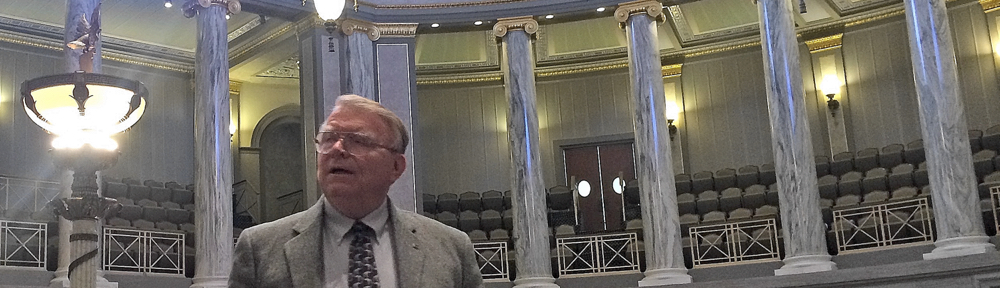
We began thinking of these questions a few days ago when we saw a Kansas City Star comment suggesting a fountain and a parkway named for J. C. Nichols be renamed because he was a racist whose real estate developments defined Kansas City’s history of racism that lingers in the minds of many citizens today, and upon hearing of a petition circulated by a University of Missouri student to remove a statue of slaveholder Thomas Jefferson from Francis Quadrangle (where the columns are in Columbia) and after seeing a news account that protestors in North Portland, Oregon had pulled down a statue of Jefferson at a high school named for him.

New to the discussion is that military bases should no longer be named for Confederate officers such as Braxton Bragg, John Bell Hood, Henry Benning Robert E. Lee, and others.

These are troubling issues and troubling questions in troubling times. Today, let’s consider Thomas Jefferson. The military bases will wait for a later posting.

Correcting the historical narrative is better than trying to erase it, for we learn nothing from erased history and we can learn everything from placing history’s people and events in context. Hasty action in emotional days might rob those in the future of needed guidance in shaping their eras.

University of Missouri Curators correctly decided to leave the Jefferson statue on Francis Quadrangle although the petitions had more than two-thousand signatures. University System President Mun Choi said, “We learn from history. We contextualize historical figures with complex legacies. We don’t remove history.”

To remove the statue of Jefferson because he owned slaves would also remove the statue of someone who was the main author of the Declaration of Independence, the creator of the Virginia Statute of Religious Freedom, the founder of the University of Virginia (three things he wanted on his original tombstone that also is at the University of Missouri-Columbia), and the president whose administration added most of the land west of the Mississippi River that made us a nation stretching from the Atlantic to the Pacific. Dr. Choi and the curators had it right.

Here’s a more intimate dimension to this issue:

Several years ago when I was a guest lecturer at Kent State University, I met a sharp, earnest African-American student, Shannon Lanier, and this then-girlfriend (now his wife, Chandra, and mother of their three children). He told me he was the sixth-great grandson of Thomas Jefferson and his slave Sally Hemings, whom some identify as the half-sister of Jefferson’s wife. Martha Jefferson died at the age of 33 in 1782. Shannon already had co-authored a book about Jefferson’s black descendants. DNA studies indicate Tom and Sally had six children, four of them surviving to adulthood. Many white Jefferson descendants accept the Hemings descendants as part of the Jefferson heritage.

I wonder how those African-American Jefferson descendants would feel if they knew a proposal had been made at the University of Missouri to remove a statue of their most famous ancestor. Would the removal place them in the position of being branded as products of some kind of unforgivable Original Sin? Is their existence the result of some kind of unforgiveable disobedience of widely-accepted contemporary codes against sexual relations between different races (a code often ignored in plantation America, including here in Missouri)?

The censuring of Jefferson as a slave-owner could be seen as a disparagement of hundreds of his descendants, a continuation of the idea that any child born out of wedlock—let alone also born of an interracial relationship—should bear a mark of historic illegitimacy.

And what difference does it make in the long run? The importance of a life is not how it begins but how it is lived. That is why a rush to judgment in emotionally-charged times can be perilous.

As Shannon put it on CBS This Morning, on February 14, 2019, “Sometimes, I’m proud of his accomplishments and sometimes I hate him for not doing more…We can’t necessarily judge history with contemporary eyes but we can learn from history and the mistakes that our past leaders have made.” (https://www.youtube.com/watch?v=PTC_UFAhrvA)

The PBS Newshour ran an extended piece that featured other descendants of Sally and Tom commenting on a Monticello exhibit about Sally. (https://www.youtube.com/watch?v=0Gm3HtijrMQ)

The New York Times ran a Farah Stockman’s story on June 16, 2018 (https://www.nytimes.com/2018/06/16/us/jefferson-sally-hemings-descendants.html) about the feelings of Hemings descendants about the exhibit. One of those descendants, former employee of the National Archives in Washington, D. C., Julius “Calvin” Jefferson, took pride in his slave ancestors: “They were there at the beginning of the country. When you are of African descent, you are told that we had nothing to do with that. I’ve realized that members of my family had a lot to do with that. The contributions that the slave community did at this one plantation afforded Thomas Jefferson the leisure to be the genius that he became.”

Additionally, how, if we are to follow the wishes of those advocating removing monuments of racists and slave-holders, should we treat the thirty-nine men who signed the United States Constitution in 1787? Or the 56 who signed the Declaration of Independence? Some of them were slave-holders yet they gave us the Declaration that declared we were a nation on equal standing with other nations and asserted the immortal line we are fond of quoting today despite the times in which it originated—All men are created equal—and then produced a Constitution that, with its Bill of Rights, defines our country as the republic that it is.

There is danger in applying a moral standard of our time to punish our ancestors for the values they held in morally different societies. To brand them for being part of an acceptable culture that would not be acceptable today runs the risk of diminishing our opportunities to learn from them. Failing to remember our past with its disgraceful as well as its noble moments is to risk an ignorance that could produce regrettable repetitions.

Thomas Jefferson, J. C. Nichols and all of those in our pasts whose flaws we recognize because of our contemporary values give us important context as we correct today’s shortcomings.

Tomorrow is more important than yesterday. But knowing about yesterday is vitally important in helping us shape that tomorrow. Ignorance of history is more dangerous than knowledge of it. Historic events and historical figures are products of their times. Placing people and events within the standards of their eras gives them a reality that we cannot ignore as we consider who we are today and who we will seem to be when we join them as history.

Our presence in these times is a history lesson for tomorrow whether we like it or not or whether those who come after like us or not.

Pulitzer Prize-winning historian Jon Meacham a few days ago on MSNBC discussed how he evaluates historical figures:

Was the person or the institution being memorialized ultimately devoted to the pursuit of a more perfect union or were they for ending the constitutional experiment altogether. And by that test, even the most flawed white Americans—Andrew Jackson, James Madison, Thomas Jefferson, George Washington, could be memorialized and understood as imperfect people who nevertheless were about defending a system that ultimately gave us the 13th, 14th, and 15th Amendments that ultimately gave us the Civil Rights Act, the Voting Rights Act, Woman Suffrage. From Seneca Falls to Selma to Stonewall, the story of the country has been one of all-too-gradual liberation and we should build our monuments; we should focus our collective commemorative memory around those moments.

Taken as a whole, was Jefferson’s life a quest for that “more perfect union?” Yes, it was and is the reason his statues should remain in Columbia and elsewhere, a representation of a man who—as is true of all of us—is greater than his shortcomings.

Wrappers

NFL Commissioner Roger Goodell issued a statement about ten days ago in which he said the NFL had been wrong in not listening to players’ protests against racism and police brutality. He said the NFL supports the Black Lives Matter movement now:

”Without Black players, there would be no National Football League. And the protests around the country are emblematic of the centuries of silence, inequality and oppression of Black players, coaches, fans and staff. We are listening. I am listening, and I will be reaching out to players who have raised their voices and others on how we can improve and go forward for a better and more united NFL family.”

Some have applauded the apparent awakening of the NFL to the issue. Some think the continued refusal of the league to re-sign Colin Kaepernick, who caused the initial stir by kneeling during the National Anthem, is a continuing sign the NFL is just talking a good game.

The proof of the league’s sincerity will be written in the future.

The message struck the President of the United States squarely in the knee, and the resulting jerk produced a Trumpian response that ignores the issue behind the message but helps stoke the fires of his loyal base. “Could it be even remotely possible that…he was intimating that it would be O. K. for the players to KNEEL, or not to stand, for the National Anthem, thereby disrespecting our Country and our Flag?”

I’m going to get in trouble from here to the end today.

I am one of those who loves our country and respects the flag that is its symbol for the good it has achieved as well as what our country can be. Should be. But that does not mean I should ignore the times when that flag has stood for regretful things or regretful things that linger.

I wonder if President Trump has ever visited an Indian reservation. I have. Some are better off than others and some are very poor, places where the ancestors of today’s inhabitants were forced to go so another race could appropriate their lands. I have, for example, stood at the edge of the ditch at Wounded Knee where so many were killed while the American Flag was flying overhead.

I can understand how the American Flag has a different meaning to those who live in those places.

I wonder if President Trump has ever thought about doing something to improve lives in ghettos and barrios or would visit one, mentally capable of understanding what he was seeing and what he was being told and then had the capacity to do something other than tweet about the experience.

I can understand how the American Flag lacks the meaning in those places that the President demands for it from his comfortable office.

I wonder if President Trump has ever visited the remains of an internment camp into which Japanese-Americans were herded a few years before he was born because they were considered security risks although their families might have been Americans for generations. I have.

I can understand why some descendants of those internees can see the American Flag differently from the President’s view that he seems to think is the only acceptable view.

It is easy for those whose lives have not included oppression or social uncertainty to wrap ourselves in a national symbol and feel warm and comfortable in it. But the flag is more than a wrapper. The problem with wrapping oneself in a flag of self-righteousness is that the wrapper can obscure one’s view of the real world around them.

The flag is my symbol, not just his. And I will decide what it symbolizes to me at any particular time. He will not dictate to me what the American Flag can mean and how I may legally express that meaning.

Among other things, the American Flag stands for moving beyond the status quo. The American Flag symbolizes a people always reaching for more, moving for more, developing more, creating more. The flag symbolizes a nation that would not be confined to thirteen states on the Atlantic coast. It symbolizes a nation that would not tolerate state-sponsored religion. It symbolizes a nation that, in time, would not tolerate a system of buying and selling people. It symbolizes a nation that demanded equality with other nations and got it. It symbolizes a people always asking, as Carl Sandburg put it, “Where to, what next?”

It symbolizes a nation with flaws and scars—and the best it can become despite them.

But moving beyond the status quo also means extending opportunity beyond the privileged. Moving beyond the status quo implies a public responsibility to one another so that allmight seek life, liberty, and the pursuit of happiness without fear.

Going beyond the status quo requires those who are comfortable with it to recognize enforcing the status quo stifles the very values the wrappers claim to cherish and leads to resentment and challenge.

Do not tell me, Mr. President, that I may not take a knee in a country that speaks of hope for better days but is seen by many as doing little to bring them to those people. Do not tell me, Mr. President, that your ideas of freedom are the only ideas I am allowed to have. Do not tell me it is un-American to kneel during the National Anthem, or to refuse to say “Under God” as part of the Pledge of Allegiance, or in some other way indicate that I believe the American Flag represents still unfulfilled goals that we should never rest in reaching for.

I am an American and I will decide the meaning of our national symbols, not you. My respect for them is based on what they mean we can be. And what we can be is surely better than what we are.

I want to make America great. And that is why I will kneel if I choose to do so. And if I remain standing with my hand over my heart, it is because I choose to believe in what must be, not what is.

I will choose how I interpret the flag. I will not wrap myself in it and proclaim that only I am righteous enough to interpret its meaning. I will not wrap myself in it and demean those who see it through different eyes. That, frankly, is un-American.

A flag cannot be inspirational and aspirational if it is wrapped. It can only be those things if it is free to blow with the winds of change.

There is a strong breeze blowing in our land today. This is a time to let the flag fly so all may see it in their own ways and be guided by it to better tomorrows.

Crisis Buffet

We are trying to think of a time when a Missouri governor has had as many major issues to deal with at one time as Governor Parson has on his plate now.

We can’t think of one.

In addition to the normal burden of duties governors have, there has been added to this one’s plate the state’s response to a worldwide pandemic, the related collapse of the state’s economy and its hundreds of large and small widespread ripples to which state government is either a party or to which it must respond, civil unrest that must be dealt with on a daily—or nightly—basis at a time when the responsibility of government to restore or maintain order is under intense scrutiny, and questions about the role of government in correcting the social and political ills that are behind the disorder. So far the governor has not had to deal with major natural disasters—a devastating tornado or a historic flood for examples.

Plus—it’s a campaign year. Additionally, the instability of national leadership, legislative action to overturn the will of the people on the so-called “Clean Missouri” initiate of 2016, and the August ballot issue to expand Medicaid and the state funding responsibilities that will go with it constitute a salad bar of issues to go with the buffet of crises facing a governor who has been given an average-sized plate.

Governor Henry Caulfield in late 1931 once ordered an immediate 26% cut in the state budget to deal with the depression’s major impact on state finances when retail sales were down by half and unemployment was rising toward a 1932 level of thirty-eight percent. His successor, Guy B. Park in 1933 faced a state treasury holding only $15,000 with a $300,000 payroll to meet. Central Missouri Trust Company loaned the state enough money to pay its bills and to match available federal funds for depression relief until a special legislative session could enact new revenue measures—a gross receipts tax that was later replaced with the state’s first sales tax.

A plethora of problems faced Republican Governor Forrest Donnell in 1941, the first being the refusal of the Democrat-dominated legislature to certify his election at the start of the year and, as the year wound down, putting Missouri on a war footing.

Governor Warren Hearnes faced civil unrest during the Civil Rights era and in the wake of the murder of Martin Luther King, calling out the National Guard at times to maintain order.

Other governors have dealt with killer heat waves or 500-year floods. But the Parson administration will be remembered for 2020, a year in which crisis after crisis came to Missouri.

We have watched his almost-daily briefings and have watched as he and administration members and private organizations have scrambled and worked to deal with the COVID-19 pandemic and its myriad effects. The civil unrest in the streets will remain as extreme civil discomfort long after the streets are clear and a record is yet to be written on whether Missouri—and the nation—at last really will do something about that discomfort after decades of talk but insufficient progress being made to limit chances for the streets to blaze again.

The economy will come back although it might take years. Missouri and the country had finally put the 2008 recession far back in its rear view mirror when all of this hit but that experience should remind us that a quick fix to today’s economic ills can best be hoped for but not counted on.

A couple of times we have seen Governor Parson show some irritation with a reporter or a published story during his briefing, a circumstance that might best have been handled with a phone call rather than a public criticism. But we’re willing to cut him a little slack, given the pressures he feels, the burden he carries, and the daily stress of a job that has become far more than any governor we know about. The passage of time will evaluate whether his leadership in this unprecedented time is, or was, effective and long-lasting.

Missouri has seldom needed as steady a hand on the tiller as we need one now. Missourians viewing today’s challenges and responses through their personal partisan lenses might differ on how this governor is doing in the moment. But he is Theodore Roosevelt’s man in the arena.

“It is not the critic who counts; not the man who points out how the strong man stumbles, or where the doer of deeds could have done them better. The credit belongs to the man who is actually in the arena, whose face is marred by dust and sweat and blood; who strives valiantly; who errs, who comes short again and again, because there is no effort without error and shortcoming; but who does actually strive to do the deeds; who knows great enthusiasms, the great devotions; who spends himself in a worthy cause; who at the best knows in the end the triumph of high achievement, and who at the worst, if he fails, at least fails while daring greatly, so that his place shall never be with those cold and timid souls who neither know victory nor defeat.”

Who among us would want to be carrying the burden of office that this governor is carrying? Who among us would want to be in the arena he is in?

Frankly, we think he is fighting the good fight. And we look forward to the day—as he undoubtedly does—when we can again live off a menu rather than deal with a crisis buffet.

Us vs. Us

A fearful old man sat down at my computer yesterday and began to type.

The son of Kansas Baptist/Methodist Republicans—Landon, anybody-but-Roosevelt, Dewey, Eisenhower, Nixon Republicans—earlier in the year fearful of a spreading plague but now fearful of something more dangerous.

Fearful that he might soon see an American Tiananmen Square, the violent and deadly pro-democracy protests that are remembered because of the image of one man blocking a military tank on its way to put down the demonstrations.

Fearful that a desperate effort to project and protect personal power without limits, unchallenged by timid participants from his own party intimidated by his presence and his loud loyalist legion will leave a legacy of distrust in a system of government created long ago by men whose ideals ultimately far overshadowed their ideology.

Fearful of a force that sees a crisis as a political opportunity rather than as a cause demanding responsibility and as an opportunity for creating a united spirit to reach an inclusive goal.

Fearful of a climate being expanded that encourages citizens to feel they are victims of government rather than responsible participants in it.

The old man at the keyboard remembers other bad times and other missed opportunities to heal the national spirit, other days of burnings and of lootings, other days when the peaceful expression of grief and of hope growing from it was overshadowed by uncaring opportunistic violence that diverted actions and intentions to create a better community and a better nation to overshadowing relief that the burnings and lootings finally were over.

The old man, having seen many things in a long life, is fearful, fearful that the democratic republic that he and his Kansas Republican parents have loved and believed in has been pushed to the edge of its existence by repeated missed opportunities and now by leadership that cares about plagues and public tragedy and disruption only to the degree that it can turn them to perceived personal advantage.

The old man is fearful when those within a leader’s orbit lack the bravery to advocate compassion that transcends perpetuating personal political power and the will to work for reason in unreasonable times. He worries at the loss of common integrity and the lack of diverse voices demanding it from those in the most powerful positions, and the refusal of those in those positions to display it.

His mind is often drawn to a poem called “Talk” by Russian poet Yevgeny Yevtushenko from many years ago that ends:

How sharply our children will be ashamed

Taking at last their vengeance for these horrors

Remembering how in so strange a time

common integrity could look like courage.

Integrity. Courage. The old man seeks them from those reluctant or afraid to display them. And in times like these when integrity and courage are most needed, he is fearful.

Us vs. It—part IX, prayer and politics.

Last Sunday was Ascension Sunday in our faith tradition. Our minister remarked that he had seen a joke circulating on Facebook that when Jesus ascended into Heaven, he became the first person to work from home.

President Trump, just before the holiday weekend, ordered churches to open “right now” for face-to-face worship. As he has done in the past, he claimed exclusive power to override local and state orders for worship-in-place limits. The president who has proclaimed that it’s up to states and their governors to fight the Coronavirus, with his administration only as a backup, seemed to think on the issue of opening churches that governors and states (and mayors and cities) have no business standing in his way when it comes to letting congregations, uh, congregate.

As is often the case with this president, he was claiming a power he does not have and the motive behind a statement, a bluster, a tweet, a fabrication, a rant—whatever—is a matter of what benefits him.

It isn’t all that hard to see who President Trump really tried to please with his sudden “order.” Politico reported his bolt-from-the-blue announcement Friday was the result of “a sudden shift in support…among religious conservatives is triggering alarm bells inside his reelection campaign.” A couple of reputable religious polling organizations show a “staggering decline in the president’s favorability among white evangelicals and white Catholics.” Both groups strongly supported Trump in 2016. The Public Religion Research Institute last month showed double-digit drops in favorability among mainline Protestants (down 18%), white Catholics (down 12%) and white evangelicals (down 11%).

Once again, it appears the president responded to his advisors who said, “You’ve got to do something!”

The PRRI cited above is run by Dr. Robert P. Jones, who has Baptist roots, a Master of Divinity degree from Southwest Baptist University in Bolivar and who once was an Assistant Professor of Religious Studies at Missouri State University in Springfield. His 2016 book, The End of White Christian America is a thoughtful study of cultural changes underway in our country, the fears of some that are motivating some political considerations and actions, and an analysis of how the white Christian culture that has dominated the course of this nation can maintain significance in the face of ongoing and inevitable cultural change.

The President last Friday didn’t answer any questions that inevitably would have been asked about his ongoing claim that he has absolute power over such things as this.

One indisputable thing he did say in his Friday announcement is, “In America, we need more prayer, not less.” He’s correct, of course, although he might not like many of the prayers that are being offered. Plus, prayers don’t have to be said inside a religious building to be heard. This observer has heard prayers on street corners. In fact, he and his wife were once stopped on a street in Philadelphia—near the cemetery where Benjamin Franklin is buried—but a great big fella who grabbed my right hand and her left and offered up a mighty prayer for our well-being. Scared the living bejeezus out of us for a second or two. But on reflection, it was kind of nice.

We know the President will be deeply disappointed and maybe angry that our church is ignoring his pronouncement. We don’t plan to gather in our sanctuary at First Christian in Jefferson City until June 7. We hope he doesn’t become upset that Governor Parson did not force us to gather there last Sunday.

It often has been observed that a church is not a building. When a pastor says, “Good morning, church,” the pastor is not talking to a structure but to a flock.

Someone, we tuned in too late to hear who it was on the radio Sunday morning, suggested the President probably hasn’t read the Bible very much, particularly the sixth chapter of the Gospel of Matthew in which Jesus suggests (as we in these times might interpret it) that it is not necessary to gather in groups under a roof to pray. In fact, it seemed to suggest just the opposite:

“Be careful not to practice your righteousness in front of others to be seen by them. If you do, you will have no reward from your Father in heaven…And when you pray, do not be like the hypocrites, for they love to pray standing in the synagogues and on the street corners to be seen by others. Truly I tell you, they have received their reward in full. But when you pray, go into your room, close the door and pray to your Father, who is unseen. Then your Father, who sees what is done in secret, will reward you..

Baptist minister Rod Kennedy, who is doing an interim ministry at the First Baptist Church in Ottawa, Kansas, responded to the President’s demand that churches open “right now” on his Facebook page:

President Trump,

On behalf of my Baptist congregation, I want to thank you for your concern for houses of worship. We respectfully decline your suggestion that we reopen. The Frist Amendment, religious freedom, separation of church and state,—all that constitutes our right to ignore you.

I’m not drinking bleach, taking suspected drugs, or buying your demagoguery. We will let you know when our church decides to reopen. After all, we are a free, independent Baptist congregation and government interference iirritates our Baptist gumption.

When churches do re-open we would be happy to see you in church every Sunday. It might help you find some divine wisdom.

If you want to help, wear a mask, stop being divisive, make sure voting will be easy in November, and stop mocking, threatening, and demeaning others. It’s not a religious practice.

Kennedy, who describes himself as a “Catholic Baptist,” retired after twelve years at the First Baptist Church of Dayton, Ohio. He has no trouble pointing out the differences he has with the more fundamentalist members of the diverse denomination. He posted a couple of longer additional messages to the President and the responses illustrate the wide differences among Baptists—and among those of other denominations who call themselves Christian. See https://baptistnews.com/article/self-described-catholic-baptist-leaves-ohio-church-embarks-on-writing-career/#.Xsrq8mhKiUk if you want to know more about him and if you’re a Facebooker, you can go to his page or if you want to hear what he sounds like in the pulpit, go to the First Baptist Church webpage in Ottawa, Kansas.

Last Sunday morning, we went to the presidential webpage to check on President Trump’s schedule for Sunday, May 24:

President Donald Trump has no public events on his schedule today and is expected to remain in the White House with the first family. With the ongoing coronavirus outbreak and current recovery efforts, the president is likely to meet with national leaders and public officials regarding the needs of the coming week.

Mmmmm-hmm. Churches are essential but not so essential that he would do what he urged millions of Americans, particularly his faithful followers (read that any way you would prefer) to do—go to church even “with the ongoing coronavirus outbreak and current recovery efforts.” Wonder why he didn’t tell Melania and Baron Sunday morning, “We’re going to church—right now!”  Instead he went out and he worshipped the putter and the driver.

Sometime when the man gets all worked up like this, we wish somebody would say, “Oh, go take a pill!” But—– hasn’t he already been doing that?

Us vs It—Part VI, This better work

This is the third day that Missouri is open for business and our lives haven’t changed here on our quiet street. The people at our house haven’t been tested yet and we don’t know anyone who has been. Our two hospitals offer testing. Maybe we’ll go see one of them soon. Columbia has five locations. Osage Beach has one. We mention those places because a lot of Jefferson City people work in Columbia, or will when the University reopens. And a lot of Columbia people work in Jefferson City now that state government is getting back to the new abnormal. A lot of these folks never quit working, of course. They just haven’t been in their offices. But we’ll be watching case numbers in Boone and Cole Counties, in particular, because of the numbers of people who pass each other going in opposite directions twice every day on Highway 63. And we’ll be watching case numbers in Camden County and Osage Beach because the reopening means tourism season has begun.

Governor Parson, the state health director, and various other state and private entities have assured us in the daily briefings that Missouri’s most critical numbers have been declining for the last two weeks, one of the main measurements needed to reopen. We’ve been assured the state is ready to quickly respond to hot spots such as meat packing plants in California and St. Joseph (St. Joseph had only one testing station when we checked the list last Sunday and California has none) and Marshall (which has one).

We have welcomed the Governor’s daily briefings. They have been examples of the kinds of Coronavirus briefings adults should conduct and we appreciate the recent change that allows reporters to be present instead of submitting questions. That’s important because answers often lead to other questions and the old system didn’t provide that opportunity very well.

We understand the growing pressure on states to reopen for business but the lack of a vaccine and the admission that the virus has not and will not go away leaves us nervous. The YMCA reopened on Monday with a lot of precautionary policies put into place to keep us safe. We haven’t resumed our three-times-a-week morning workouts yet although we miss our friends a great deal. We’ll go back soon, just not right now.

Our church isn’t going to go back to in-person worship services until the first Sunday in June. I don’t know that we’ll go to a restaurant or to a movie theatre anytime soon. We both plan to wear our masks for awhile any time we go someplace where a lot of people are visiting or shopping.

We are going to tiptoe into the world, not dash into it.

We want things to be okay. We want to be able to be with friends. We want our working friends to get their jobs back.

Your faithful observer has kept a journal since March 28th and it is unlikely that journal will stop anytime soon. Our wish is that there be little to add to it but we’re keeping it going into autumn, into the next flu season and, if the scientists are correct, into the second wave of this virus.

To be candid, we suspect reopening the state and the nation is as much a political decision as it is anything else. But reopening has to occur, or had to occur, sooner or later and most of the people in positions to decide when reopening is appropriate and safe (enough) recognize the responsibility they are assuming by giving the go-ahead. It seems to us from having watched the daily briefings from our capitol that the reopening order has not been hastily or easily given.

We do hope there are thresholds in place that will determine when stay-at-home orders will be put back in place.

If you’ve read these entries this year you know we spent a lot of time looking at what happened with the last great pandemic, the Spanish Flu of 1918-19, and while our abilities to fight a pandemic are better than they were, the shortcomings in response that we have seen leave us nervous.

We don’t think our governor would unlock the doors if he didn’t think it was safe to go out and responsibly conduct ourselves and our business.

But this is bad stuff and more Americans died from it in April than died in the entire Vietnam War and it is still on the loose.

This reopening better work.


Us vs. It—part III, Re-opening Day

This is the third or fourth version of this entry from your faithful observer as he has struggled to keep up with our President and his ping-pong positions on the pandemic.

We started with the anticipation that President Trump would be convening a task force to look at when he can proclaim the country re-opened for business. He called it the biggest decision of his life. Within seventy-two hours he had amplified his position, asserting that he and he alone could order the lifting of social distancing and other policies put in place by the nation’s governors.

Now, after several governors have suggested rather clearly that he didn’t know what he was talking about, he has decided he’s going to “authorize” each governor to reopen states as the governors see fit. This is a big CYA effort (or if you prefer a more elevated phrase, a face-saving effort) and governors are likely to maintain that they don’t need his “authorization” either.

The way things are going, this entry could be out of date before sundown. But we’re going ahead anyway.

The President is under a lot of pressure to get the economy moving again. Some of that pressure is coming from Wall Street, which is highly-important to him personally as well as politically.

The Washington Post reported a few days ago that the Trump Organization had laid off 1,500 people and closed seventeen of its twenty-four properties in various parts of the world because of the virus. Based on previous Trump financial disclosures, says the newspaper, the closed properties generate about $650,000 a day. The organization’s payments on leases and property taxes are coming due or are past-due.

Some of this is increasingly political. He needs a big economic turnaround before the Republican National Convention opens in Charlotte, North Carolina on August 27. He needs the virus to be gone and a major economic resurgence to talk about at the convention and in the weeks before the election. He can continue deflecting criticism of his handling of the epidemic to someone else—as he already has in pointing a finger at China, Congress, Democrats, the Obama Administration, governors, and the World Health Organization. But by late August, he’ll have a hard time generating enough other boogeymen to deflect enough blame away from an administration that had taken exclusive credit for the growing economy and now wants no criticism for its sharp decline.

While he now seems willing to let governors decide what is best for their states, we’ll be watching to see if this new attitude also includes better assistance to the states in the recovery. As we have heard, he has blamed governors for their lack of protective equipment for healthcare workers.

Actually, we were looking forward to a possible legal donnybrook between the governors and the President if he had maintained his position that he has the exclusive power to reopen state economies. We do wonder if his new position still includes part of his previous statement that if he disagrees with a governor’s actions or lack of them, “I would overrule a governor, and I have a right to do it.”

We all know what could happen if he tries to overrule a governor, don’t we? What will the President do if a governor refuses to be overruled? Will he withhold federal disaster aid? That won’t win many friends or votes. Will he sue the states or the governors? Will the states and their governors sue him?

Our Governor Parson, asked on Monday about the President’s remarks about exclusive powers, said the President “well-knows the authority of the states.”  He said he’s not worried.” We might have to go back to the early days of World War II to find a governor who suddenly has so many things on his plate.

The President still hopes something good for him can happen on May 1. He seems to be one of the few who thinks that date is realistic.

Here’s an outlook for Missouri is concerned:

Leaders of the Missouri legislature hope to re-convene the General Assembly on April 27. Governor Parson said yesterday that would be okay with him as long as they maintain social distancing—as they did last week when they passed the supplemental budget bill. Some projections underline the governor’s cautionary note.

The University of Washington’s Institute for Health Metrics and Evaluation, which has been cited in several White House Coronavirus briefings, a few days ago lowered the anticipated death toll from the virus at 61,545, quite a drop from a possible 240,000 suggested earlier. It says social distancing is the key to the lower number. But while the 61,545 was the hard number we read about and heard about, the institute admitted it was only an estimate, somewhere between 26,487 and 155,311 in its modeling.

We checked the projection graphs a few hours before posting this entry. The institute has increased its projected death total to 68,841 with the 68,841st death coming on June 28. The hard number falls in a bracket of 30,188 and 175,961.

The forecast estimated that on May 1, the nation’s hospitals will need 49,891 beds, 10,937 in intensive care, and 8,953 invasive ventilators. It suggests 976 people will die that day.

Not a good day to reopen the country. We expect the modeling will changes from day to day as new statistics are fed into the system.

The IHME’s latest forecast is for Missouri’s peak day is April 29, just one day before May 1, two days after the legislature convenes. The good news is that no bed shortages or ICU space shortages are forecast. But we will need 313 ventilators. The institute forecasts that we’ll be averaging 50 deaths per day by then, part of an anticipated total of 1,712 with the 1,712th death coming on June 16. That’s the hard number forecast so far. The institute model says that’s within a range of 420 and 5,557.

Governor Parson has said more than once that he’s making decisions about re-starting the economy based on Missouri-specific data. He needs a lot more of it. Our testing numbers, although growing, are not impressive and Missouri as well as other states are going to have to have large improvements in testing to make a safe determination of when stay-at-home orders should be lifted and social distancing standards should be eased.

The President realizes that the opposition gains more ammunition each day the virus creates a new hot spot, each day that first responders are overwhelmed, every day that doctors and nurses are exposed to the virus because they lack the personal protective equipment they need. He knows, or should know, that declaring the company open is a great risk if the virus is still killing significant numbers of people each day.

Governors also must be aware that easing the protective steps they have ordered could backfire on them, many of them facing re-election this year. The autumn flu season will have started by the election in November. The autumn sports seasons will draw thousands of people to distances far less than six feet, elevating the danger of a new virus surge. The last thing the President or the governors need is a flare-up of COVID-19 ten days or fewer before the election.

A popular song during World War I proclaimed, “We won’t come back ‘till it’s over, over there.” The lyric can change to fit our times: “We won’t come back ‘till it’s over, over here,” with a new definition of “come back” and another new definition for “it.”


Us vs. It—part II, Waist deep

At the height of the Vietnam War one of the nation’s greatest folk singers began performing an allegorical song called “Waist Deep in the Big Muddy.”

When Pete Seeger performed it on the Smothers Brothers Comedy Hour more than fifty years ago, the song became part of a national controversy because many people, apparently including the CBS censors, thought that the next-to-last verse criticized President Johnson’s increasing investment of American lives in what some already thought was an unwinnable war.

It didn’t help that Seeger was among those blacklisted during the McCarthy Era (he was part of The Weavers, the group that brought folk singing to early popularity. But the group was too liberal for McCarthyites) and he was still considered somewhat “leftist,” therefore, “subversive.”

The CBS censors cut the song out of the show but when Seeger performed it on a later program—one of the last in the show’s brief run—it was allowed to stay in, perhaps because of the public reaction to its deletion the first time.

We keep hearing President Trump talk about the need to re-open the country or to get big-time sports going again even as he also says we’re headed for the deadliest part of the Coronavirus assault. The shutdown of a part of the economy—the hospitality industry—is a big blow to his personal interests and reopening the country, as he likes to put it, would certainly be to his benefit. We make the observation without implying that he is driven only by his personal economic concerns but his insistence that reopening business in the wake of the ongoing pandemic brings Pete Seeger’s song from another era to mind. It was the next-to-last verse that got Seeger and the Smothers Brothers in trouble then and it might get this observer in trouble today, at least with some people. Have at it in the comment area at the end if you wish—either way. Just remember our civility guidelines.

Waist Deep in the Big Muddy

It was back in nineteen forty-two,
I was a member of a good platoon.
We were on maneuvers in-a Louisiana,
One night by the light of the moon.
The captain told us to ford a river,
That’s how it all begun.
We were — knee deep in the Big Muddy,
But the big fool said to push on.


The Sergeant said, “Sir, are you sure,
This is the best way back to the base?”
“Sergeant, go on! I forded this river
‘Bout a mile above this place.
It’ll be a little soggy but just keep slogging.
We’ll soon be on dry ground.”
We were, waist deep in the Big Muddy
And the big fool said to push on.


The Sergeant said, “Sir, with all this equipment
No man will be able to swim.”
“Sergeant, don’t be a Nervous Nellie, ”
The Captain said to him.
“All we need is a little determination;
Men, follow me, I’ll lead on.”
We were, neck deep in the Big Muddy
And the big fool said to push on.


All at once, the moon clouded over,
We heard a gurgling cry.
A few seconds later, the captain’s helmet
Was all that floated by.
The Sergeant said, “Turn around men!
I’m in charge from now on.”
And we just made it out of the Big Muddy
With the captain dead and gone.


We stripped and dived and found his body
Stuck in the old quicksand.
I guess he didn’t know that the water was deeper
Than the place he’d once before been.
Another stream had joined the Big Muddy
‘Bout a half mile from where we’d gone.
We were lucky to escape from the Big Muddy
When the big fool said to push on.


Well, I’m not going to point any moral,
I’ll leave that for yourself
Maybe you’re still walking, you’re still talking
You’d like to keep your health.
But every time I read the papers
That old feeling comes on;

We’re, waist deep in the Big Muddy
And the big fool says to push on.

Waist deep in the Big Muddy
And the big fool says to push on.
Waist deep in the Big Muddy
And the big fool says to push on.


Waist deep! Neck deep! Soon even a
Tall man’ll be over his head, we’re
Waist deep in the Big Muddy!
And the big fool says to push on!

https://www.youtube.com/watch?v=uXnJVkEX8O4

We are not implying in this entry that President Trump is “the big fool” of today’s “war.” That would be name-calling and we do not believe name-calling either solves problems or ennobles the person who has nothing of intrinsic value to otherwise add to a conversation.

A blogger, Chimesfreedom*, has a nice piece about Seeger’s performance of the song on the Smothers Brothers Comedy Hour. Tom and Dick Smothers were constantly at war with the CBS censors and Seeger’s performance of the song on their season-opening show in 1967 led to a loud public fight about censorship.

http://www.chimesfreedom.com/2014/01/28/the-censored-pete-seeger-performance-on-the-smothers-brothers-comedy-hour/

The brothers’ constant fight with CBS about the content of their show led the network to abruptly cancel it, despite good ratings, after just two years. It was replaced by Hee-Haw.

Chimesfreedom is a blog with an unnamed “editor-in-chief” who describes himself as “a writer and professor in New York.”

Us vs. It

Finger- pointing is not going to solve the health problems we are facing or will be facing in the next few months as the pandemic sweeps from both coasts into the midlands. And it won’t do any good after the Coronavirus runs its course. We have serious problems and we can’t afford to waste time blaming this person or that country if we’re going to overcome those problems. So enough of the name-calling and blame-shifting already.

Things aren’t happening to other people They’re happening to us. And that’s what’s so unsettling. The Coronavirus isn’t something happening only in some distant countries. It might be next door. It might even be in our house and we don’t know it.

It’s not a tsunami at some remote Pacific Island, a tornado in another town, a flood in another state, or even a fire down the block.

It’s……somewhere. Close. Everywhere, maybe. It’s even making the stock market sick.

My friend Joe, a retired homicide cop, lamented at the YMCA before it closed indefinitely that back in the day he could see who might shoot at him and he could do something about it. But this Coronavirus, well, this is something impossible to relate to because we’ve never experienced anything like it. It is forcing us to become patient in a short-attention-span world.

Joe and I and several other friends at the Y all fall into the demographic group that this virus likes to hit. We like to think that our regular activities on the machines and with the weights and on the walking track make us a LITTLE more bulletproof.

But who knows?

The YMCA and the church are the main social outlets for several of us retired folks. Our church is doing worship services on its Facebook page instead of in the sanctuary now. The only activity still going on is our food pantry distributions. When we all left the Y for the last time before it closed, we didn’t know when we’d see each other again. This virus is shrinking our world, generally and personally. One good thing is that the weather is warm enough that we can at least go outside and walk about the block or something and at least breathe outside air—when it’s not raining.

Our fortunes are becoming unfortunate, something that didn’t happen in the Spanish Influenza era when retirement plans, health savings accounts, and insurance were not so much a part of life.

There is a choice to be made—people or the economy.   We can always rebuild the economy, though it might take more time that we wish. But we can’t rebuild the people we will lose if our leaders who think the economy is the key to their continued employment choose to make people more vulnerable and less valuable than the numbers on the stock market. The health of my body is more important than the health of someone’s portfolio.

We already are past the finger-pointing stage. It matters not where this outbreak began. What matter is how it is ended. Blaming others for the start of a crisis that we must help end is not an excuse for disarray in combatting it.

When this ends, as it will, there will be much room for a national soul-searching with the understanding that talk is cheap and the protections, treatments, and cures will require financial commitment based on our responsibility to be our brother’s and sister’s keeper.

Will this change us? It better change us. It already has, in fact.


Dr. Crane on truth

(We normally reserve any political observations for our Wednesday posting but an event a few days ago has led us to bend that standard for this Monday. Last week, President Trump held a conference call with the nation’s governors to discuss the pandemic. When some governors questioned the federal help their states could get from Washington, the President said Washington was serving only as a “backup” to their efforts. That prompted Washington’s governor to respond that the nation doesn’t need a backup, it needs a Tom Brady—a reference to the great quarterback of the New England Patriots. At a news conference, the President seemed to miss the point entirely when he told reporters, “They think Tom Brady should be leading the effort. That’s only fake news, and I like Tom Brady, spoke to him the other day, he’s a great guy.” Our strong personal attitude on the President’s accusations that the mainstream media is nothing but liars aside, there is nothing fake about the news of the COVID-10 pandemic as it envelops our world ever more tragically. Truth, consistent truth, is badly needed in these circumstances. So we turn to Dr. Frank Crane and his thoughts just after the Great War on—

THE UPROAR

Violence is the gesture of Impotence.

Brutality is the outward sign of inward Cowardice.

The persecutor is not quite sure of himself. It’s the half-doubt lights the fagot.

When the boy passes the graveyard at night he whistles, because he is afgraid of being afraid. It’s the same with all who vociferate.

Only those who believe with their whole hearts can keep still.

The screaming reformers do not believe their cause—wholly.

If the Germans had been sure of the superiority of their Kultur they would have left it alone, to conquer the world by its inherent excellence. Because they were not sure, they went to war.

“Defenders of the Faith!” Ludicrous title! For real faith needs no defense. It is a defense.

You don’t need to stand up for the Truth, and to fight for it, and to preserve it against the enemy. When you talk that way it shows you don’t understand the quality of Truth.

Truth is the one indestructible, ever-green, eternally persistent thing on earth.

All we have to do is to see it, to believe in it, to adjust our lives, thought, and speech to it, and wait. By and by, it always wins.

Hence genuine believers in the Truth do not “strive nor cry, neither is their voice heard in the street.” They are quiet, calm, glad. They have hold of the one thing that cannot fail.

They lean against the pillars of the universe.

The Infinite flows through them, and they smile at the contortions of the Finite.

Whoever is sure is undisturbed.

All fret, worry, apprehension, and morbidity arise from uncertainty. Those who fight are not quite sure.

Only those who are sure can afford to turn the other cheek.

Only the sure can afford to forgive their enemies.

Few reach the dizzy height of Jesus, who saw the Truth so clearly, and believed so utterly inits triumph, that He refused to struggle for it.

The most amazing thing about Him was His leisureliness.

So true it is that “he that believeth shall not make haste.”

Most of us have only caught up with Joshua; we are miles from Jesus.

We juggle His texts, but have no idea of His vast, calm spirit.

Let us find the Truth, even if it be only the Truth about wood, or metal, or mathematics, just any little piece of the Truth, and believe it, and adjust ourselves to it, and be happy; for out of Truth flows peace.