Sports: Mizzou Chases a World Series Win; Cardinals get a win; Battlehawks Outbattled; and One Guy’s May 

By Bob Priddy, Missourinet Contributing Editor

(MIZ)—The University of Missouri softball team enters the NCAA post-season tournament as the overall seventh seed, earning a home field regional tournament slot. They’ll play thefourth-seeded University of Omaha Friday afternoon in Columbia.

Omaha is 41-13.  The Lady Tigers are 43-15 after losing the SEC championship to Florida.  Indiana, the number two seed, and Washington, seeded third, also will be playing in Columbia. It’s a double-elimination tournament.

If Missouri wins it will be the host team in the super regional round, facing the winner of the Durham Regional that includes South Carolina, Morgan State, Utah, and Duke, the tenth seed. (ZOU)

(BASEBALL)—A bad week for the Cardinals and what is becoming a typical week for the Royals.

(ROYALS)—The off-season moves by the Kansas City Royals continue to make the front office appear to be brilliant strategists and buyers as the season reaches the one-fourth mark.   The Royals finished their week eight games above .500 and only one-half game out of first place thanks to a sparkling 12-strikeout performance against the Angels on Mother’s Day by Seth Lugo.  Lugo lasted eight innings and gave up one earned run in a 4-2 Royals win. Seventy-seven of his 112 pitches were strikes as he kept the Angels off the scoreboard until the sixth inning.

Manager Matt Quatraro says getting a dozen strikeouts on only 112 pitchers was “really remarkable.”

His performance has made him the American League ERA leader at 1.66.

(CARDINALS)—If the Royals’ front office seems brilliant for its offseason moves, the Cardinals front office continues to draw scornful looks from fans and media observers for what it did.  And it appears President of Baseball Operations John Mozeliak knows he might be on even less firm ground that manager Oli Marmol. During an interview Sunday on the Cardinals’ flagship radion station, KMOX, Mozeliak said he understood fans are not happy with him or with Marmol. “I think we have to just keep trying to go back, trying to get this to work….We understand that if it doesn’t, people are going to be held accountable and ultimately that starts with me.”

A few hours later, the Cardinals finally beat the Brewers on Mother’s Day to close out the week eight games UNDER .500.  Ryan Helsley, who hadn’t pitched in eight days, got the save in a 4-3 Redbird win.  That ended an eight-game losing streak stretching to last year against the Brewers.

Paul Goldschmidt had a pair of hits, including a home run, to break a 1-for-34 streak.

Cardinals’ starter Miles Mikolas staggered through the first inning, giving up all three Brewers runs on 42 pitches, before settling down and needing only 53 more pitches to shut down Milwaukee through the next five innings.

The Cardinals have won only two of their last ten games.

0-0-0

The ‘Birds got some discouraging news about Willson Contreras’ broken arm during the weekend. It had been thought he’d be gone for about eight weeks but the new prognosis is for him to be missing for about ten.

He was the team’s leading hitter, with a .280 batting average when he went out. Backup Ivan Herrera is hitting .263.

(Battlehawks)—The St. Louis Battlehawks and the Birmingham Stallions went into their weekend game with combined records of 11-1, the Stallions having the unblemished record.

And they still do—but it was a nail-biter.

St. Louis got a team-record 61-yard field goal from Andrew Smyzt to stay within three of the Stallions at the half, and took a 20-17 lead into the fourth quarter—the first time all season Birmingham had trailed going into the last quarter. But Birminghan got the final score on a touchdown pass from Adrian Martinez to Kevin Austin Jr., with 5:23 left, the sixth lead change of the game.

The ‘Hawks, down 30-26, got the ball back on a blocked punt with 40 seconds left, 47 yards from the end zone. But they couldn’t finish a final drive and left for home with a 5-2 record, tied with the San Antonio Brahmas for the lead in the XFL Division. St. Louis, however, has a tie-breaker win in San Antonio.

Quarterback A. J. McCarron hobbled to the sidelines with an ankle injury late in the fourth quarter after taking a low and late hit. He returned to finish the game but was limping perceptibly.  Coach Anthony Becht told reporters yesterday that he doesn’t know yet if McCarron can play next weekend against the D. C. Defenders. He says McCarron will be evaluated day-to-day.

Speeding right along—

(IndyCar)—It’s May and that means racing at the Indianapolis Motor Speedway.

Practice begins today for the Indianapolis 500 with 34 cars competing for the 33 starting spots in the race Memorial Day Weekend. Qualifying is set for next weekend.

But first, there was the traditional May-opening race on the road course.

Indianapolis, IN – during the INDYCAR Sonsio Grand Prix at the Indianapolis Motor Speedway. (Photo by Joe Skibinski | IMS Photo)

Defending series champion Alex Palou started from the pole and raced to a 6.6-second win ahead of Will Power, going back-to-back in the May road course race.  But the race was far more intense than that, with eight drivers seeing the lead and fourteen lead changes—including the first lap when Christian Lundgaard, who started third, grabbed the lead from Palou early on the first lap.

Lundgard led 35 of the first 42 laps but was third at the end. Palou led the last 23 laps. Lundgard was third, ahead of Scott Dixon and Marcus Armstrong.

The win puts Palou into the points lead again, up twelve on Power who has three second-place finishes in four races this year.

It was a solid day for Chip Ganassi racing, whose cars finished first, fourth and fifth. Palou’s win is the third straight for Ganassi on the Indianapolis road course. Scott Dixon won the fall race last year.

Power had the best finish of the three Penske team drivers. Scott McLaughlin finished sixth after starting thirteenth and Josef Newgarden, who started fourth, fell back to seventeenth at the end.  Penske’s teams were short some personnel who have been suspended for the month’s races because of the push-to-pass controversy at St. Petersburg.

Colton Herta, who started the race as the points leader, had a difficult day, starting 24th because he ran out of gas while qualifying and then being bumped off the track by teammate Marcus Ericsson early in the race, dropped to fourth in the standings although he rallied back to seventh. Ericsson wound up sixteenth.

(Doing the Double)—The most closely watched driver in today’s two practice sessions (weather permitting) will be Kyle Larson, who will try to coordinate qualifying at Indianapolis next Saturday with the NASCAR All-Star Race that night at North Wilkesboro, North Carolina.

Larson hopes to run the full 500 and then fly to Charlotte for NASCAR’s annual Memorial Day 600 mile race that night.

Friday is the first day he’ll be challenged to wear two hats, or helmets.  IndyCar practice is scheduled for noon-6 p.m. Practice in Noth Wilkesboro for the All-Star Race is scheduled from 4-4:50 p.m. with qualifying going from 5:50-7 p.m. His team has lined up newly-retired Kevin Harvick to practice and qualify his car Friday night, if needed.

If Larson and his IndyCar team are satisfied on Friday with the way he’s running, he could leave Indianapois early enough to get to North Carolina.

Saturday is more complicated by the qualifying procedures at Indianapolis. Qualifying on Saturday starts at 11 a.m. and goes to 5:50 p.m.  Drivers can try to improve their starting position with additional qualifying runs. At some point, Larson and his team will have to decide when he will or or if he will go to North Wilkesboro for qualifying there.

Sunday will be another challenge.  If Larson is one of the twelve fastest qualifiers, he’ll be part of a shootout scheduled for 3:05-4:05 Sunday.  If he is one of the six fastest drivers in that contest, he’ll be part of a second shootout from 5:25-5:55 to determine who will start from the pole and the starting positions for the first two rows on race day.

The NASCAR All-Star Race starts at 8 p.m.  He should be able to make the start even if he’s part of the fast six shootout. Flight time, Indianapolis to North Wilkesboro is about an hour.

Then there’s race day.

(All of these times are Eastern Daylight Savings times, by the way.)

Hendrick Motorspots, his NASCAR team, has made it clear that Larson’s top priority on Memorial Day Sunday is the Charlotte 600-mile race that night.

If the Indianapolis 500 starts on time and has no serious interruptions, it should be over in plenty of time for Larson to make it to Charlotte for the 6 p.m. start of the NASCAR race.

But if the 500 start is delayed or if the race is interrupted by weather or on-track events that endanger his ability to start the race in Charlotte, he’ll park his McLaren car in Indianapolis and head east. He told reporters last weekend he’s not sure who will make the call but at a certain point, “I have to leave because the 600 is the priority and chasing another championship is the priority.”

Recently retired IndyCar driver Tony Kanaan is a standby driver for the 500 but he’ll only drive the McLaren entry if the start of the race is delayed long enough that Larson has to leave for Charlotte.

Kanaan cannot replace Larson in the car once the race has begun. IndyCar rules prohibit relief drivers. If Larson has to leave for Charlotte while the 500 is still underway, the car will be parked and he will be scored in the standings on the basis of the number of laps he ran.

The hope, of course, is that those race-day contingencies don’t need to be used and Kyle Larson will become the fifth driver to compete in both of those major races on th same day.  John Andretti was the first to try, in 1997.  Tony Stewart did it twice, 1999 and 2001. Robby Gordon tried The Double in 2002 and the next year, and Kurt Busch did it in 2014.

Nobody has won either of the races the year they did the double.  Tony Stewart was 9th in the 500 and 4th in the 500 in 1999 then was sixth in the 500 and third in the 600 in 2001; Kurt Busch was sixth in both races in 2014.

(NASCAR)—Brad Keselowski’s long dry spell is over.

Keselewski finally picked up his 36th NASCAR Cup victory at Darlington after 110 races without seeing victory lane. The win is the first for a Ford this year and his first win as a part-owner of Roush-Fenway-Keselowski Racing.

The race’s intensity, which would spill over into the pits after the checkered flag, picked up as Keselowsky, pole-winner Tyler Reddick, and Chris Buescher fought for the win during the last thirty laps.

Keselowski and Reddick raced each other door-to-door after the final restart on the 261st lap of the 293 lap race. Their heated battle allowed Buescher to get past both of them three laps later, shortly before Reddick was able to get ahead of Keselowski and start chasing down Buescher.

With nine laps left Reddick tried to go inside of Buescher but couldn’t hold his car low and took Buescher with him into the wall as he slid up the track.

That left the door open for Keselowski, who held off Ty Gibbs by 1.2 seconds at the end.

While Keselowski was celebrating on the track, Buescher was unloading on Reddick in the pits. “We got wrecked. That one’s clear as day. Don’t need any cameras to tell us,” he told Reddick. Reddick’s move, he said, “is just something you know isn’t going to work.”

Reddick readily admitted he fouled up. ““I I made a really aggressive move and was hoping I was going to clear him. When I realized I wasn’t going to, I tried to check up to not slide up into him, but, yeah, I wish I wouldn’t have done that. I completely understand why he is that mad. He did nothing wrong…Just trying to win the race, and to take myself out—that’s one thing—I can live with that, but just disappointed it played out the way that it did, and I took him out of the race as well.”

While one streak ended, another continued.  Denny Hamlin led one lap, his seventeenth race in a row in which he has led at least once.

(Photo Credits: MU; Joe Skibinski-IMS, Bob Priddy)


Guillotines for Fun and Profit

Alpha Media owns more than 200 radio stations across the country.  Its recruiting web page is loaded with corporate-speak buzzwords about “having a passion for great radio” and a “highly-functioning, best-of-class team on all levels” that goes about “building strong relationships in our local communities.”

“If you are looking for an environment where management has a passion for our business; in working hard to provide the best possible live and local radio in the industry; and in having fun, then Alpha Media is for you,” it says.

You will excuse a lot of people in Moberly, Festus, Lebanon and the Farmington/Park Hills areas if they gag on those words. They’ve been stabbed in the back by the owner of their legacy radio stations.

Alpha Media assassinated local radio in those communities last week, laid off—with no notice—entire on-air staffs including some folks who had been everybody’s neighbors for decades.

In place of the voices who talked about local things including local sports, weather, and events, listeners of radio stations in those markets will be hearing syndicated programs from Alpha. Unfortunately, this kind of thing is not new.

Local radio has been dying by self-inflicted corporate wounds for a long time.

Your loyal observer, who believed throughout his professional career and continues to believe in the value of local radio, is astonished by the total hypocrisy of Alpha Media claiming it is “working hard to provide the best possible live and local radio in the industry and having fun.”

That’s precisely what these stations have been providing for decades.

Having fun?

If you think running a guillotine is lots of yucks, you’d probably be in total agreement with Alpha’s actions in these three communities. .

These radio stations were once owned by a man named Jerrell Shepherd, a small market radio entrepreneur who believed radio stations should not just be IN communities, they should be OF communities. The idea that grandpa or grandma might hear their grandchildren’s names mentioned during broadcasts of local high school sports events; the idea that the new president of the Lions Club would talk about an upcoming peanut sale fund-raising event; the county fair livestock auction; the hospital auxiliary ice cream social; Sunday morning church services; what the city council or school board did last night; that people might instantly go to their local radio station when bad weather approaches or has arrived—street closings, lunches at the schools or the senior center, obituaries—-are immaterial.  But those were and are part of being a locally responsible corporate citizen, especially in markets this size.

But that was then; this is now. The Hell with being a locally responsible corporate citizen.

The big-growth media companies, more interested in bottom lines than community responsibility and identity, only want to make money. And that’s why the familiar voices went to work one day last week and were told they would no longer have a job at the end of their shifts.

The “best possible live and local radio in the industry” became a lie that day in those towns.  And the definition of “having fun” became gallows humor.

Reporters from various central Missouri media who contacted Alpha to get an explanation have received nothing back.  A full-page ad in the local newspapers explaining, without the corporate doublespeak, why ditching true local radio is justified would be a courteous thing for Alpha to do. But don’t count on it.

There is no doubt that local newspapers and local radio stations have faced some struggles as more business is done through the internet.  And the issue with some businesses is not that they don’t make a profit—they just don’t make a big enough profit.

Employees reduce profits in all kinds of businesses which is why all kinds of businesses are finding ways to dump workers (Notice how few people at McDonald’s take orders at the cash registers lately?).  It would be nice if Alpha explained that to the people in these towns who no longer have a radio station they cared about because it cared about them.

Satellites and the internet allow for cutting the overhead of a radio station by allowing layoffs of as many of those dollar-consuming staff members as possible, replaced by voices of strangers from who-knows-where and who are unlikely to ever set foot in places like Moberly, Festus, Lebanon, or Farmington.

Broadcasting used to be regulated by the Federal Communications Commission which required broadcasters to operate “in the public interest, convenience, and necessity.”  But the industry back de-regulation in the Reagan years and got it.

I was part of a national professional organization that supported de-regulation because we thought some regulations stifled public discussion of important issues more than it promoted it.

We supported it because it required stations to meet certain standards of public service that really were hollow standards.  We believed that serving the public did not mean government dictating, in some instances, what had to be said before a counter argument could be aired.

We were wrong.

We never anticipated the homogenization of broadcasting that comes with owning hundreds of stations, with the death of local programming thanks to satellite-delivered syndicated shows—Rush Limbaugh being the first of the great influencers, a man who is considered the savior of AM Radio.

But now, we are faced with asking, “Saved from what?”

Radio began to lose its soul when communities became markets; when stations became properties, and when staffs became overhead expenses.

Part of the answer to “saved from what?” was delivered last week in Moberly, Farmington, Lebanon, and Festus.

Alpha Media is advertising for new employees at the Missouri stations it has hollowed out. The openings listed on the company web page say something about how it will provide “the best possible live and local radio in the industry.”  The company wants a business office part-timer and a part-time board operator/production assistant and a business office/sales assistance person. They want an Integrated Marketing Consultant (Sales) for their stations in Bethany and Moberly and on-air programmer/board operators in Farmington and Festus.

Local news people? Local sports people?  Local talk show hosts?  Those are the people who are “live and local.” The company isn’t looking for any of them.  Board operators are the ones who throw a switch in the studio to bring in a syndicated show off the satellite or internet.  Production assistant?  Well somebody has to record or produce commercials—if sponsors want to buy them now.

What has happened in these markets and is happening in broadcasting generally also is happening in the newspaper industry. We’ll look at that on Wednesday.

If Our History Were Written West to East 

Ignorance of history is helping fuel the controversial White Christian Nationalism movement. There are plenty of people in our political world who prefer to keep things that way.

To base our understanding of our nation’s history on Jamestown, Plymouth, Pilgrims and Puritans and interpretations of their reasons for coming here—and the reasons behind more than a century of explorations before they arrived—is a grave mistake. It shortchanges our future as a nation and as a nation’s people.

One of the best cases for understanding our history differently is in a letter written by our great poet Walt Whitman after he had been invited to compose a poem to celebrate the 333rd anniversary of the settlement of Santa Fe, New Mexico.  It is dated July 20, 1883. It is critical of those who think our history began on the rocky shores of Massachusetts and Virginia.  The invitation to deliver the poem arrived too late, he wrote, so he had to decline. “But I will say a few words off-hand.”

We Americans have yet to really learn our own antecedents, and sort them, to unify them. They will be found ampler than has been supposed and in widely different sources. Thus far, impressed by New England writers and schoolmasters, we tacitly abandon ourselves to the notion that our United States have been fashioned from the British Islands only, and essentially form a second England only—which is a great mistake. Many leading traits for our future national personality, and some of the best ones, will certainly prove to have originated from other than British stock. As it is, the British and German, valuable as they are in the concrete, already threaten excess. Or rather, I should say, they have certainly reach’d​ that excess. To-day, something outside of them, and to counterbalance them, is seriously needed.

Thus seething materialistic and business vortices of the United States, in their present devouring relations, controlling and belittling everything else, are, in my opinion, but a vast and indispensable stage in the new world’s development, and are certainly to be follow’d​ by something entirely different—at least by immense modifications. Character, literature, a society worthy the name, are yet to be establish’d​ , through a nationality of noblest spiritual, heroic and democratic attributes—not one of which at present definitely exists—entirely different from the past, though unerringly founded on it, and to justify it.

To that composite American identity of the future, Spanish character will supply some of the most needed parts. No stock shows a grander historic retrospect—grander in religiousness and loyalty, or for patriotism, courage, decorum, gravity and honor. (It is time to dismiss utterly the illusion-compound, half raw-head-and-bloody-bones and half Mysteries-of-Udolpho, inherited from the English writers of the past 200 years. It is time to realize—for it is certainly true—that there will not be found any more cruelty, tryanny, superstition, &c., in the résumé of past Spanish history than in the corresponding résumé of Anglo-Norman history. Nay, I think there will not be found so much.)

Then another point, relating to American ethnology, past and to come, I will here touch upon at a venture. As to our aboriginal or Indian population—the Aztec in the South, and many a tribe in the North and West—I know it seems to be agreed that they must gradually dwindle as time rolls on, and in a few generations more leave only a reminiscence, a blank. But I am not at all clear about that. As America, from its many far-back sources and current supplies, develops, adapts, entwines, faithfully identifies its own—are we to see it cheerfully accepting and using all the contributions of foreign lands from the whole outside globe—and then rejecting the only ones distinctively its own—the autochthonic ones?

As to the Spanish stock of our Southwest, it is certain to me that we do not begin to appreciate the splendor and sterling value of its race element. Who knows but that element, like the course of some subterranean river, dipping invisibly for a hundred or two years, is now to emerge in broadest flow and permanent action?

If I might assume to do so, I would like to send you the most cordial, heart-felt congratulations of your American fellow-countrymen here. You have more friends in the Northern and Atlantic regions than you suppose, and they are deeply interested in development of the great Southwestern interior, and in what your festival would arouse to public attention.

Very respectfully &c.,Walt Whitman

Here we are, 141 years after Whitman’s letter, being encouraged by the “seething, materialistic and business vortices of the United States, in their present devouring relations, controlling and belittling everything else.”   Whitman’s letter still calls on all of us to realize history written west to east is a valid subject and that the more comprehensive history will bring about “character, literature, a society worthy the name…through a nationality of noblest spiritual, heroic, and democratic attributes.”

It is a national shame that so many prefer “devouring relations, controlling and belittling everything else” to understanding the reverse geographical truths of our history that will allow us to achieve “the broadest flow” of the representative democracy we only partially understand, and in only partially understanding it continue to further disadvantage our country.

(Photo Credit: PBS “The American Experience”)


Sports: Muddling Along for Some; Finishes Within the Blink of an Eye For Others

(Baseball)—Our two major league teams could do no better than .500 ball for the last ten games and for one of them, that was a big disappointment.

The Cardinals were played a three-game series against the worst team in baseball this year and managed to lose two out of three.  The White Sox, losers of 14 of the first 15 road games this year won the last two games of the series againt the Cardinals to drop St. Louis four games under break-even for the year.  They’re 15-19, last in their division. The game was the first of the year for Dylan Carlson. He went hitless in three at-bats.

The Royals bullpen gave up a tying run to the Rangers in the ninth inning Sunday and a winnig run in the tenth.  The Rangers now have won six series in a row against Kansas City in the last three years.

How much have the Royals improved since 2023?  The Royals are 20-15 through their first 35 games of 2024. Last year, after 35 games, they were   9-26 and did not reach twenty wins until their 73rd game.

(ROYALS vs. CARDS)—-Here is a quick look at the reason the Royals are five above .500 and the Cardinals are four below it:

The Royals have scored 161 runs. Their pitchers have given up 117.

The Cardinals have scored 118 runs. Their pitchers have given up 150. Last night, in their loss to the Mets, they went one for six with runners in scoring position and in their last few games they’ve gone 10 for 55 and are now a season worst five games below break even.

(FOOTBALL—BATTLEHAWKS)—The St. Louis Battlehawks’ 22-8 win over th Houston Roughnecks has set up THE big game of the year in the UFL. Next Saturday the Battlehawks (5-1) square off against the undefeated Birmingham Stallions (6-0).

The ‘Hawks had only one good offensive quarter, the second, when Quarterback A. J. McCarron was 17 for 21 with a pair of touchdowns.

The game drew almost 33,000 fans.

Birmingham remained undefeated with a 39-32 win over the Memphis Showboats (1-5).

The game next weekend matches the top survivor of the XFL against the top survivor of the USFL before the two leagues merged.  It will be a stern test for St. Louis.  Birmingham went into last weekend’s game leading the league in total yards, rushing yards, yards per reception, total offense, all-purpose yards, first downs, field goals made, punt return yards, sacks, rushing touchdowns allowed, scoring allowed and first downs allowed.

Now the fast stuff:

(DERBY)—Normally we don’t pay much attention to racing that only goes one lap, but this year’s Kentucky Derby was exceptional so we’re making an exception.

We know that Mystik Dan won the Derby by a nose or noses in 2:03.34.  The Derby says Sierra Leone finished second by a nose and Forever Young by a nose, however many tenths of a second a nose is.

(NASCAR)—NASCAR doesn’t do noses.  Kyle Larson inched past Chris Buscher by one one-thousandth of a second to win the weekend race at Kansas Speedway, the closest race finish in NASCAR’s 75-year history).   Buescher took the lead on the start of the overtime period but gave Larson just enough space to pull even with him on the outside of the last turn and beat him to the line in a photo finish.

The top four cars (17 Buescher; 5 Larson; 9 Chase Elliott; 19 Truex, just outside the picture) finished within 0.0075 seconds.  (By contrast, the average eye blink is a full tenth of a second so they really did have four cars finish the race in the blink of an eye, or less!)

It’s Larson’s second win of the year as he enters a month that will end with him racing 1100 miles on Memorial Day Sunday.

(FORMULA 1)—Lando Norris is the talk of Formula 1 this week after winning the Grand Prix of Miami by almost eight seconds over the usually-dominant Max Verstappen.  Norris was driving a McLaren with the latest chassis upgrades and kept Verstappen at bay in the latter stages of the race.

Verstappen struggled for speed all weekend.

(INDYCAR)—IndyCar begins its “month of May” (an anachronistic phrase for the Indianapolis Motor Speedway’s preparations for the Indianapolis 500)  next weekend with a race on the Speedway’s road course.

In the old days, the Speedway would be open for practice for the first couple of weeks of May, with qualifications for the race spread through two more weekends and the race on Memorial Day itself. Now, such preparations are less necessary and the road race will be next weekend with practice for a week and qualifications on the 19th, final preparation runs on the 24th and the race on the 26th. A crowd of more than 300,000 is anticipated—that’s about one out of every one-thousand people in this country.

(Photo credits: NBC News; NASCAR)


How to be a Leftist With One Word

The word is “Democracy.”

The denigrating reference to one of the most honored words in our American existence was stunning when I read it.

“Democracy” seems to have become a bad word for some people.

The Jefferson City newspaper had an article yesterday about whether our city council elections should become partisan political elections again.  The City Charter adopted three or four decades ago made council elections non-partisan.  But in last month’s city elections, the county Republican committee sent out postcards endorsing candidates.

All of them lost.

A new political action committee established to oppose a Republican-oriented committee that killed a library tax levy increase last year had its own slate last month. All of the non-GOP candidates won, which prompted a leading member of the GOP-oriented group to comment in the paper that the new PAC, as the paper put it, “used leftist buzzwords like ‘transparency’ and ‘Democracy’ on their website.”

Friends, when things have gone so far out of whack that “Democracy” is nothing more than a “leftist buzzword,” our political system is in extremely perilous condition.   And if the same side considers “transparency” to be something that is politically repugnant, it appears that a substantial portion of our political system has abandoned one of the greatest principles of our national philosophy—-that government of the people, for the people, and by the people should not hide what it does from its citizens.

City councils are the closest governments to the people.  Elections of members of city councils should focus on the issues that most directly affect residents of wards and cities, not on whether candidates can pass party litmus tests or mouth meaningless partisan rhetoric.

The Jefferson City newspaper spent weeks publishing articles giving candidates’ opinions on the issues that confront citizens living on the quiet (and some noisy) streets of the city. Voters had ample opportunities to evaluate candidates on THEIR positions, not whether they were an R or a D.

Bluntly put, the county Republican committee did not respect the non-partisan system that has served our city well for these many decades.  And to have one of its leading characters dismiss words such as “transparency” and—especially—“Democracy” as “leftist buzzwords” is, I regret to say, a disgrace.

The (Robert) Reich Stuff 

We subscribe to several newsletters at our house, liberal and conservative, because we kind of want to take the pulses of the various parts of the political spectrum. One of those we enjoy is by Robert Reich.

He worked in the administrations of Republican Gerald Ford and Democrats Jimmy Carter, and was Bill Clinton’s Secretary of Labor. He also was part of President Obama’s economic transition advisory board.

He’s been the Chancellor’s Public Policy Professor at UC-Berkeley for eighteen years. He used to be a lecturer in government at Harvard, and a prof of social and economic policy at Brandeis University. Time magazine said he was one of the ten best cabinet members of the Twentieth Century (2008) and ranked sixth on the Wall Street Journal’s list of Most Influential Business Thinkers.

So it appears he has some pretty solid bipartisan credentials.

A few days ago, he explained why prices remain high despite the slowing of inflation. His explanation recalls a warning I heard thirty years ago or more from Abner Womack, an Ag-Econ professor at the University of Missouri, a co-founder of the Food and Agricultural Policy Research Institute.  He warned of the dangers of vertical integration in the agriculture industry—a time when only a few companies controlled the agriculture industry from providing the seeds, providing the fertilizer, processing the harvested product, and marketing it to consumers, and doing the same thing with the livestock part of agriculture. In effect, he was talking about the growing tendency of creating agricultural monopolies.

In his column on February 16, Reich began with a chart:

The chart shows corporate profit trends from 1946 through the third quarter of 2023.

This, he says, is why President Biden is not getting the credit he deserves to improving the economy—-corporate monopolities are unnecessarily increasing prices, or charging the same prices but reducing the size of the products.  For example, he says—

“In 2021, PepsiCo, which makes all sorts of drinks and snacks, announced it was “forced” to raise prices due to “higher costs.” Forced? Really? The company reported $11 billion in profit that year

“In 2023 PepsiCo’s chief financial officer said that even though inflation was dropping, its prices would not. Pepsi hiked its prices by double digits and announced plans to keep them high in 2024.

“How can they get away with this? 

“Well, if Pepsi were challenged by tougher competition, consumers would just buy something cheaper. But PepsiCo’s only major soda competitor is Coca-Cola, which — surprise, surprise — announced similar price hikes at about the same time as Pepsi, and also kept its prices high in 2023.

“The CEO of Coca-Cola claimed that the company had “earned the right” to push price hikes because its sodas are popular. Popular? The only thing that’s popular these days seems to be corporate price gouging.” 

And that is why, he explains, consumer prices are still high even though inflation is down and prices are rising “far more slowly” than in the past couple of years. However, those trends are not reflected in the prices of the products.  The result is that the corporations can “get aay with overcharging you” because corporations have few competitors who can force them to lower prices to compete for customers.

Why are prices thirty percent higher than they were in 2020?  Because “four companies now control processing of 80 percent of beef, nearly 70 percent of pork, and almost 60 percent of poultry.”  He suggests, but offers no proof, that these companies coordinate price increases.

Reich says it’s time federal antitrust laws be enforced, noting the Biden administration has been more aggressive in this field than any administration for the last forty years. It has acused the meat industry of price fixing. The administration is suing Amazon with “one of the biggest anti-monopoly lawsuits in a generation.”

He points to legislation suggested by Senator Elizabeth Warren and others. She says, “Giant corporations are using supply chain shocks as a cover to excessively raise prices and sometimes charging the same price but shrinking how much consumers actually get.”  Among other things, the bill would force public companies to divulge more about their costs and pricing strategies.

But, he says, don’t expect this idea to go far because Democrats have only a slim majority in the Senate and Repulicans have a slim majority in the House that enables them and their business allies to blame the Biden administration instead of solving the problem by going after that important constituency for the GOP.

So ends Robert Reich’s basic economic course for the day. He’s clearly a liberal but that doesn’t automatically mean he’s not worth appreciating any more than a conservative’s thoughts are automatically worthy of dismissal.  And those who wear the label “conservative” honorably will find some points of agreement with him, perhaps.

Late in the 1890s and early 1900s, it was popular in politics to be a “trust buster.”  Reich has suggested targets for a new generation of them.

It’s time to get started.

Getting their Chances: Getting a Big Win; Two So-So Weeks in Baseball; and the Fast Stuff 

By Bob Priddy, Missourinet Contributing Editor

(MIZ)—The NFL was paying attention to the Missouri Tigers in 2023, evidenced by the dozen players either drafted or signed as undrafted free agents.

Six players were drafted, the most since 2009 and only one short of the record set in 1981.

Defensive Lineman Darius Robinson was a first-rounder, the 27th pick, by Arizona; Cornerback Ennis Rakestraw was a second rounder, picked by Detroit; Linebacker Ty’Ron Hopper went to Green Bay in the third round and Javon foster was Jacksonville’s pick in the fourth round.  Jaylon Carlisle (Colds), and Kris Abrams Draine (Denver) were fifth round picks.

Corey Schrader was quickly picked up by the 49ers as an undrafted free agent.  The Carolina Panthers will give kicker Harrison Mevis a look. The Jets are interested in offensive lineman Marcellus Johnson while the Buccaneers have signed Xavier Delgado, another offensive lineman. And running back Nate Pete has signed with the Dallas Cowboys. The Detroit Lions have invited defensive lineman Josh Landry to their rookie mini-camp.

Four guys are hoping somebody will call: Defensive lineman Realus George jr., defensive end Nyles Gaddy, Linebacker Chad Bailey, and linebacker Ben Straatmann. (ZOU)

(BATTLEHAWKS)—The St. Louis Battlehawks made the fourth quarter a nightmare for the DC Defenders during the weekend, handing the Defenders their first home lost in their four seaons in the XFL and, now, the UFL.

The ‘Hawks led only 17-12 at the half but capitalized on the Defenders’ two fourth-down failures, a blocked punt, an interception, and a fumble to bury DC 45-12, the most lopsided victory in Battlehawks history.

The ‘Hawks blew the game open with about nine minutes left when Quarterback A. J. McCarron hit Hakeem Butler for an 80-yard touchdown pass.  It’s the longest play in the UFL this year and the longest scoring play in the Battlehawks’ history.

(BASEBALL)—Our two MLB teams had 4-6 weeks, the Royals losing three in a row.  The Cardinals missed a chance to reach .500 with a 12th-inning loss on Sunday to the Mets. Former Cardinals center fielder Harrison Bader drove in the tying run and scored the winner in a 4-2 Mets victory.

The Royals have moved to Detroit for a midweek series. They’re still four games above .500.

Need Speed?

(INDYCAR)—IndyCar got the race it needed at Barber Motorsports Park last weekend after a tough week that saw three drivers for the sport’s leading team penalized for having the push-to-pass mechanism in the year’s first race.

Josef Newgarden’s season-opening win at St. Petersburg was taken away as was the third-place finish by teammate Scott McLaughlin. Their third teammate, Will Power, was fined but he was not disqualified. Pato O’Ward has been given the St. Petersburg victory.

Newgarden and McLaughlin used the push-to-pass button, which should have been disabled, during the race.  The button increases engine power for a few seconds in passing situations. It had been used in recent testing and was supposed to have been removed for the race.

Both drivers said they did not realize they were not supposed to have that capability.

The fact that the problems occurred with Team Penske only increased the embarrassment throughout the sport and cast a shadow over IndyCar in the days leading to last weekend’s race. Team owner Roger Penske also owns IndyCar and the Indianapolis Motor Speedway. His teams for decades have been known for their strict professional discipline and ultra-high race organization and preparation. The situation revealed a crack in that perfection and several competitors were quick to react.

Newgarden and McLaughlin said they were not aware they could not use the P2P button. Newly-crowned St. Petersburg winner Pato O’Ward appreciated Newgarden taking one for the team but “I truly feel like him taking the fall for something that he needs a team of people to help with…I think it’s a bit unfair to him.”

But Colton Herta, who drives for Andretti Global and who finished third in the revised standings from the St. Petersburg race, was less forgiving. He flatly called Newgarden’s comments “a lie.”

Newgarden, whom some might regard as a physical embodiment of the Penske image, was emotional when he met with reporters before the race last weekend. He struggled with his composure as he denied being “a liar,” and apologized for the incidents. “I’ve worked my entire career to hold myself to a very high standard and clearly I’ve fallen very short of that in this respect. It’s a difficult thing to wrestle with…It’s crushing…I don’t ant that win on my books, either. If it was tainted, I don’t want to be near it. Unfortunately, it is.”

“You can call me every name in the book; you can call me incompetent, call me an idiot…call me stupid…but I’m not a liar,” he said.

Newgarden went out afterward and topped the Friday practice speeds but could not match those numbers in qualifying. He started eighth and finished sixteenth in the race.

The closely-contested race that featured a lot of close, sometimes too-close, competition went to McLaughlin, with Power chasing him at the end.  McLaughlin led 58 of the 90 laps on the 2.3-mile road course and cranked out the hottest lap of the day at more than 122 mph.

Herta, who finished eighth, retained the series points lead by one over Power.

IndyCar moves to Indianapolis now for the leadup to the Indianapolis 500, starting with a race on the infield road course on May 11.

0-0-0

McLaren driver David Malukas is now a FORMER McLaren driver. He’s been released because his wrist injuries from a pre-season mountain biking incident still has not healed sufficiently to allow him to drive.

Malukas signed a contract last September hurt himself in February.

McLaren has used substitute drivers for the first four races but says it needs someone in the seat permanently.

0-0-0

Longtime IndyCar driver and official Wally Dallenbch has died at age 87.  He stated in 13 Indianapolis 500s. His best finishes were a air of fourths in 1976-77. After hanging up hishelmet, he served as competition director and chief steward for about 25 years of CART (Championship Auto Racing Teams) after its split from IndyCar.

(NASCAR)—Win number three for Denny Hamlin this year, this one coming at Dover.  He beat series points leader Kyle Larson by .256 second. Hamlin’ win, his 54th, ties him with the legendary Lee Petty.

0-0-0-0

Newly-retired Kevin Harvick will be back in a seat next month for NASCAR’s All-Star Race at North Wilkesboro Speedway.  He’ll qualify Kyle Larson’s car whle Larson is in Indianapolis qualifying for the 500.  Larson plans to “do the double” on Memorial Day Sunday—run the 500 and then jet to Charlotte for the 600 mile race there that night.

(FORMULA1)—Formula One had the weekend off. Next up: The Grand Prix of Miami next Sunday.

Doing Business, or being Done to by Business 

A couple of merchandising practices have grabbed our attention lately and we imagine you might have had a passing thought or two about this kind of thing, too.

It’s another sign that our high school graduation speakers were correct: it’s a cruel world out there.

We have several in-store credit accounts that we always pay off each month when we use them.  We’d pay cash but the lure of “points” that we can use to save on something else cannot be ignored.

We used one of our in-store credit cards to buy $1,740 worth of things recently. Our credit card statement told us that our annual interest rate is a tick under thirty percent.

The minimum payment is $29.  The statement told us that if we made the minimum payment, our new appliance would be paid off in just FOURTEEN YEARS. And the total we would have paid for our $1,740 appliance would be a dollar short of $7,000.

However, if we paid $74 a month, the new appliance would be ours free and clear in just three years and we would have saved $4,300 dollars and change.  And the chances would be much better that the appliance would still be working in three, not fourteen years.

All of this assumes we didn’t buy anything else along the way with this store’s credit card.

At least they’re honest about all of this. But they are leaning pretty hard on people to pay off the credit card promptly.

Maybe we could go back to college, fold this expense into a student loan, and wait for the President to forgive it.

There’s a second merchandising practice that is less direct.

A certain kind of refund.

We just can’t accept the idea that a store that says you will get X% rebate on your purchases couldn’t be more fair to their customers.

To claim your rebate, you have to go to the time and effort to mail in your receipt and after a time you get back some kind of a certificate that is not a refund of X% of the purchase price you just paid; it’s a few dollars off of the price you are charged the next thing you buy at that store—if you remember to take your certificate to the store with you.

We wonder what percentage of these rebates are ever filed with the store and how much revenue the store keeps because nobody ever turns in their certificates.

Next:  Do the stores ever pay interest on the customers’ funds that they are holding onto until the certificate is redeemed?   If I inherited a certificate issued fifteen years ago, is it still only worth $1.50 or have I been getting, say, 30% interest each year for grandma’s rebate certificate?

Why not?

We have long thought that if the customer is given the impression that they can save X% on a purchase that the cash register price should be X% less than the shelf-posted price.  In our computerized business world it should not be difficult to hit a cash-register key to signify an item has been purchased at the discounted price so the store’s bookkeeping can keep track of such things.

It just seems more honest to have rebates made by the store at the point of purchase and not play games such as this with customers.

Maybe someday the legislature will pass a law saying all discounts and rebates will be recognized at the cash register at the time of purchase.  That’s a matter of basic honesty in our book.

Yes, yes, yes, we know rebates are not the same as discounts.  But, really, that’s just wordplay.  And rebates that apply only to future purchases aren’t really discounts.  Close.  Kind of like a deer is like a moose, perhaps. Both have horns and four legs.

Maybe we need a law (always the simplest solution) that says any rebates will be made at the cash register upon purchase of the item.  If the item is worth the money, the customer will return to do more business. Customers don’t need carrots on sticks if the product is good and the price is reasonable to begin with.

Capitalism.  Ain’t it Wonderful?

-0-

The Jontay Thing

Just as Monday’s entry was being written came news of the tragedy of Jontay Porter, the Columbia kid, ex-MU Tiger, fringe NBA player who is the first person permanently banned from the NBA since Jack Molinas was banned 71 years ago for betting on games he played with the Fort Wayne (now Detroit) Pistons.

The Porter case is of special interest not only because of his Missouri roots but also because Missourians might be deciding whether sports betting should be legalized in our state—and what that might mean to the confidence we have in our big-time sports teams and their games.

Alex Kirschner, writing for Slate.com says Porter “did things worse than anything Pete Rose ever got up to.”

Jeff Zilgitt of USA TODAY was equally unforgiving when he wrote, “In all of Jontay Porter’s idiocy, he provided a service to other professional athletes who might consider placing bets on games in which they are direct participants or in which they have insider knowledge to provide to gamblers. It’s almost impossible to pull it off in a world of legal, regulated and monitored gambling. It’s even more impossible when you’re as blatant as the NBA says Porter was.”

Kirschner  notes that sports leagues “make a lot of money off of people betting on their games…It’s a cash grab, yes.  But from the leagues’ perspective, it’s also a payment in exchange for tolerating certain risks. Sports leagues profit from betting but they are also terrified of it.” 

 Porter, he says, committed two sins and flirted with a third.  He disclosed privileged information to bettors and manipulated in-game outcomes. In Porter’s case, he took himself out of a game early so he would not meet projected performance levels.  The third circumstance that terrifies leagues, says Kirschner is outright throwing of games. “The single easiest way to threaten a league’s multibillion-dollar business is for people to doubt that they’re watching a game left to chance…If that goes, everything could go.

Porter is only 24 years old. Kirschner says his career is in the dumpster because he has been involved in the biggest betting scandal involving a player since sports wagering was legalized in this country in 2018. “If the Black Sox were a 10 on the scandal scale,” he writes, “Porter probably is a 6 or 7.”

Zilgitt darkly predicts this will happen again. “Someone always thinks they can beat the system, and maybe someone can but not Jontay Porter and his simple attempt at trying to make extra money. It’s inevitable, just as it was inevitable it happened in the first place.” Porter, who has spent most of his pro career in the NBA’s minor league, was being paid $410,000 this year to play for the NBA’s Toronto Raptors. The league investigation says he made $22,000 on the bets he placed on the game from which he removed himself, claiming illness.

The “idiocy” that Ziglitt attributes to Porter is explained by Kirschner who writes that the kid used the gambling companies that partner with the pro leagues to place his bets—-and those bets are monitored by the leagues. “If Porter were collaborating with underground bettors and bookies, his activity would have gone undetected,” he wrote.

In Kirschner’s view, pro sports teams are just asking for this kind of problem.  Sports wagering companies are aggressively advertising their “services,” leading to greatly expanding participation in betting. He bluntly observes, “A bigger pool of bettors means a bigger pool of potential crooks. In a subtle but real way, the NBA courted the Porter scandal.”

Pro sports leagues fought against sports wagering until the U. S. Supreme Court legalized it nationwide in 2018.  Once it was legalized, the leagues had no choice but to get in bed with the betting industry.  Pessimists might be forgiven for wondering if they’ll stay on their separate sides of the bed.

And whose reputation is damaged by this scandal?  Not the gaming industry.  It’s sports and those who play them.  A player has been banished for life. Pro sports worries whether its fans think its product is genuine and honest.

Zilgitt quotes NBA Commissioner Adam Silver saying the Porter case “raises important questions about the sufficiency of the regulatory framework currently in place, including the types of bets offered on our games and players.” Zilgitt notes Silver has advocated federal regulation of sports wagering and suggests outlawing or limiting certain kinds of bets.

Not considered by either columnist is what role state regulatory agencies can play or should play in terms of disciplinary actions against casinos that handle such bets or wagering companies that process them. In this case, the hammer has fallen on the player, deservedly so, but those who took, paid, and processed his bets appear to be facing no penalties.

Missouri’s pro sports teams are gathering signatures to get a statewide vote on a constitutional amendment legalizing sports wagering.

The proposal mirrors bills introduced in this year’s legislative session that grievously disadvantage the state and the programs that rely on gambling income for their budgets.  The Missouri Gaming Commission has warned that the legislation pushed at the Capitol by gaming interests does not raise enough revenue for the commission to adequately regulate sports wagering. Nor does it do anything to punish the betting industry that produced the measley $22,000 that Porter won.

“Measley,” as in how little he gained compared to how much he has thrown away.

The Porter scandal is a tragedy for him and for sports in general.  How will Missouri voters see the issue now that one of our own has become a self-induced victim of a system we are being asked to approve?  He might be the first but nobody expects he will be the last.

If Missourians approve the proposition, will they also undermine trust in the games that they love?  How many Porters are needed before we wonder about every missed free throw, every error, every missed tackle, every overthrown pass, every wide shot on goal?

(If you want to read the full articles on which we’ve based two entries):

Jontay Porter NBA betting scheme is a lesson in stupidity (usatoday.com)

Athletes beware: Jontay Porter NBA betting scheme is a lesson in stupidity (msn.com)

Sports: Norm’s In; Going Opposite Directions; New AD on the Horizon? And a Few More

By Bob Priddy, Missourinet Contributing Editor

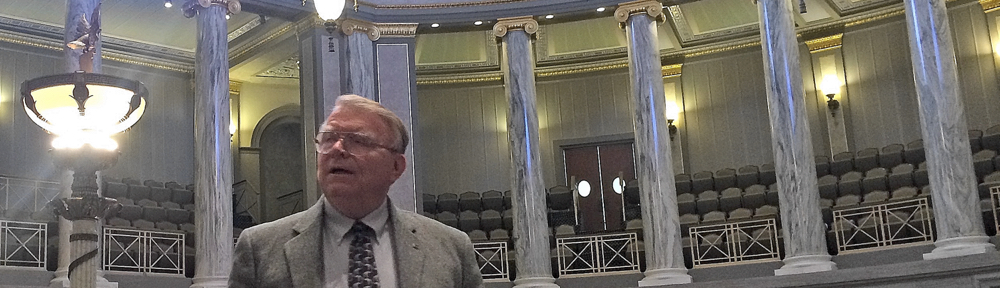
(NORM)—Former Missouri Tiger basketball coach Norm Stewart finally is getting his place in the Hall of Famous Missourians at the State Capitol.  The bust will be unveiled at 1 p.m., May 1 in the House Chamber. It later will be moved to the rotunda, joining more than three dozen other busts of famous Missourians.

Stewart turned 89 in January.

His teams rang up a record of 731-375 in 38 seasons as a head coach, 634 of them at his alma mater.

(BASEBALL)—One of our teams finished last week at 13-9.  The other one finished at 9-13, with some folks remembering last year when the team started 10-24.

(KANSAS CITY)—The 13-9 record isn’t the only statistic that shows how much the Royals’ season is a turnaround from last year. Here’s another one:

The Royals were held without a run by Baltimore on Sunday, their first shutout of the year. Last year they failed to score fifteen times.  Seth Lugo took his first loss and gave up his first home runs of the year after winning three straight to start his season and not giving up a homer in 41.1 innings.

Kansas City is led this year by catcher/first-baseman Salvador Perez, who starts this week hitting .333 with six homers and Bobby Witt, Jr., at .300. The pitching is among the best in baseball with a 3.18 ERA, which normally would be an outstanding year for an individual, let alone a team.  The pitching continues to carry the team, which is batting a cumulative .237, Perez and Witt notwithstanding.

(CARDINALS)—The Cardinals on theother hand are 9-13.   Wilson Contrares has the longest hitting streak in Major League Baseball, 14 games, at the end of the playing week.  Shortstop Masyn Win and Contreras are above .300 at the plate but the ‘Birds as a team are hitting only .219. But with an offense like that, the pitching staff’s 3.95 ERA, solid thought it be in today’s game, isn’t good enough.

The Optimist Award for 2024 goes to Sonny Gray, the pitching ace who says the Cardinals are going to turn things around big-time soon. Gray is doing his part, going 2-0 without an ERA and an 11-0 strikeout to walk ratio in his first two starts. Sunday, a dozen of the 19 outs he got were strikeouts. He did give up his first walk of the year and his first home run and that was enough for the Brewers in a 2-0 shutout.

(FOOTBALL)—As we were going to press (as they used to say in the journalism biz), reports were coming out that the new Athletic Director at the University was going to be Laird Veatch, the AD at Memphis for the last five years.

It’s a return for Veatch, who supervised fund raising for the athletic deaatment, 2000=2002. He later was the general manager of Mizzou Sports Properties in 2003, coordinating external media operators for Learfield Sports, which has multimedia rights with Tiger sports teams.  His first big job, other than lining up all of the NIL deals, will be raise half of the money for the $250 million dollar make over of the north end of Memorial Stadium.

(BATTLEHAWKS)—A big offensive day for the St. Louis Battlehawks coupled with a solid offensive day gave them a 32-17 win over the Memphis Showboats and a 3-1 record. St. Louis again led the UFL in attendance with 31,575 people in the Dome.

‘Hawks quarterback A. J. McCarron threw the ball an all-time high of 45 times, completed 35 of them for 222 yards and three touchdowns. Running back Jacob Saylors rushed for 103 yards. The defense gave up only 127 yards and let Memphis convert only one of ten third and fourth down attempts.

(Playing with Engines)

(INDYCAR)—Nobody INDYCAR “makes fuel” as Scott Dixon does.  He proved it again with his win at the Grand Prix of Long Beach.

Dixon went about 50 of the race’s 85 laps without refueling and had to hold off Josef Newgarden, who was closing the gap with ten laps left before   Newgarden was hit from behind by Colton Herta’s car.Herta went on to finish second, about one second behind Dixon.

The win extends Dixon’s record of having at leat one victory to twenty consecutive years.

(NASCAR)—The “big one” didn’t happen until the field was roaring toward the checkered flag at Talladega Superspeedway. With cars crashing ahead of him, and more crashing behind him, Tyler Reddick kept his foot on the floor and steered out of harms way to the win.

The crash was triggered when pole sitter Michael McDowell tried to block Brad Keselowski but touched Keselowski’s car at 200 mph and turned into the wall.  Reddick let the wrecking cars move out of his way while he slipped Keselowski for the win.

(FORMULA 1)—Max Verstappen adds the trophy for the Chinese Grand Prix to his shelf, posting a 13 second victory over runnerup Lando Norris.

(Photo Credit: Bob Priddy)