SPORTS:  Look for a Long, Hot, Depressing Summer, Baseball Fans; Maybe You Should Go to a Race

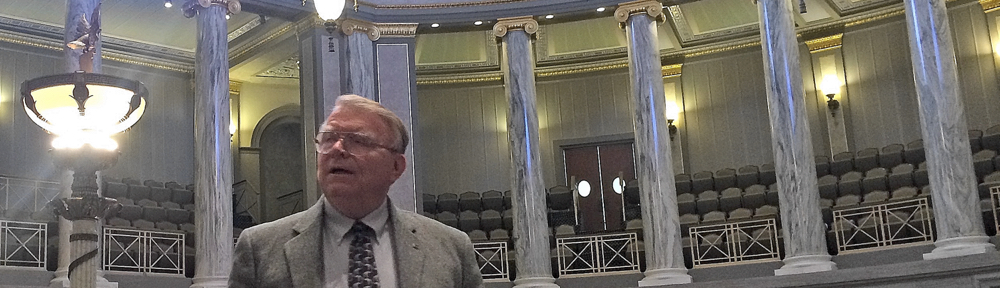
(BASEBALL)—We are left to recall a man who lived and died baseball, who passed up a potential Heisman Trophy college career to play the game of baseball, and who gave us some memorable thoughts and calls during fifty years in the broadcast booth as Jack Buck’s sidekick and later as the number one play-by-play guy with the Missourinet’s first sports director, John Rooney.

Mike Shannon is gone. He was 83. He was a multi-star athlete in high school who went to the University of Missouri on a football scholarship. In the days when freshmen could not play varsity football, Shannon so impressed Missouri coach Frank Broyles that Broyles thought he could have won the Heisman Trophy if he had stayed with football.

Instead, Shannon got a $50,000 signing bonus from the Cardinals and played baseball.

He gave us a lot of things on the field and in the booth. His Shannon-isms might be rivalled in all of baseball history (at least in our experience) only by the colorful phrasing of another native Missourian, Casey Stengel:

“It’s Mothers Day, so a big happy birthday to all you mothers out there.”

“Back in the day when I played, a pitcher had three pitches: a fastball, a curveball, a slider, a changeup and a good sinker pitch.”

(During a game in New York): “I wish you folks back in St. Louis could see this moon.”

“Ol’ Abner has done it again.”  (a late-game observation when the game is tight going into the last innings.)

“He’s faster than a chicken being chased by Ronald McDonald.”

“Our next home stand follows this road trip.”

“The wind has switched 360 degrees.”

“The crowd (is) on their feet for the Canadian Star Spangled Banner.”

And there were many more. Mike Shannon was Mike Shannon. Nice guy.  Good ball player. One of those guys who made a baseball broadcast booth much more than calling balls and strikes.  They don’t come along often and their enthusiasm for the game can’t be faked or scripted.

And we really need him these days.   His beloved Cardinals are in the pits. There’s no sugar-coating it.

They haven’t won a series since April 10-12 and were 10-19 after their weekend series against the Dodgers, wrapping up a road trip in which they went 2-8. They haven’t been this far under .500 in at least 16 years, 2007, the last time the cardinals finished below .500.  They have to go 80-53 if they’re going to win 90 games and compete for a wild card slot.

The Cardinals had never finished the first month of the season in last place in the National League Central—-and it was formed in 1994.

This weeks’ USA TODAY power rankings put the Cardinals 23rd out of the 30 teams.  The team started the year with fairly low expectations from the newspaper. They were ranked 11th.

And they’re expecting a 41-year old pitcher who has had a mediocre rehab assignments in Springfield and Memphis to lead a turnaround?   Wainwright had an ERA of 6.14 in Springfield and 6.35 at Memphis, 13 strikeouts in 12.2 innings in which he gave up 18 hits and nine runs.

Doesn’t me he can come up to the big club and do better—-rehab assignments aren’t necessarily about winning and losing.

But still…..

The Cardinals could be worse.  They could be the Kansas City Royals and ranked 29th by USA TODAY.  Only Oakland (soon to be Las Vegas, perhaps) is below them.

Where’s Mike Matheny when the Cardinals need him?

He’s in Kansas City where he is 172-242 in his three-plus seasons after going 591-474 in seven seasons in St. Louis and never having a losing record. The Royals went 7-22 in the first month of the season.

(MIZ-WHO?)—We confess that we’ve lost track of what the Missouri basketball team has won or lost since the season ended.  I think we’re suffering from portal fatigue.  They still lack a horse in the middle, a big one.

We’ll root for whatever Dennis Gates puts on the floor next year. But the era of carpet bagger-players the NCAA has ushered in with the portal and the NIL business has been a huge mess we prefer not to try to follow.

Pretty much the same for the football team.  We hope coach Drinkwitz is able to put together an outstanding team.  But by and large it’s going to be a bunch of strangers on Faurot field next fall.

It’s tempting to say that the NCAA has really screwed up collegiate sports.

(RACING)—All three major series were on track during the weekend—although the weekend stretched to an extra day for one of them.

(INDYCAR)—Close, but no cigar—again—for Romain Grosjean who led 57 of the first 66 laps before Scott McLaughlin fought his way past on lap 71 and held on to beat Grosjean to the line by about 1.8 seconds at Barber Motorsports Park at Birmingham, Alabama.

Grosjean, who started the race on the pole,  admits that he’s headed to Indianapolis for the two races in May—on the road course on May 14 and the Indianapolis 500 on the 28th.

McLaughlin’s win, his fourth in the INDYCAR series, was the product of race strategy.  His team planned on three pit stops. Grosjean’s team hoped to win the race on two stops.  But the three-stop strategy eliminated any fuel concerns for McLaughlin, who called it a “happy driver strategy.”

McLaughlin is the fourth driver to win in the four races run this year in INDYCAR.

Two-time series champion Will Power challenged Grosjean in the final laps but couldn’t get close enough to make a pass attempt.  Pato O’Ward and Alex Palou made up the rest of the top five.

(NASCAR)—The long dry spell for Martin Truex Jr., has come to an end after 54 races and 597 days.  Truex, opting for two tires on his last pit stop, held off Ross Chastain, who went with four, for the final fourteen laps.  Truex crossed the stripe a half-second ahead of Chastain.

The race was run yesterday (Monday) because it was rained out on Sunday. The win made the long weekend a family affair. His younger brother, Ryan, won the Xfinity race on Saturday.

Ryan Blaney, William Byron, and Denny Hamlin completed the top five. Byron led almost half of the 400 laps (193 of them) but couldn’t keep up with the top three in the closing laps.

Chastain’s run has put him on top of the points standings.

Chase Elliott, in his third race after returning from a broken leg was 11th and is now within the top thirty in points.  NASCAR rules say a driver must be in the top thirty in points and must have at least one victory if they’re not 16th or better in points at the start of playoffs.  Elliott is still looking for his first win of the year.

Josh Berry, who filled in for Elliott while he was recovering, was driving Alex Bowman’s car at Dover because Bowman suffered some compression back fractures in a sprint car wreck last week. He’s out indefinitely.  Berry finished 11th.

(FORMULA 1)—Sergio Perez is the first driver to win twice at the Grand Prix of Azerbain.

He beat teammate Max Verstappen, the defending f1 champion, by 2.1 seconds. Ferrari’s Charles LeClerc claimed the other podium spot.

Perez’s victory moves him to within six points of Verstappen in the standings. Both drivers have won twice this year. Two-time F1 champion Fernando Alonso, who seems to have found a new life in his career driving for Aston Martin, is third.

(Photo Credits; MLB Tonight (Rooney and Shannon) and Bob Priddy)


Sports Trivia Questions

Former St. Louis Cardinals catcher Hobie Landrith played only briefly with the team, but he participated in a historic game that the Cardinals played many years ago.

What did he do?

He also was part of a long-forgotten trade that led to a second transaction that changed baseball history, especially for his former team in St. Louis.

Can you figure that one out?

(We pause for you to cogitate. No fair Googling.)

Longtime baseball fans might hear a faint bell in their minds at the mention of his name but only a few have the kind of encyclopedic memory to recall his significance.

Hobie Landrith died April 6, just short of 61 years since his historic game.  He was 93.

His 14 years of major league baseball didn’t produce memorable stats—a .233 batting average, 34 home runs, 203 home runs. In his two years with the Cardinals he was a backup catcher for Hal Smith.

The answer to the first question is:

Hobie Landrith was the New York Mets’ first player.  He was picked in the expansion draft of 1961 and was the starting catcher on April 11, 1962—against the St. Louis Cardinals.

The Cardinals won 11-4. Larry Jackson got the win.  Roger Craig took the loss, the first of his 24 losses that year (and the first of 110 losses for the Mets). Landrith went oh for four. He was credited with one of the three Mets’ errors.  The Cardinals had 16 hits, four by Julian Javier.  Stan Musial went three for three.

The top three Mets pitchers that year, by the way, were Craig at 10-24. Al Jackson went  8-20, and Jay Hook was 8-19.  Their fourth pitcher, Bob Miller, was 1-12.

The Cardinals went 84-78-1. They finished sixth. Jackson finished 16-11, one win more than Bob Gibson, 15-13 despite a 2.86 ERA.

We’re about to fall into the statistical pit of baseball, which is awfully easy to do.  So let’s get back to Hobie Landrith.

Landrith was an important first choice for the Metropolitans (their real name) because, as manager Casey Stengel remarked, “You gotta have a catcher or you’d have a lot of passed balls.”

One of these days we’re going to have to remember Casey, a Kansas City native who once thought about becoming a dentist, and some of the things he said.  We didn’t have a master of the misstatement and the malaprop like Casey until Mike Shannon and his Shannonisms (“The outfield is deep and playing him straight-away and the infield is the same except first, second, third, and short are playing him to pull.”

Landrith played only one season with the lovable losers, as they were called. They lost the first ten games they ever played and lost 120 overall.

He was out of baseball in the third season after that.

Landrith also played a role in what arguably is the greatest trade in Cardinals history.  After two years in St. Louis, he was traded in October, 1958 to the San Francisco Giants along with Billy Muffett and Benny Valenzuela for Marv Grissom and—

Ernie Broglio.

In June of ’64, the Cardinals  sent Broglio, Bobby Schantz, and Doug Clemens to the Cubs for Jack Spring, Paul Toth and—

Lou Brock.

Broglio was out of baseball a couple years later. Brock is in the Hall of Fame.

The trade became infamous almost immediately and is remembered by the Emil Verban Society (a Washington, D. C. group of Cubs fans  who are in a club named for an obscure second baseman). Each year they give a Brock-for-Broglio Judgment award to recognize bad decision-making.  One recipient a few years ago was Saddam Hussein who was honored for his invasion of Kuwait in 1990.

Funny, sometimes, how a story starts out going one way and before it’s done, it is someplace else, entirely, from a backup forgotten catcher to an all-time great.

-0-


Bob and George, Part II 

I’ve already admitted that I appear to be woke and unapologetically so.  Now I have revealed that I once was involved with George Soros.

I have some strongly conservative friends but so far none have made the sign of the cross and waved garlic branches to protect themselves as I have drawn near them.  I swear, however, based on some letters to the editor, that there are people who each night pull their Murphy Beds down from the storage space in their bedroom wall and then look under it to see that George isn’t there.

Here’s how George and I got together.

One of the hinge-points in world history occurred on November 9, 1989 when the gates of the Berlin Wall were opened and the destruction of the wall began.  The fall of the Berlin Wall was the symbolic end of the Cold War, confirmed at a summing meeting on December 2-3 ith George H.W. Bush and Mikhail Gorbachev during which both declared the Cole War was officially, in their opionons at least, finished. German reunification took place the next October.

The Union of Soviet Socialist Republicans quickly fell apart.  When Czechslovak President Gustav Husak resigned on December 10, the only hard line Communist government remaining from the Warsaw Pact was in Nicolai Ceaucesecu’s Romania and he was about done.

(He pronounced his last name Chow-CHESS-koo.)

About the time Berlin was celebrating the fall of the wall, the Romanian Communist Party’s Fifteenth Congress  was electing Ceausescu to another five-year term. His speech that day denounced the Peaceful Revolution, as it was called, that was underway throughout Eastern Europe. Violent demonstrations broke out in the Romanian Capital of Bucharest and in Timisoara, considered the cultural and social center of the western part of the country.

Ceausescu held a mass meeting on University Square in Bucharest four days before Christmas that year in which he blamed the riots in Timisoara on “fascist agitators who want to destroy socialism” but the crowd was having none of it. He was booed and heckled and took cover inside the building.  By the next day the revolution was nationwide and the military turned against him. He fled in a helicopter than had landed on the roof of the building, just ahead of demonstrators who had surged inside. The chopper was ordered to land by the army which soon took custody of the president and his wife.

They were tried on Christmas day by a court established by the provisional government, convicted and sentenced to death. It was reported that hundreds of soldiers volunteered to be their firing squad. A firing squad described as “a gathering of soldiers” began shooting as soon as the two were in front of a wall. Their execution was videotaped and shown on Romanian television.

In the months after those events, Marvin Stone, a former deputy director of the United States Information Agency, with support from Secretary of State James Baker, founded the International Media Fund to “help establish non-governmental media across the former Communist bloc.”

In August and September, 1991, I was one of three men sent to Romania and Poland to conduct seminars under the auspices of the International Media Fund and the National Association of Broadcasters. While there we worked with The Soros Foundation for an Open Society, which organized the seminars we conducted.  The foundation told us it was formed “to promote the values of freedom and democracy in Central and Eastern Europe.”

In order to build an open society, one needs education, free communications and the free flow of ideas, and the development of independent, critical thinking at all levels in society. An open society is characterized by a plurality of opinions. There is never only one truth, such dogmatic thinking is the characteristic of closed societies. In an open system ideas, ideals and opinions are constantly challenged, and they enter into competition with each other.  This free, unhindered competition of ideas yields a better system for all.

I was joined by two other men, Bayard “Bud” Walters of Nashville, the owner of several radio stations who would discuss sales—a novel concept in a country that had nothing approaching a capitalist society or a capitalist mindset—and Julian Breen, a former programmer from WABC in New York who had built WABC to having the largest listening audience in America.

Julian died at the age of 63 in 2005. Bud, who is my age, still runs his Cromwell Media expire from Nashville.  When he was asked a couple of years ago about his career highlights, the first one he cited was being “part of a three-person media team that taught how to have a Free Press in Romania and Poland.”  It was eye-opening and rewarding.”

We spent a week in each country and all three of us were impressed by the enthusiasm the young people of Romania and Poland had for free expression.  I talked about the mechanics of covering the news, of who news sources would be—or should be, of the things people needed to know about in a free society (heavy emphasis on telling people what their government was doing for, to, and with them, a unique thing to those folks).  I talked of ethics, a particular interest of our audience.  I talked about the courage it takes to be a reporter, a quality necessary in building free media in a society still mentally adjusted to totalitarianism.

When we came home, we hoped we had planted some seeds of freedom in countries that still had few free radio stations, countries where many people—especially older ones who were accustomed to cradle-to-grave government regulation of their lives—were not sure what this freedom thing was all about and whether it was a good thing.

But the young people knew it was.  One of them told me there was a great irony in the advent of freedom in Romania.  In 1966, Ceausescu made abortion illegal. It was an effort to increase the country’s population. Decree 770 provided benefits to mothers of five or more children and those with ten or more children were declared “heroine mothers” by the state. The government all but prohibited divorces.

The ”decree-ites,” our friend told me, the children born because of the ban on abortions, constituted the generation of Romanians that revolted and killed Ceaucescu.  And were learning lessons about a free society from us.

A decade later, I was judging an annual contest for excellence in news reporting for the Radio-Television News Directors Association—an international organizationthat made me the first person to lead it twice—when one of my board members announced that we had our first truly international winner.

A young woman from Romania.

I think she was too young to have been in those seminars in ’91.  But knowing that a seed we had sown in Romania had, indeed, flowered, was a strongly emotional moment.

We were sent there by the IMF and the Media Fund.  The seminars at which we spoke were financed by George Soros.

For those who speak his name because of their ignorance of his belief in an open society, I want you to know that I am proud of my association with him even though it was decades ago.  To those who think we as a nation should be ignorant of our history of prejudice, discrimination, and coercion,  and blindly follow those who demean and insult our intelligence in their efforts to get and maintain self-serving power over us, I want to remind you of the goal of George Soros’ Open Society foundation:

In order to build an open society, one needs education, free communications and the free flow of ideas, and the development of independent, critical thinking at all levels in society. An open society is characterized by a plurality of opinions. There is never only one truth, such dogmatic thinking is the characteristic of closed societies. In an open system ideas, ideals and opinions are constantly challenged, and they enter into competition with each other.  This free, unhindered competition of ideas yields a better system for all.

When it comes to freedom, I’d rather have George Soros on my side.  Because I have seen the other side. Unlike so many of those who have turned his name into an empty-headed epithet, I have been within his circle. And I do not fear him.

Despots should.  And I know why.

George and Bob, Part I

The far right’s obsession with George Soros as some kind of leftist boogeyman funding every supposedly un-American conspiracy it can think of shows a lack of creativity, reality, and intellect we should expect in discussions of our political system.

To some of these folks, the mention of the words “George” and “Soros” provokes the same reaction that Pavlov got from a dog when he rang a bell.

Soros bashing emerged again last week with the indictment of Donald Trump.  Trump’s former Secretary of State Mike Pompeo, attacking Manhattan District Attorney Alvin Bragg as “a Soros-funded prosecutor who refuses to prosecute violent crimes…” A New York Times fact-checker has found no direct Soros funding link to Bragg’s campaign although he did give a million dollars to a political action committee that put a half-million dollars into the Bragg campaign.

Our former Attorney General and Trump acolyte, Eric Schmitt, accuses Bragg of ignoring “violent crime (that) rages on & violent criminals walk free.”  Too bad he never criticized prosecutors here at home where our two biggest cities have had high murder rates for years, including time when Schmitt was AG or was in the legislature making state policy.

Current AG Andrew Bailey accused Bragg of being “another Soros-funded prosecutor with misplaced priorities.

Governor Parson says it’s a matter of “another Soros-backed prosecutor [who] uses the rule of law to serve his own political agenda, not justice.

My defense of Soros should not be unexpected because I have been a beneficiary of Mr. Soros.

Or maybe I was a Soros enabler and others benefitted—-although his critics will say nobody has benefitted from the distribution of his wealth as he sees fit to distribute it—-a reverse reflection of how the people on the Left feel about the Koch brothers and their support of right-wing activities.

In such discussions we should acknowledge some things:

The Golden Rule in politics has been expressed as, “He who has the gold, rules.”

That’s not exactly correct. There are a lot of instances in which wealthy patrons have invested in this or that candidate only to see that candidate lose.  But the super-wealthy can afford to just shrug and see who else or what else they can buy, confident they will prevail eventually—although most of us wonder why the super-rich feel a need to keep prevailing.

Why can’t they just be like Scrooge McDuck and go down in their basement and take a bath in their money?

Why should they?

Soros faced his wealth and the freedom it gives him to be involved not only in politics but in other causes this way in a 2016 essay in The New York Review of Books: “My success in the financial markets has given me a greater degree of independence than most other people. This obliges me to take stands on controversial issues when others cannot, and taking such positions has itself been a source of satisfaction. In short, my philanthropy has made me happy.”

One of the things that makes him happy is the project that involved me.

Before I tell the story, let me tell you some things about George Soros that his critics never talk about but they’re things that help understand some of the man.

George, if I may speak of him with a familiarity I have not earned, is about 92, the son of a man who escaped from a Soviet prison camp and made his way back to Nazi-occupied Budapest where his family—Jewish family—was living. He says his father printed fake identity documents for other Jewish families.  Those years living as a Jew in Nazi Hungary shaped his life.

He went to England after escaping from Hungary, studied economics and developed his philosophy of investing. He came to America, became a naturalized citizen in 1961and began a career as a financial analyst before he later moved into hedge fund management and a career that led him to be what he calls a “political philanthropist.”

This article from The Street  includes Soros’s Wall Street Journal article in 2016 explaining, “Why I Support Reform Prosecutors.”

Billionaire George Soros Hits Back at Donald Trump – TheStreet

It might be educational for some of his critics whose knees jerk and whose saliva glands gush at the mere mention of his name to read—-although I doubt that few will.  He seems to be right on the money, however, when he wrote, “Many of the same people who call for more punitive civil justice policies also support looser gun laws.”

As for supporting Bragg, Soros says he has never met him and has never directly contributed to his campaign although his political action committee has constributed money to a group that has given some funds to Bragg’s campaigns.  To assert that Soros owns Bragg is a big leap.

In the early 80s, Soros created the Open Society Foundations to promote democracy and financial prosperity in nations that were falling away from the Soviet Union as the USSR crumbled.

And that is when George Soros and Bob Priddy came together.

Now, to be clear—I have never met George.  But the opportunity he gave me to be part of his program to bring freedom to the newly-independent countries that had been Soviet territories for decades turned out to be one of the most rewarding experiences of my career as a journalist.

George Soros is not always correct in backing the causes he backs. The history of his involvements makes that clear. Some of his assessments of this country’s present and this country’s future anger those on the right who see this country as the world’s dominant nation during a time when there are challenges to that idea and that reality every day.

His wealth and his world life-experience allow him the freedom to challenge those who have trouble thinking outside the box that constitutes the boundaries of the United States. But he does not have a corner on international geopolitical wisdom.  His ideas are open to challenge.  But such challenges are not beneficial if all they do is call him a name or vaguely blame him for everything that is wrong for this country and this world by merely beeathing the word “Soros.”

It is his right, as it is the right of wealthy others on the other side, to use his wealth to disseminate his opinions and to shape societies as he thinks they should be shaped.

The great broadcast journalist Edward R. Murrow once said something that brings up a problem with the ability of the super-rich to influence our political system. Murrow told fellow broadcasters, “Just because the microphone in front of you amplifies  your voice around the world is no reason to think we have any more wisdom than we had when our voices could reach only from one of the bar to the other.”

So the super-rich on both sides of the aisle can afford a much bigger microphone than you or I can afford.  Finding a way to equalize the voices of the average American and the billionaire American is an important quest, but one unlikely to succeed in the foreseeable future.

My experience with George Soros leads me to defend him as something other than a leftist boogeyman. And I am naturally inclined against finding validity in those who only parrot cheap-shot party line character assassinations in place of intelligent discussion.

I’ll tell you about George and me in the next entry.


SPORTS: Fluttering Cardinals, Tarnished Royals, Battling Hawks and Dirty Racing.

by Bob Priddy, Missourinet Contributing Editor

(BASEBALL)—Both of our Major League baseball teams have staggered out of the gate in this young season.  While only modest success had been expected of the new-look Kansas City Royals, the Cardinals are far from meeting early-season expectations. A rookie leads the team in hitting and a crippled veteran’s rendition of the National Anthem is near the top of this year’s highlight reel through the first ten games.

The Royals are three-and-a-half games back after ten, with three wins. They are not the worst team in the league, though.  Oakland and Detroit are 2-7.

The Cardinals are last in the National League Central with as many wins as the Royals and one fewer loss.  Philadelphia has the sme record (3-6). Washington is the only team with a worse start, at 3-7.

Cardinals rookie Jordan Walker had one of the Redbirds’ five hits Sunday, setting a new team record for longest hitting streak to start his career—nine games. Another Jordan, Montgomery, was impressive as a starting pitcher during the weekend—nine strikeouts in six scoreless innings against the Brewers. Nolan Arenado got his 300th home career home run during the weekend. But pitchers are giving up almost five earned runs a game (4.87) while scoring only 36 runs (4.0 per game).

The Royals, on the other hand, have scored only 27 runs in their first ten games. But when your pitching staff has a team ERA of 3.74—

If the Cardinals were to play the Royals today, who—if anybody—do you think would win?

(RECORDS)—Baseball might be the most esoteric of all sports and Jordan Walker is a living example.  By getting a hit in his first nine games, he has tied Magneuris Sierra for the team record for longest hitting streak at the start of his career.  (Sierra, once a hotshot prospect for the Cardinals, flamed out, was part of the trade with Atlanta for Marcell Ozuna at the end of his first year in St. Louis. He took his .228 career batting average onto the free agent market during the offseason and signed a minor league deal with Atlanta.)

But an even more obscure record is that Walker has tied the great Ted Williams for second-longest hitting streak by a player twenty years old or younger to start a career. The all-time record is 12 games set by Eddie Murphy of the Philadelphia Athletics in 1912.  Murphy lasted 15 years in the majors and was known as “Honest Eddie” because he was not one of the eight members of the Chicago “Black” Sox involved in the 1919 World Series scandal.

(BATTLEHAWKS)—Some people thought it was funny.  But those who did not will certainly be excused for their reactions.

Pro Football Talk reports that the St. Louis Battlehawks, a little more than a week ago posted this notice:

“Following a vote from XFL owners, the Battlehawks have been officially approved to relocate to the greater Los Angeles area and will do so for the 2024 season.

“St. Louis is a city known for its incredibly hard-working, passionate and proud people. Bringing the XFL back to St. Louis in 2023 will go down as one of the proudest moments in our league’s history. This move isn’t about whether we love St. Louis or its fans, but rather about what is in the best interest of the Battlehawks organization.

“We would like to thank the XFL, its owners, and all of Battlehawk Nation for their diligence and dedication, and we look forward to building a world-class franchise in Inglewood.”

There likely were several folks who failed to note that the notice was posted on April 1 as a joke. Much of the statement sounds like the condescending news release of the Rams when they skedaddled out of town. Rest assured fans, it was just an April Fool’s intended knee-slapper.

In the real world, the Battlehawks battled back in the closing minutes against the Las Vegas Vipers for an overtime 21-17 win.  Down 17-8 with backup quarterback replacing A. J. Mccarron, the Battlehawks scored with 4:49 left when punter Sterling Hofrighter threw a pass to Gary Jennings that turned into a 64-yard touchdown. A three-point points after failed. But the ‘Hawks defense stopped the Vipers and Donny Hagemann kicked a tying field goal with eleven seconds left.

XFL overtime is played as three alternative two-point plays from the five yard line.  St. Louis scored on its first two possessions, a pass from backup QB Nick Tiano to Hakeem Butler and a run by Brian Hill.

St. Louis is 6-2. Las Vegas drops to 2-6.

(SMITH)—Former Missouri Tiger Aldon Smith, whose potentially outstanding pro career fell apart in a flurry of drunk driving, domestic violence, and weapons charges, has been sentenced to a year in jail and five years probation after pleading guilty a felony drunk driving charge growing out of a traffic crash that injured the other driver.

Smith started his pro career by setting a record for sacks as a rookie (14.5). He was an All-Pro the next year with nineteen of them. But his career started spiraling down in 2013.

(RACING)—NASCAR ran its only Cup race on dirt this weekend, at Bristol, Sunday night. Christopher Bell, one of the young guys who grew up racing on dirt tracks, held off another young gun, Tyler Reddick.  The race had been dominated by another young dirt-track veteran, Kyle Larson, until he was involved in a crash just past the halfway point.

Bristol is one of NASCAR’s shortest tracks. Fourteen cautions lowered the winning speed to just 47 mph.

Another short track, Martinsville, is on tap for next weekend.

(OTHER RACING)—INDYCAR and Formula 1 both took Easter weekend off.

We Don’t Want Big Government

—except we do want it.

I was listening to some debate in the state senate a few days ago during which one senator went off on the idea that government is too big and needs to be shrunk.  This issue has been debate fodder for decades.

Despite many cutbacks—I recall when governors proudly pointed in their State of the State Addresses how many jobs they had eliminated in the past year.

But do we REALLY want smaller government?

The appropriate answer is a familiar one:  Yes, for the other guy.   But don’t touch my programs or my benefits.

There’s an organization called NORC at the University of Chicago.  Although the outfit says, NORC is not an acronym, it is our name,” the letters stand for The National Opinion Research Center, founded in 1941. But it does businesses as NORC, the pronunciation of which always reminds us of a hilarious 1977 outtake from the Carol Burnett show in which Tim Conway, as he often did, ad-libs a story that broke up the cast, including guest star Dick Van Dyke.  Tim Conway elephant story – YouTube.

Well, anyway, The Associated Press and NORC have done a new survey.  Sixty percent of Americans think the federal government spends too much money. But 65% want more spending for education (12% want less).  Health care?  More, says 63% of the respondents; 16% want less. Only 7% of those surveyed want less in Social Security.  Sixty-two percent want less. Medicare? 59% more. Ten percent less. Increased border security spending is favored by 53% with 29% favoring less.  Military spending is pretty even—35% want more and 29% want less.

It’s interesting to see how these numbers matter in the partisan deadlock over raising the debt ceiling and/or cutting government spending. Heather Cox Richardson, whose blog is called “Letters from an American,” says Republicans are harping on Biden policies and want to slash the budget, ignoring the fact that spending in the Trump administration increased the national debt by one-fourth.  The GOPers in Congress want a balanced budget in ten years but don’t want to raise taxes or cut defense, Medicare, Social Security, or veterans benefits.  She says that would “require slashing everything else by an impossible 85%, at least (some estimates say even 100% cuts wouldn’t do it.”

She cites David Firestone, a New York Times editorial board member, who has written, “Cutting spending…might sound attractive to many voters until you explain what you’re actually cutting and what effect it would have.” Firestone asserts that Republicans cut taxes and then complain about deficits “but don’t want to discuss how many veterans won’t get care or whose damaged homes won’t get rebuilt or which dangerous products won’t get recalled.”

He opines that difference of opinion and philosophy is why Republicans in the U.S. House haven’t come up with a budget.  He says, “its easier to just issue a fiery news release” instead of dealing with the unpopularity of austerity.

What makes things harder for our people in Washington is that we want things.  And we expect them to get those things for us.  That’s why we’ve never heard a member of Congress come home and tell constituents, “I didn’t introduce the bill that would have built a new post office,” or “I didn’t work for a federal grant for the local hospital,” because the congress person didn’t want to increase the national debt.

And here’s another recent example:

Arkansas Governor Sarah Huckabee Sanders, who made a lot of political hay in her campaign by saying Arkansawyers should not allow the feds to become involved in state and local issues and who tweeted earlier this year that “As long as I am your governor, the meddling hand of big government creeping down from Washington, DC will be stopped cold at the Mississippi River,” has toured the areas of death and destruction from the tornados this week. Afterwards she said, “The federal government is currently paying 75% of all costs incurred during our recovery process, but that arrangement must go further to help Akansans in need…I am asking the federal government to cover 100% of all our recovery expenses during the first 30 days after the storm.”

She seems to be asking, “Where is big government when we want it?”

The other person is always the greedy one who wants the government to do everything for him or her until WE are that other person.

And that’s why we don’t trust politicians.  They give us what we want.  Then they argue about who is responsible for the debt.

At the basic level, folks, it’s not them. It’s us. We’re responsible for this situation.  They can’t argue with us so they argue with each other.

-0-

Disintegration

We’ve heard it several times in recent days and heard it again this past weekend when a talking head on one of the talking head shows said we are watching “the disintegration of the Republican Party” with the indictment of ex-president Trump and the early support he’s getting from his ardent supporters including two former Missouri Attorneys General.

Senator Josh Hawley calls the charge “an assault on our democracy, pure and simple,” interesting words coming from a man who encouraged that huge crowd of “tourists” to “tour” the U. S. Capitol in a memorable way two years ago.

His successor, Eric Schmitt, calls it “a purely partisan case.”  Schmitt is remembered because he decided to meddle in the 2020 election in four states in what surely was a non-partisan defense of popular democracy. Schmitt, as we recall, was 0-for-4.

And newly-minted Congressman Mark Alford from Raymore, who thinks prosecutor Alvin Bragg  “will clearly dig up old parking tickets if that means Donald Trump cannot run for President,” and says the charges are “nothing short of political persecution.”  Alford was one of Trump’s endorsement successes in the elections last year.

Politico reports, by the way, that Trump went 10-11 in his congressional endorsements last year, eight of those victories coming in districts that already leaned Republican, including Alford’s district.

It is important to remember that Trump is by far not the first federal public official to be indicted. Kentucky Congressman Matthew Lyon was found guilty of violating the Alien and Sedition Acts in 1798. He was re-elected while he spent four months in jail.

Until now, the highest federal official indicted was Vice-President Spiro agenew, who pleaded no contest to income tax evasion in 1973.

Much is made of Donald Trump being the first PRESIDENT indicted.  It’s worth noting historically but it has no meaning otherwise.  Lyon was the first member of the House to be indicted. Joseph R. Burton, in 1904, was the first sitting senator to be indicted—by a federal grand jury in St. Louis. He was convicted of taking a bribe, fined $2,500 and ordered to serve six months in jail in Ironton, Missouri. He resigned after losing two appeals to the Supreme Court.

The point is: Somebody has to be first.  Trump is the first ex-president to be indicted.

Point noted. He joins a firsts list of  Lyon, Burton, and Agnew.

Now, get on with it.

The headlines have gone to those who have thundered their support of Trump.  Slight notice has been paid to those who have been more judicious in their comments, if they have commented at all.

The silent ones will be the ones who count when it comes to a post-Trump GOP.

It seems obvious that inter-party support for Trump is declining and the ratcheting-up of the noise on his behalf is a strident indication that the remaining Trumpists know their grasp on the short hairs is weakening.

The Republican Party is not “disintegrating” as those who speak more broadly than discretion should suggest are suggesting.  Indictment by indictment, more and more Republicans will be willing to do unto Trump what he has done unto so many others—throw him under the bus (The phrase, by the way, is believed to have started in British politics in the late 1970s).

Here’s the difference between the Trump era of the Republican Party and the post-Trump era—it is the difference between a fish and a tree.

An old political saying, from an unknown origin is, “A fish rots from the head down.”  It generally means that when the leader of a movement dies, the movement will, through time, die too.

But a political party is not a fish.  A political party is more like a tree, which grows from its roots.  Its tip might die but when the dead part if lopped off, the lower part regrows.

So it will be for the Republican Party.  The focus today is on a diseased top branch.  When removed, whether by a windstorm of justice or by intentional cutting and pruning by those who are tired of dealing with it, the roots and the trunk will remain and they will sprout new branches and new, clean leaves.

The focus today is on an element of the national party.  But the roots and the trunk of the party are at the state level and they will remain, and not just in Missouri. The windstorm or the cutting and pruning might make the tree less attractive for a while or reduce its output of political fruit, but it will survive.

Many years ago, our last family vacation before children left for college and ultimately for the real world, we went to Yellowstone National Park.  It was the year after the great fires had blackened so much of the land.  But already we were seeing small green leaves emerge amidst the charred stumps and scorched grass.

The Republican Party will not disintegrate despite gloomy forecasts from talking heads, although the rotten top branch might be transformed in the political fireplace into an “ash heap of history” a phrase attributed to Ronald Reagan, whose party Trump usurped.

Us vs. It—part XIII, Empathetic edition 

We began this series in the early days of the pandemic. It’s been a long time since the twelfth chapter that likened what we have been going through, or went through, and yesterday.

An odd thing sometimes happens to the historical researcher.  Names and addresses become more than words and numbers on a printed page.  Something empathetic happens sometimes.  I like to say that ghosts live in those boxes of letters and journals or in the stories on the pages of microfilmed newspapers that make yesterday immediate.

Maybe it’s because the address is a place the researcher has driven past many times without a thought.  But now, knowing something that happened at that address produces a peculiar personal tie to the place. These are some of the Jefferson City Sites of Sadness during the great Spanish Flu expidemic of 1918.

1022 West McCarty

1029 West Main

1303 Monroe Street

708 East Miller Street

804 Broadway

Particularly, in this case, is this note in the newspaper from December 10, 1918:

Mrs. Fred Landwehr died at her home east of the city.

The house was east of the city in 1918. It’s well within the city in 2022.  I used to drive past this house almost every time I went to my home on Landwehr Hills Road where we lived for twenty years.  Mrs. Landwehr was one of the victims of the Spanish Influenza pandemic.  One of her descendants is a former Mayor of my town.

In most instances, the people who now live at the addresses above where part of that terrible history happened in 1918-19 have no knowledge of the small but enormously tragic event that enveloped their home so many years ago. They don’t know that the living room of their home might have held the coffin of a loved one who died in that pandemic—funerals often were held in homes in those pre-funeral home days.

We don’t know if such information would be particularly meaningful to the way the current inhabitants live their lives.  But these houses remain memorials to the citizens whose name mean little or nothing to most of us but who were part of the fear and the sadness that was there in that awful historic time.

And in the past three-plus years some modern addresses have been added that were the homes of victims of the worst pandemic since the Spanish Flu of 1918-19.

History is more immediate and more valuable than you might think if you know you are in a place where life and death happened or if you know as you drive past what circumstance of life was played out behind those windows.

Who Are We?   

The Missouri Senate left early for spring break, hung up on the latest proposal that is part of the constant process of trying to determine who we are.

Senators had been locked in a two-day filibuster on a bill banning gender-affirming care for transgender minors.

It’s never easy to classify people and people’s rights as we learn that human beings are more varied and more complicated than we think. The issue has been summed up by Catholics for Choice:

The Catholic hierarchy teaches that God created a binary system of male and female bodies that are supposed to complement each other. They believe that women and men are equal in worth and dignity, yet their physical and anatomical differences are evidence that God intends different roles and purposes for them in church, society and the family. This system not only reinforces women’s suffering but oversimplifies the complexity of gender identity, erasing whole communities of people made in God’s image.

Men are always awarded power, authority and dominance, women are relegated to the roles of service, nurturing and adoration, and non-binary or gender non-conforming people are not even recognized.

Catholics for Choice believes that God’s creation is far more complex. We do not accept that an individual’s purpose is bound by biology or anatomy, and the notion that sex is a binary of male and female is scientifically inaccurate. We work towards a world that treats all people equally regardless of sex, gender identity, or gender expression.

 It’s not just the Catholic Church that is divided by this issue philosophically. Several Protestant fath organizations divided on the issue of slavery. Another split on the issue of instrumental music in worship. Today’s divisions, philosophically as well as structurally, seem to be on issues of gay marriage or other gay rights.

This is not new to our nation. What’s happening is that we again are at a point where we are re-defining human beings. We have never been able to see each other—as Catholics for Choice put it—as a whole community of people made in God’s image.

African Americans got the 14th Amendment in 1868 saying they were equal citizens under law.  The Nineteenth Amendment, ratified in 1920, gave women the right to vote. Native Americans were declared American citizens in 1924. In 1954, the Supreme Court ruled black and white children could go to school together. The Civil Rights Act of 1964 banned discrimination in hiring because of religion. Inter-racial marriage became legal in 1967. The Fair Housing Act of 1968 eliminated race-based real estate covenants. Gay marriage became legal in 2015.

Now we are wrestling with how to recognize a different kind of identity, the non-binary individual.  Once again, some of the arguments are based on religion and doctrine versus science, society, and self-identity.

We are more complicated as a species than we sometimes want to admit.  Always have been.  As a society we’ve always had problems dealing with those who are different and reconciling ourselves that even different people have unalienable rights, too.

A generation from now, maybe two, some of our descendants will look at our times and ask, “What were they thinking?” in the same way we look at our previous generations and wonder about the race and gender issues that bedeviled them.

Will they still be fighting about what rights people have who are in some way different from the majority of them?

Utopia will always be far away as long as we find ways to define ourselves by our differences

INNOCENT

Your correspondent is not sure whether it is harder to acknowledge that Donald Trump is innocent or harder to admit he’s guilty. The answer lies on which side of Trump you see.

He claims he will be arrested tomorrow on an indictment stemming from the Stormy Daniels hush money case. If it happens, it’s likely to be the first of a series of indictments.

For now, he is innocent of everything that dominates the speculation that flows from the mouths of the talking heads on left and right alike. The reported imminence of indictments has both sides showing signs of froth at the corners of their mouths.

But until a prosecutor makes the case without a shadow of doubt, Donald Trump is innocent and free to go wherever he wants to go.

If he is indicted, however, there is one way for him to be fitted for a one-piece, orange suit. Immediately.

It can happen if Trump continues to be Trump.

If he takes to Truth Social or at his tasteless planned rally in Waco, Texas on the thirtieth anniversary of the David Koresh compound tragedy, and goes full Trump against any judge that might by then be involved in any case that might by then be filed, said judge should waste no time finding him in contempt and sending him to jail.

It would not be surprising if he expands his attacks on prosecutors and former associates to include a judge.  He is a man with no respect for authority who quickly could get a change of address if his lawyers can’t make him behave.

And if his arrest should materialize and his calls for protests trigger violence, again, it might be a good while before he sees his golf course again.

But regardless of the bombast and the disrespect we might get from this man, let us remember this simple fact:

He is innocent until he is proven guilty of whatever charge or charges he will face.

Even if he does not respect our system of government, the governed should respect it.  Even those who cannot describe the depths of their disrespect for him must respect the system that will determine if he has exceeded the bounds of the law as much as he often seems to exceed the bounds of decency.

-0-